


If you have ever stared at a food chain diagram and thought, “I know what it means… but I can’t explain it in exam language,” you are not alone. In IB Biology, trophic levels are one of those simple ideas that become tricky the moment arrows, energy losses, and real ecosystems enter the picture. The good news: once you see trophic level as a position in energy transfer, everything else snaps into place.
What is a trophic level in IB Biology?
A trophic level is the feeding position an organism occupies in a food chain or food web, based on how it gets energy. In IB Biology, exam questions often test whether you can do three things quickly:
-
Identify the producer (the starting point for energy)
-
Follow arrows in the direction of energy flow
-
Explain why less energy is available at higher trophic levels
If you want a syllabus-aligned explanation and practice, start with RevisionDojo’s notes on C4.2 Transfer of energy and matter.
The main trophic levels (with a fast checklist)
In IB Biology, you can treat trophic levels like rungs on an energy ladder:
-
Producers (1st trophic level): plants, algae, phytoplankton
-
Primary consumers (2nd trophic level): herbivores that eat producers
-
Secondary consumers (3rd trophic level): carnivores/omnivores that eat herbivores
-
Tertiary consumers (4th trophic level and above): higher predators
-
Decomposers: feed on dead organic matter from all levels, recycling nutrients
For the exact phrasing IB expects, see C4.2.10 Classification of organisms into trophic levels.
Food chain examples (and how to write them correctly)
A clean food chain example you can use in IB Biology answers:
Grass (producer) -> rabbit (primary consumer) -> fox (secondary consumer) -> eagle (tertiary consumer)
Two exam cues:
-
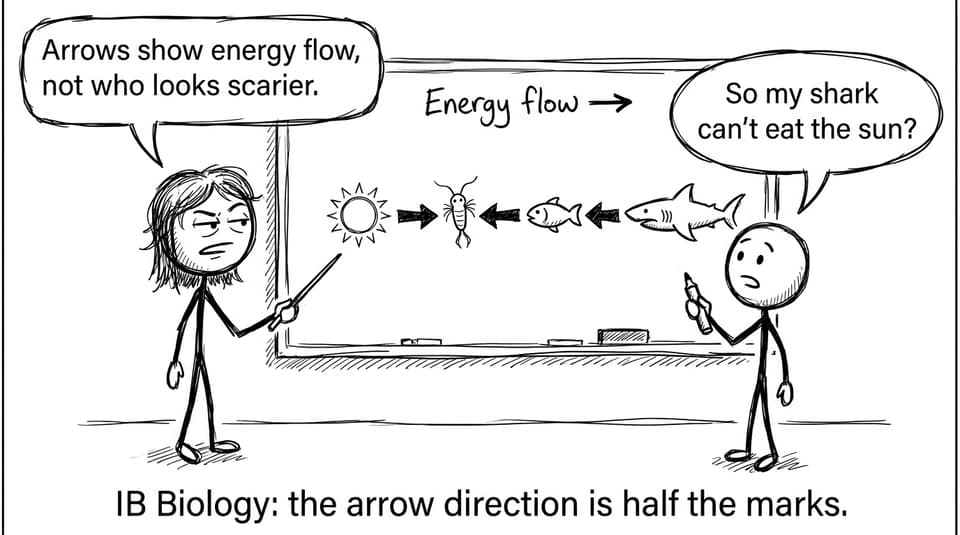
Arrows show energy flow, not “who eats who” vibes.
-
Real ecosystems are usually food webs, not neat chains.
To build and interpret chains/webs with fewer mistakes, revise C4.2.4 Construction of food chains and food webs.
Energy flow: why only about 10% transfers
Here is the quiet reason trophic level questions keep showing up: energy transfer is inefficient.
On average, only about 10% of energy in biomass becomes biomass in the next trophic level. The rest is “spent” on life: respiration, movement, heat loss, and waste.
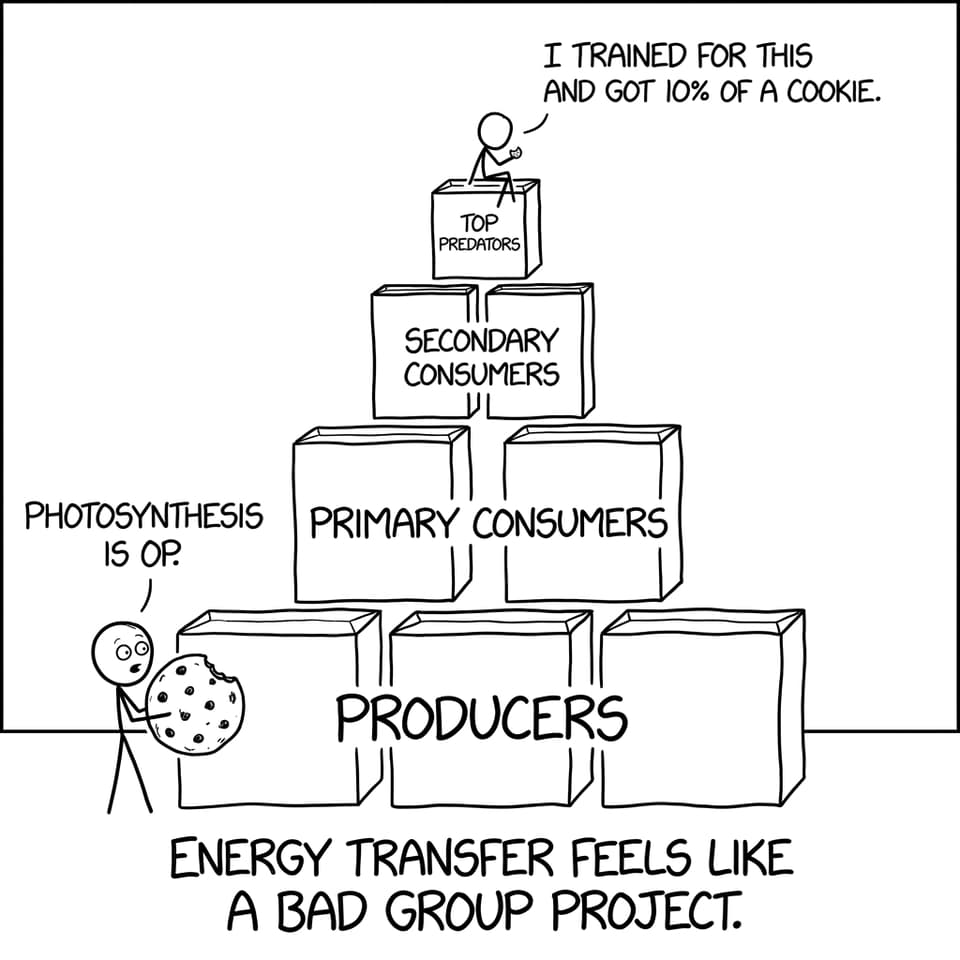
This is also why food chains usually top out around 4-5 levels. For the examiner-friendly explanation, use C4.2.14 Restrictions on the number of trophic levels in ecosystems and pair it with C4.2.11 Construction of energy pyramids.
Decomposers: the trophic level “everywhere”
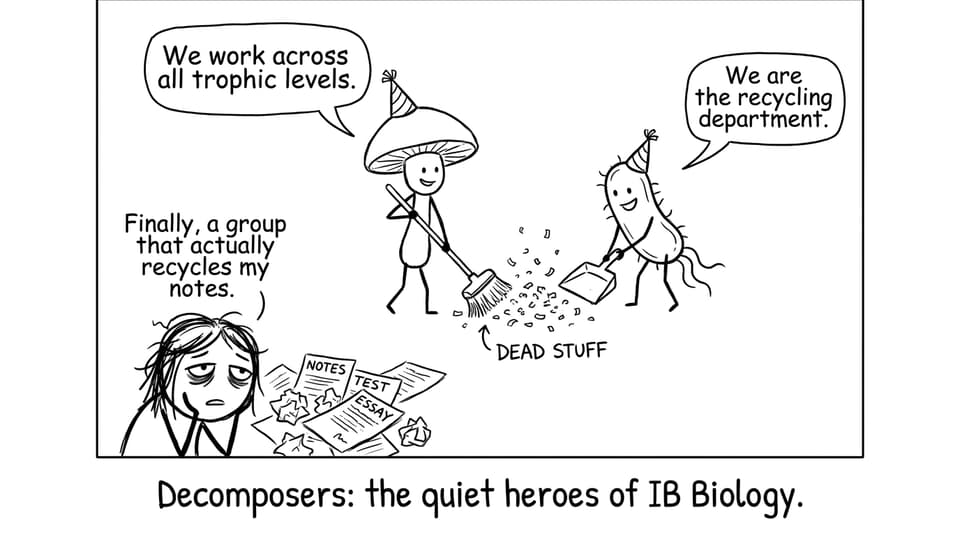
Decomposers do not sit neatly at the top. They break down dead organisms and waste from all trophic levels, returning nutrients to the ecosystem. In IB Biology, that detail can rescue a longer response question, because it shows you understand both energy flow and nutrient cycling.
Quick exam practice (the RevisionDojo way)
If your goal is marks, not just understanding, build a tight loop:
-
Read the key section in IB Biology Topic C4.2
-
Drill exam-style items in the 4.2 Energy flow Questionbank
-
Use RevisionDojo Flashcards for definitions and the AI Chat to fix misconceptions fast
-
Run a timed set with Mock Exams, then use Grading tools to spot patterns
Final takeaway: trophic level is an energy position
A trophic level is simply an organism’s place in the story of energy flow: starting with producers, moving through consumers, and supported by decomposers that recycle nutrients. In IB Biology, the marks come from precision: correct arrows, correct terms, and a clear explanation of the 10% transfer idea.
If you want to turn that understanding into exam confidence, RevisionDojo brings it all together with Study Notes, Flashcards, AI Chat, Mock Exams, Grading tools, a Coursework Library, and Tutors that help you fix mistakes before they become habits. Keep trophic level practice short, frequent, and exam-style, and you will feel the difference on test day.