


A motif is the detail your brain keeps circling back to
In IB English, you’ll sometimes reread a page and feel a quiet irritation: Why is that image here again? A colour repeats. A word keeps returning. A type of scene shows up in slightly different clothing.
That irritation is useful. It’s your attention noticing a motif.
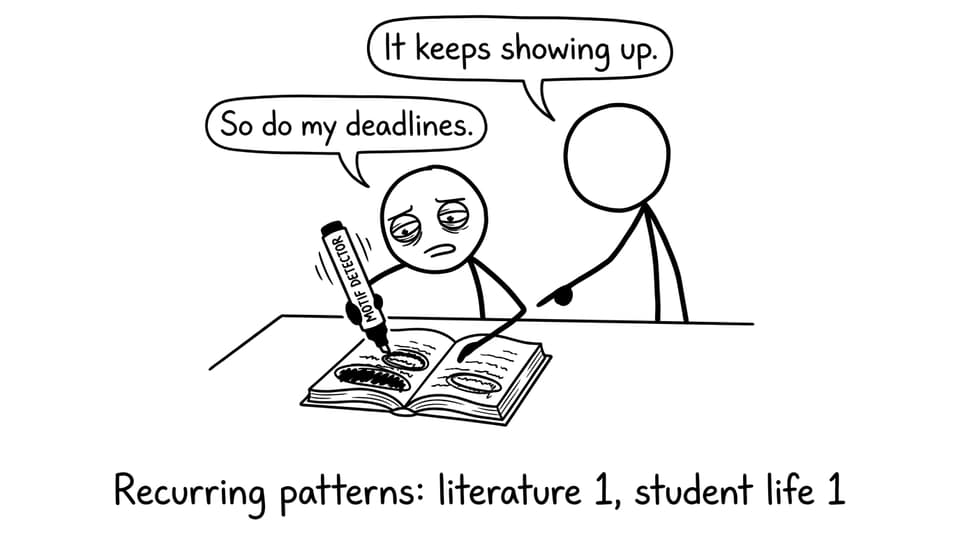
A motif is rarely loud. It doesn’t announce itself with a label. It just shows up again and again until the repetition becomes meaning. And in IB English, that’s exactly the kind of pattern examiners reward: you’re not only spotting techniques, you’re showing how writers build ideas over time.
Motif definition for IB English
In IB English, a motif is a recurring image, symbol, word, phrase, idea, or situation that appears across a text and helps develop its themes.
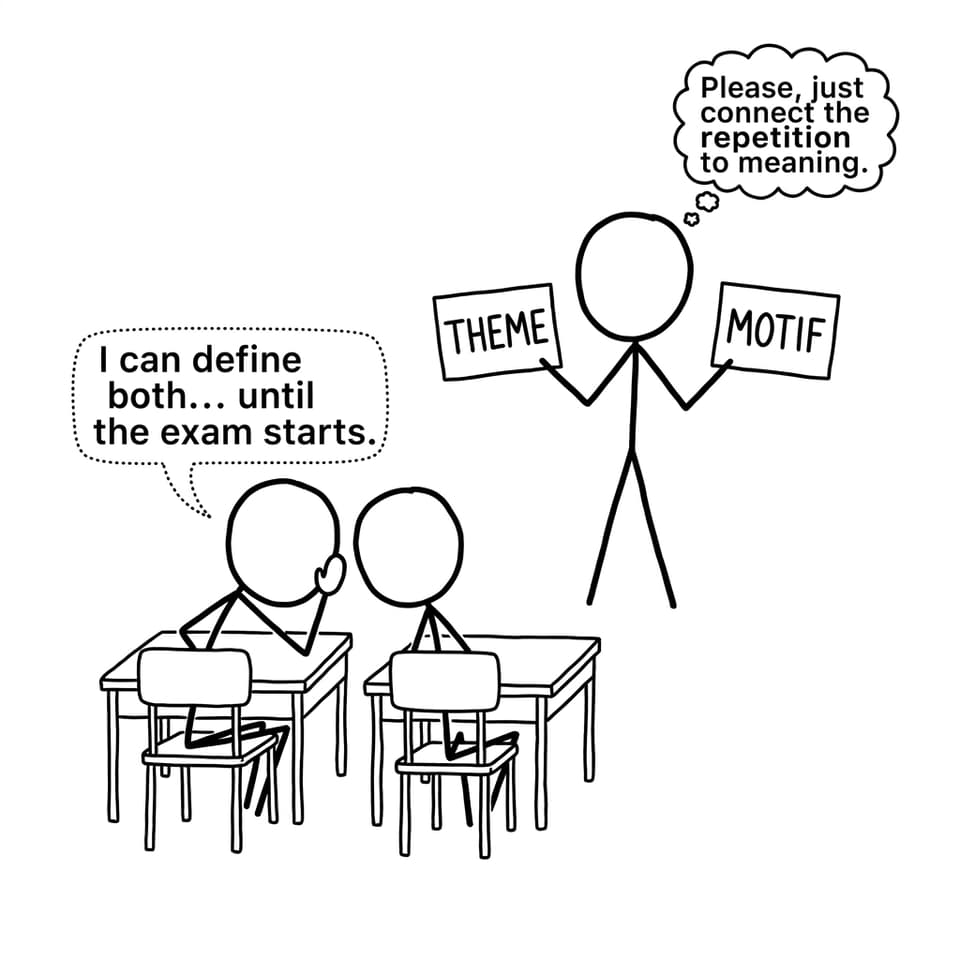
A motif is not the theme itself. It’s the repeated evidence trail that points toward theme.
If you want a quick foundation for related terminology, pair this guide with IB English: How to Define Theme in Literature and the LangLit notes on Symbolism vs. Motif.
Quick checklist: how to spot a motif fast
Use this when you’re preparing IB English Paper 1, Paper 2, or the Individual Oral:
-
Do you notice repetition (image, word, object, setting detail)?
-
Does the repetition happen at turning points (starts, endings, major decisions)?
-
Does it create a consistent tone (dread, tenderness, irony, confinement)?
-
Does its meaning shift as characters change or stakes rise?
-
Can you link it to authorial purpose (what response is the writer shaping)?
For a broader technique toolkit, keep Mastering Literary Devices in IB English Exams open beside your annotations.
Motif vs theme vs symbol (the distinction that earns marks)
Students lose marks in IB English when they treat key terms as synonyms. Examiners don’t need fancy vocabulary; they need accuracy.
Theme
A theme is the text’s central idea or claim about life, society, or human behaviour.
Motif
A motif is the recurring pattern that helps build that theme.
Symbol
A symbol is a specific object, image, or detail that stands for something beyond itself. A motif can include symbols, but it works through repetition.
If you want to strengthen this distinction in modern texts, read Symbolism and Motif in Modern Novels.
Examples of motifs (and what to do with them)
In IB English, examples matter because they show you can move from observation to interpretation.
-
In Macbeth, the motif of blood appears repeatedly to reinforce guilt, violence, and ambition. Each return makes the moral stain feel less removable.
-
In The Great Gatsby, the motif of eyes (including Dr. T.J. Eckleburg’s billboard) builds an uneasy sense of judgement, surveillance, and moral blindness.
Notice what makes these examples “IB-ready”: the motif isn’t just named. It’s connected to a theme and to an evolving effect on the reader.
To improve your close-reading speed, practise with Close Reading Techniques for Prose and Poetry and then test yourself using the IB English A Lang & Lit Paper 1 Questionbank.
How to write about a motif in IB English (a paragraph formula)
Here’s a clean method that works in IB English essays and the IO:
Identify the motif precisely
Name the recurring element (image, word, scene type). Quote or reference a moment.
Track how it functions in this moment
What does it do right now? Build mood? Reveal character psychology? Create irony?
Show how repetition changes meaning
A motif should develop. Explain how it grows heavier, darker, funnier, or more intimate as the text progresses.
Link to theme and authorial purpose
Finish with the “so what”: what idea does the motif push the reader toward, and why might the writer want that response?
If you’re preparing timed writing, pair this with IB English Paper 1: Best Ways to Prepare (Expert Guide) or the full IB English Paper 1 Success Guide.
Where motifs matter most in IB English assessments
-
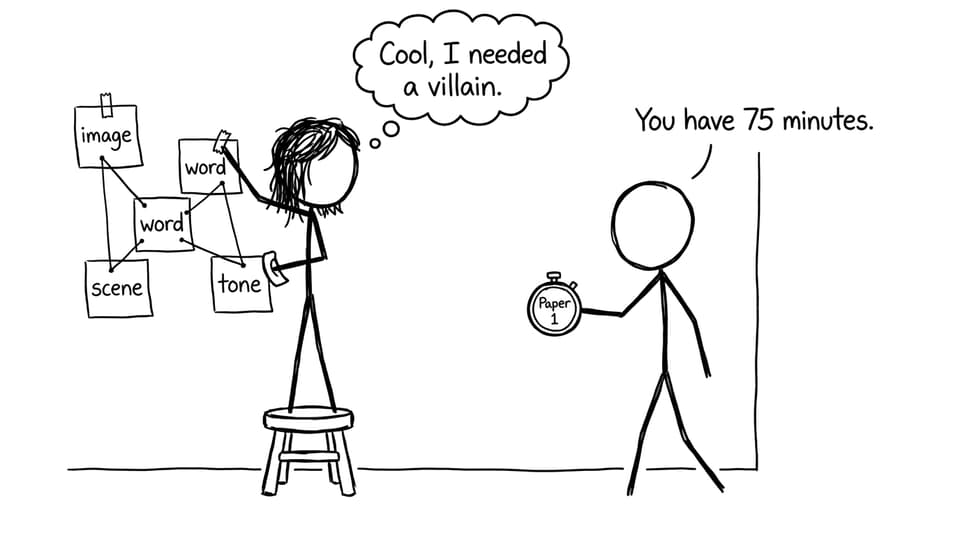
Paper 1: Motifs help you prove you can see patterns in language and structure, not just list devices. A recurring image can become your line of argument.
-
Paper 2: Motifs give you comparative material: how two authors repeat different details to build similar themes.
-
Individual Oral (IO): Motifs help you move from extract-level analysis to whole-text meaning, which is essential for a convincing global issue.
For IO planning support, use How to Approach the IB English Individual Oral (IO) Presentation and the broader IB Oral (IO) Guide: Language & Lit and Literature.
Closing: turn repetition into a score boost
Motifs are quiet on purpose. They reward the patient reader who notices what the text can’t stop saying.
If you want to turn motif spotting into consistent exam marks in IB English, build a weekly loop: practise with the Questionbank, review with Study Notes, lock patterns into Flashcards, and use AI Chat plus Grading tools to tighten your paragraphs. When you’re ready to simulate the real thing, RevisionDojo’s Mock Exams, Predicted Papers, Coursework Library, and Tutors make the jump from “I noticed something” to “I can defend an argument” much smaller.
For more targeted guidance across the course, start at IB English A Lang & Lit Resources and keep your IB English analysis anchored to patterns that actually repeat.


