
Metaphors are the moments a text stops being “about something” and starts doing something to you. You read a line, and suddenly the room changes temperature. That shift is not magic. In IB English, it’s craft you can name, track, and turn into marks.
A metaphor is one of the fastest ways writers compress big ideas into small phrases. And because IB English assessment rewards analysis of authorial choices, metaphor is a device you can repeatedly use to build confident claims in Paper 1, Paper 2, and the Individual Oral (IO).
What is a metaphor in IB English?
In IB English, a metaphor is a figure of speech that describes one thing as another to highlight shared qualities and reveal deeper meaning.
The simplest way to remember it is:
- Metaphor formula: A = B (no “like” or “as”)
Examples you can analyze quickly:
-
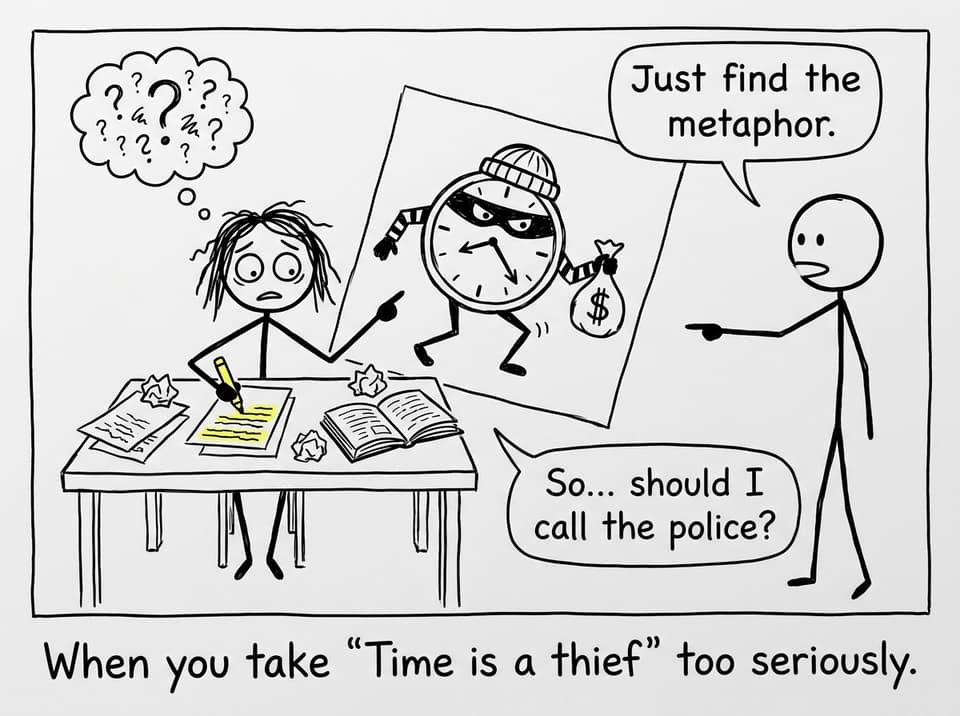
“Time is a thief.” Time is framed as something that steals what you value.
-
“All the world’s a stage.” Life is framed as performance, with roles, scripts, and audiences.
The exam move is not just spotting the metaphor. The exam move is explaining how the metaphor shapes tone, theme, and reader response.
A quick IB English metaphor checklist (use under pressure)
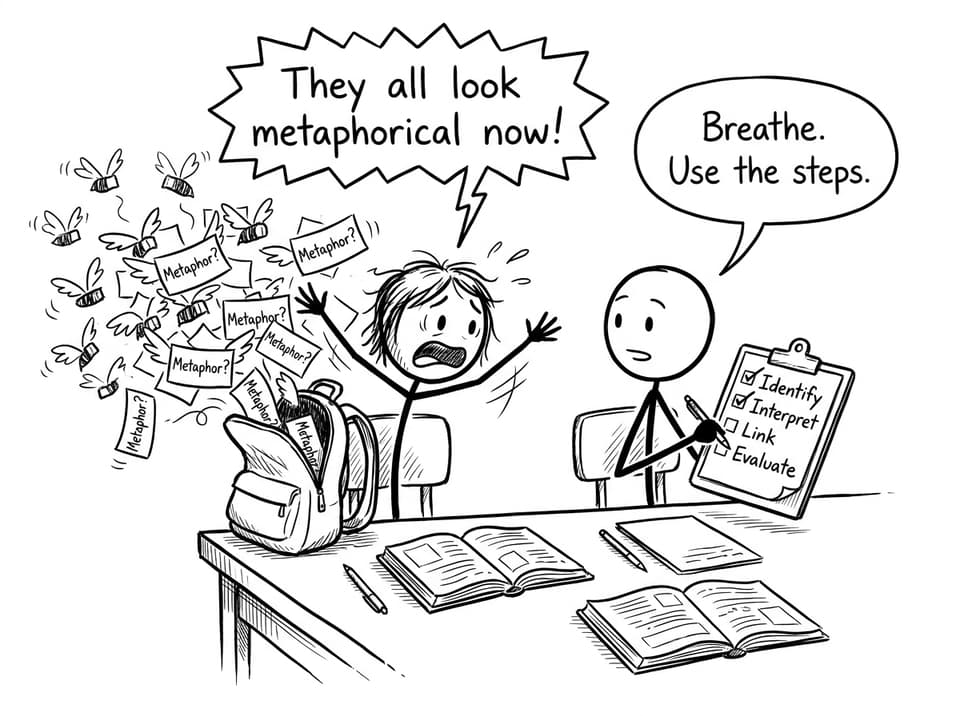
When you find a metaphor, run this short checklist:
-
Identify: What is being compared?
-
Translate: What is the literal situation?
-
Interpret: What abstract idea is being carried (power, loss, identity, control)?
-
Effect: What feeling does it create (admiration, dread, irony, tenderness)?
-
Link: How does this support your thesis or global issue?
If you want a broader method for turning devices into marks, pair this checklist with Mastering Literary Devices in IB English Exams.
Types of metaphor you should recognize in IB English
Metaphors show up in different shapes. Knowing the type helps you write with precision in IB English.
Direct metaphor
The comparison is stated clearly.
- Example: “Her voice is music.”
Implied metaphor
The comparison is suggested without naming it outright.
- Example: “He barked orders.” (implies dog-like aggression)
Extended metaphor
The comparison continues across multiple lines or an entire passage.
This is common in poetry, speeches, and dramatic monologues because it can build intensity and momentum.
Conceptual or allegorical metaphor
Sometimes the whole text operates metaphorically.
A fable, dystopia, or parable might be readable as plot and also readable as argument.
If you want to sharpen this skill, read Allegory and Extended Metaphor in Challenging Texts.
How to analyze a metaphor (the sentence structure examiners reward)
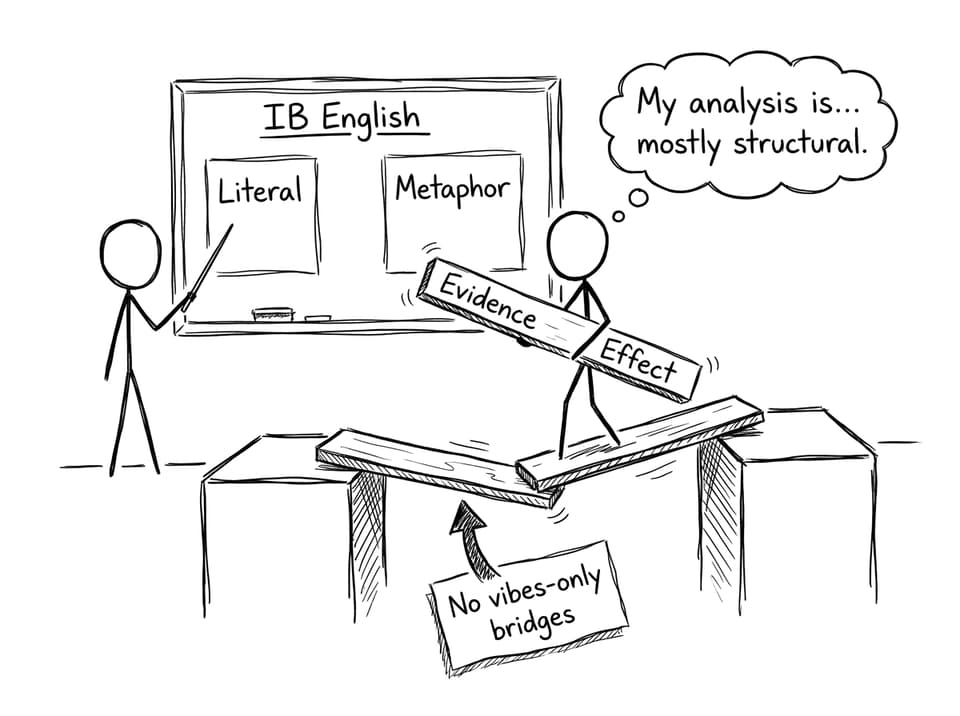
Many students write: “The author uses a metaphor.” In IB English, that’s the warm-up, not the workout.
Use a reliable sentence blueprint instead:
The metaphor of X frames Y as Z, creating a tone of ... and shaping the reader’s understanding of theme/global issue.
Example (adapt to your texts):
The metaphor “Time is a thief” frames ageing as theft, creating a quiet urgency and reinforcing the theme of loss.
This structure works beautifully inside a Paper 1 commentary, especially when paired with strong close reading. For a full approach, see Writing a Commentary for IB English A: Step-by-Step Guide and Close Reading Techniques for Prose and Poetry.
Where metaphors matter most: Paper 1, Paper 2, and the IO
Metaphor analysis travels well across the course.
-
Paper 1 (unseen analysis): Metaphors help you move from description to interpretation fast. Build your routine with Mastering IB English Paper 1 and Best Ways to Prepare for IB English Paper 1.
-
Paper 2 (comparative essay): Metaphors become comparative angles: does one author use light imagery to promise hope while another uses it to expose illusion? Start with Step-by-Step Guide to Comparative Literary Essays (Paper 2).
-
Individual Oral: Metaphors are often the cleanest bridge between extract-level detail and global issue-level meaning. Use How to Approach the IB English Individual Oral (IO).
How RevisionDojo helps you practice metaphor analysis
The hardest part of IB English is consistency: doing good analysis once is encouraging, but doing it repeatedly under time pressure is what changes grades.
RevisionDojo is built for that repetition without boredom. Use the Study Notes to lock in definitions and examples, then drill identification and explanation in the Questionbank. Turn your recurring mistakes into Flashcards. Stress-test interpretations with AI Chat. When you need clarity on criteria, lean on the Grading tools. And when exam season tightens, use Predicted Papers and Mock Exams to practice full responses end-to-end. If you want human feedback, Tutors can help you refine thesis statements and paragraph control.
Closing: turn metaphor into marks
Metaphor is not a hidden puzzle. It’s a writer showing you how to feel and how to think, at the same time. When you treat metaphors as evidence of authorial choice (not just pretty language), IB English becomes more predictable, and your essays start to sound inevitable.
If you want to make that skill automatic, build a simple practice loop on RevisionDojo: learn the device in Study Notes, drill it in the Questionbank, refine it with AI Chat, and measure it with the Grading tools. Do that often enough, and metaphors stop being intimidating lines to decode and become reliable levers you can pull in every exam response.