
A symbol rarely announces itself.
It just sits there: a green light, a conch, a color repeated too often to be accidental. And then, right when you try to summarize the plot, that detail refuses to stay small. That’s symbolism.
In IB English, learning to analyze a literary symbol is one of the cleanest ways to move from “I understood the story” to “I can prove what the writer is doing.” Examiners don’t reward treasure-hunting. They reward pattern + interpretation + evidence.
What is a literary symbol in IB English?
A literary symbol is a person, object, image, setting detail, or event that points beyond its literal role to represent an abstract idea, like power, freedom, corruption, identity, or hope.
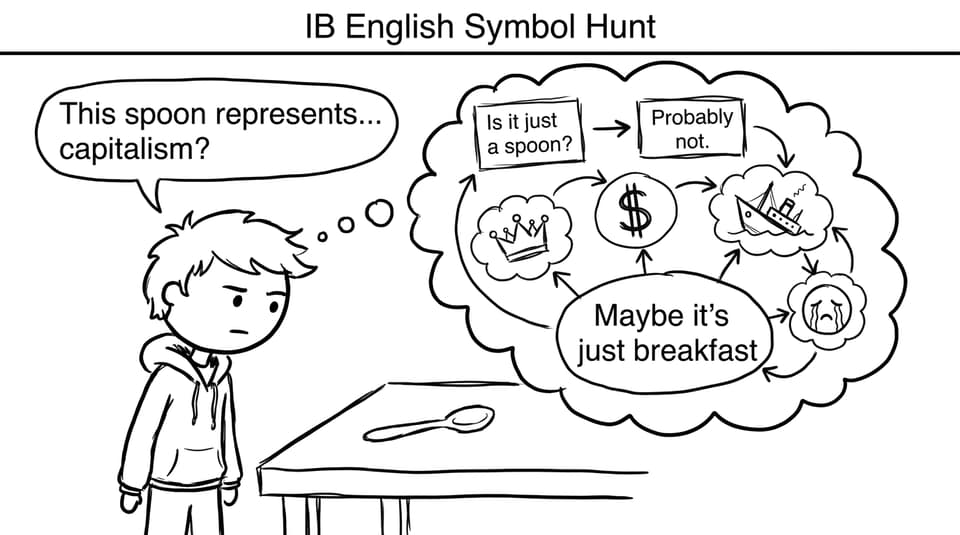
The best way to keep your IB English analysis accurate is to remember this: a symbol becomes a symbol because the writer treats it as meaningful. That usually happens through repetition, contrast, placement at key moments, or a shift in how characters react to it.
If you’re building your foundations for Paper 1, it helps to pair symbolism with other devices (tone, imagery, diction). The quickest way to tighten your toolkit is to revise techniques alongside a method like the one in Mastering Literary Devices in IB English Exams.
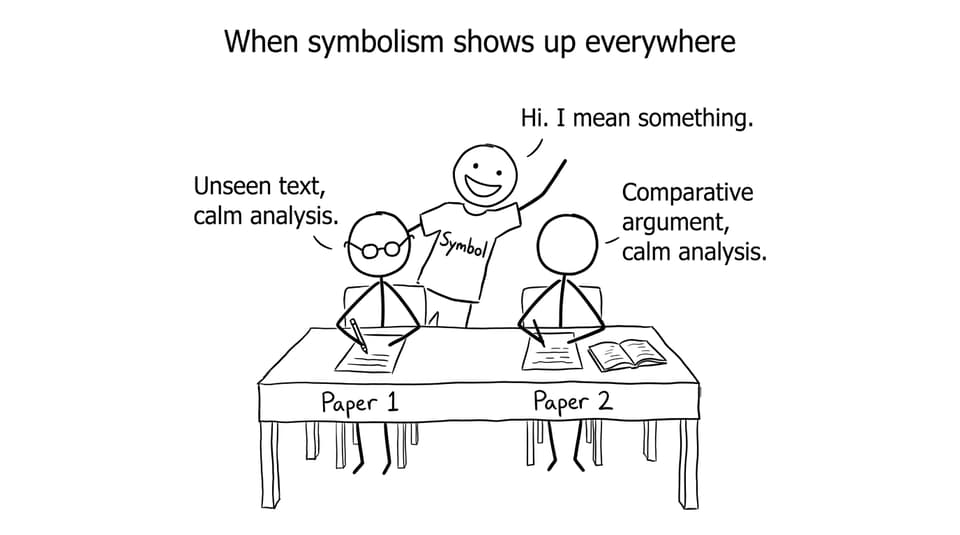
Symbolism quick checklist (Paper 1, Paper 2, IO)
Use this checklist every time you spot a possible IB English symbol:
-
What is the literal object/image doing in the scene?
-
Where does it repeat or get emphasized?
-
What abstract idea does it suggest (theme, emotion, ideology)?
-
Does the meaning change across the text?
-
How does it connect to authorial purpose and context?
-
Which 1-2 quotations anchor your claim?
For timed practice, you can combine this with the planning routine in Step-by-Step Guide to Revising IB English Paper 1.
Types of literary symbols (and how to spot them)
Conventional symbols
These are culturally shared symbols with common associations. They’re useful in IB English, but only if you still tie them to your text.
Examples:
-
Dove = peace
-
Crown = authority
-
Red = passion, danger, or shame (depending on context)
Conventional doesn’t mean “automatic marks.” Your job is to show how the writer uses the convention: do they reinforce it, complicate it, or subvert it?
Contextual (authorial) symbols
These symbols gain meaning primarily inside the text. The same object in another story might mean nothing.
Examples (classic IB-friendly ones):
-
The Great Gatsby: the green light as longing, illusion, and the unreachable future.
-
Lord of the Flies: the conch shell as fragile order and social authority.
Contextual symbols are where top-band IB English analysis often lives, because you can prove meaning through patterns, not guesses.
How to analyze a symbol (the method examiners reward)
When you write about symbolism in IB English, aim for a chain of reasoning: technique leads to effect, which leads to meaning and purpose.
Identify and ground it
Name the symbol and describe its literal role. Keep this brief. You are not summarizing.
Track pattern and change
Ask: does the symbol appear at turning points? Does it evolve? Does it darken, break, disappear, get mocked, get idealized?
Link to theme and authorial purpose
Now connect the symbol to what the text argues about human experience (identity, power, belonging, fear, ambition). If you’re practicing Paper 1 unseens, the “why” is often purpose and audience; a strong companion guide is How to Analyze Language and Style in Unseen Texts (Paper 1).
Write a high-scoring sentence
Try this flexible template:
“The recurring image of X functions literally as Y, but symbolically it represents Z, reinforcing the text’s concern with bigger idea by making the reader feel/notice effect.”
Want a deeper symbolism-specific walkthrough? See IB English: How to Analyze Symbolism in Literary Texts.
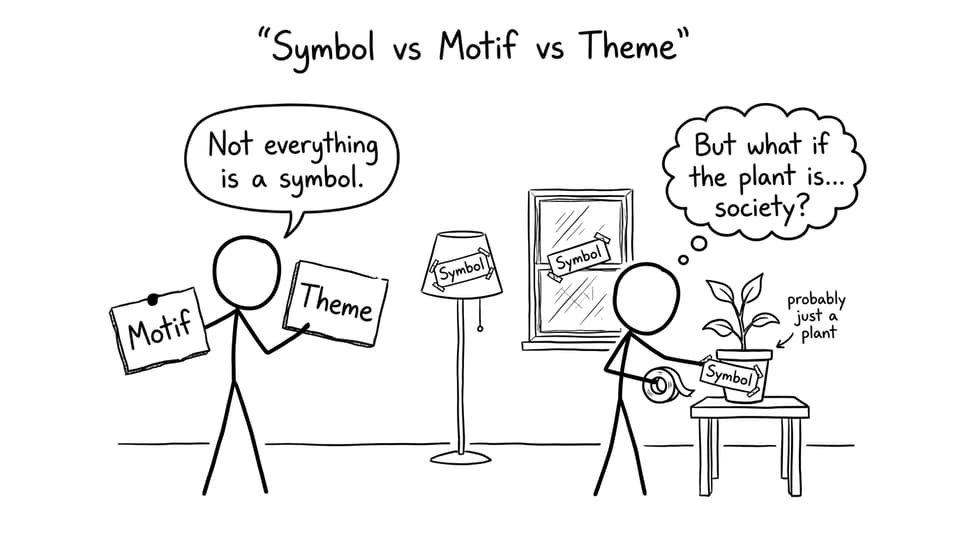
Symbol vs motif vs theme (don’t mix them up)
In IB English, these terms are connected but not interchangeable:
-
Symbol: a concrete detail that carries abstract meaning.
-
Motif: a repeating element that builds a pattern (and can include symbols).
-
Theme: the text’s central idea or insight.
A motif can contain symbols. A symbol can support a theme. But if you call everything a symbol, your analysis gets vague fast.
Where symbolism matters most in IB English assessments
Symbolism pays off across the course:
-
Paper 1: symbols help you build a thesis from small details without summarizing. Use How to Write a Literary Commentary for Paper 1 as your structure anchor.
-
Paper 2: symbols give you sharp comparison points (how each author “stores” meaning differently). Review Understanding the IB English A Literature Paper 2 Exam Structure.
-
IO: symbols are excellent evidence for global issues, especially identity, power, and control. Use IB Oral (IO) Guide to connect technique to global issue cleanly.
How RevisionDojo helps you practice symbolism (without guessing)
Symbolism gets easier when you practice it like a routine, not a talent.
RevisionDojo’s IB English ecosystem is built for that: the Questionbank gives you exam-style prompts, Study Notes and Flashcards keep definitions precise, and AI Chat helps you test interpretations against evidence. When you draft, Grading tools can flag where you’re drifting into summary. When you’re building stamina, Mock Exams and Predicted Papers help you rehearse under realistic timing. And if you need human feedback, Tutors can help you turn “I think it means…” into a defensible argument.
Start with the hub: IB English A Lang & Lit Resources.
Final takeaway: treat symbols like evidence, not riddles
Symbols are where writers hide the loudest ideas inside quiet details. If you can spot a pattern, prove it with language, and explain its purpose, you’re doing real IB English analysis.
When you’re ready to practice symbolism systematically, use RevisionDojo’s IB English resources, from Questionbank drills to grading tools and IO planning support, so your interpretations stay bold, but never baseless.