Join 650k+ students breezing through the IBReady to breeze through the IB?
A quiet moment happens in most IB Design Technology classrooms: you look at your project, then at the real world, and you wonder where this actually goes.
Not in a vague, motivational way. In a practical way.
What careers does IB Design Technology prepare you for?
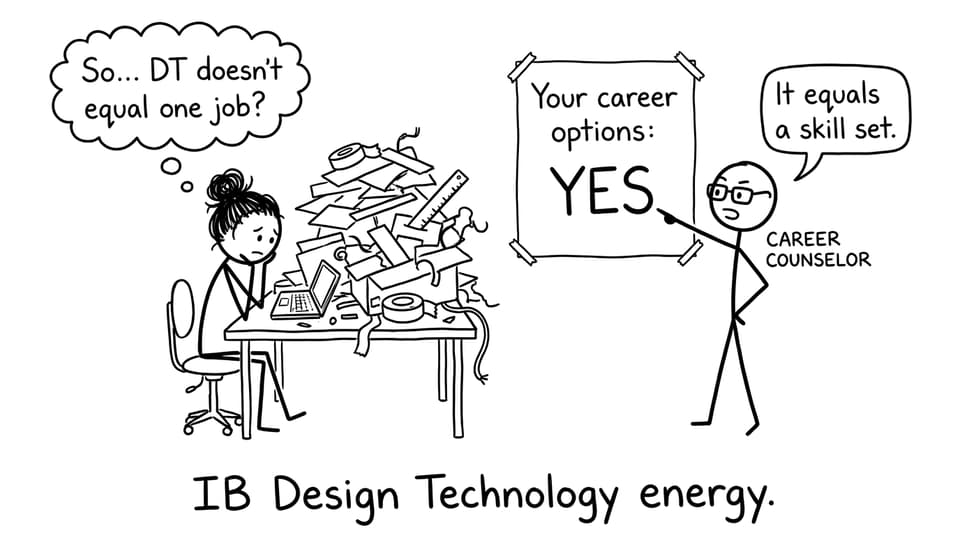
The honest answer is also the reassuring one: IB Design Technology rarely points to one job title. It points to a repeatable way of thinking that employers recognize instantly when it’s explained well: define a user problem, generate options, test constraints, iterate, evaluate, and communicate decisions.
IB Design Technology energy comic
Quick checklist: the career skills IB Design Technology builds
If you can do these under exam pressure, you can do them in a surprising number of careers. IB Design Technology trains you to:
Spot real needs (not just “cool ideas”) using user-centred research
Translate needs into requirements and measurable success criteria
Model and prototype to reduce risk before committing time and money
Evaluate trade-offs (cost vs sustainability, strength vs weight, aesthetics vs usability)
Explain decisions clearly using structured reasoning
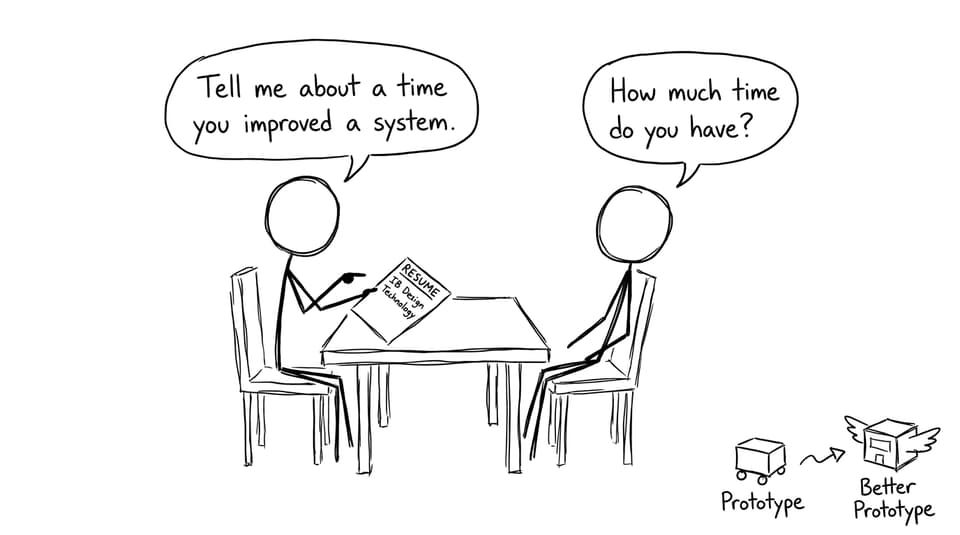
When you revise, you’re not only collecting marks. You’re collecting stories you can later use in applications and interviews.
Why IB Design Technology doesn’t map to one career
Some subjects behave like direct pipelines. IB Design Technology is more like a toolkit.
That can feel unsettling at first. But it’s also why the subject stays useful even when the world changes. Tools don’t expire as quickly as job titles do.
If you want a strong home base for your revision and topic coverage, start from the IB Design Technology Resources hub and use it like a map: notes when you’re learning, then practice when you’re ready to perform.
Engineering and technical pathways
Many students choose IB Design Technology because they can feel engineering in it: constraints, systems, testing, and improvement.
Career directions that pair well with IB Design Technology include:
Mechanical, product, or systems engineering (often alongside Maths and Physics)
Manufacturing and production engineering
Mechatronics and hardware development support roles
Your advantage is not that you “know engineering already.” It’s that you’re comfortable with how engineering decisions are justified: evidence, constraints, and iteration.
To tighten this skill for exams, you can drill topic-specific practice using the IB Design Technology Questionbank and learn the language examiners reward.
Architecture, built environment, and sustainable design
Architecture is not only about beautiful drawings. It’s about human experience inside constraints: space, materials, climate, cost, and safety.
IB Design Technology prepares you for architecture-adjacent futures because it builds:
user-centred thinking (who is this for, and why?)
contextual design (what does this environment force you to do?)
evaluation (what do we gain, and what do we sacrifice?)
Possible career pathways include:
Architecture and urban design
Sustainable building and environmental design
Construction project coordination and planning
A useful revision move is to strengthen your materials reasoning. RevisionDojo’s Properties of Materials notes are a fast way to build exam-ready explanations you can reuse across questions.
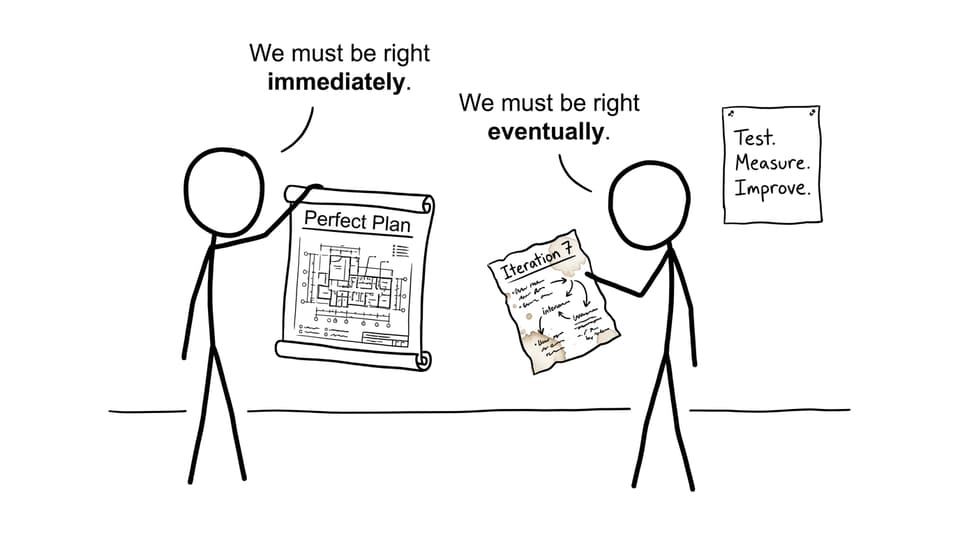
Iteration vs perfection comic
Product design, industrial design, and design consultancy
This is the most obvious family of careers, but it’s worth being precise: professional design is rarely “pure creativity.” It’s functional creativity under constraints.
IB Design Technology builds the habits used in:
Product design and industrial design
Design research and prototyping roles
Design consultancy work (where clear documentation matters)
If your IA has felt like a long, messy story, that’s not a flaw. It’s training. What matters is learning to show your thinking in a structured way.
Here’s the twist students often miss: IB Design Technology is business-relevant because the design cycle mirrors how products are built and improved in real markets.
Careers this supports include:
Product management and product development
Innovation roles inside companies
Entrepreneurship and early-stage startups
The DT advantage is your comfort with uncertainty. You can test assumptions, measure feedback, and iterate without turning every change into a crisis.
UX, digital product roles, and tech-adjacent careers
IB Design Technology isn’t a coding course. But many tech teams don’t need everyone to code. They need people who can translate human needs into good decisions.
That’s why IB Design Technology can align with:
UX research and UX design
Digital product strategy
Service design and systems improvement
The shared language is user needs, testing, iteration, and evaluation.
Closing: IB Design Technology keeps your options open
The best part of IB Design Technology is that it doesn’t force your future into a single lane. It gives you a repeatable way to face unfamiliar problems without freezing: define, design, test, improve.