


When you choose IB Group 6 Arts, you’re not just picking a subject. You’re choosing a rhythm. Some weeks feel like calm studio time; others feel like sprinting between rehearsal clips, reflection paragraphs, and a deadline that somehow arrived early.
The question most students ask is simple: what are the differences between HL and SL in Group 6? The answer is also simple, but not always comfortable: HL and SL are the same course in spirit, but not in depth, volume, and expectation. And those differences quietly shape your entire exam season.
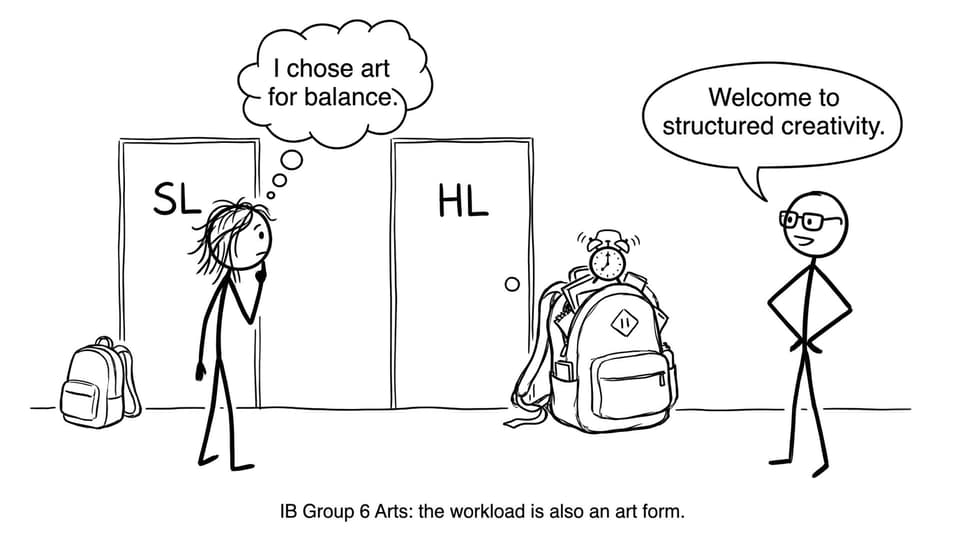
HL vs SL in IB Group 6 Arts: the quick checklist
Use this as your fast filter before you commit (or before you panic and try to switch).
-
Teaching time: HL is about 240 hours; SL is about 150 hours.
-
Portfolio/performance scope: HL typically requires more evidence and more development.
-
Reflection and analysis: HL asks for stronger justification, context, and synthesis.
-
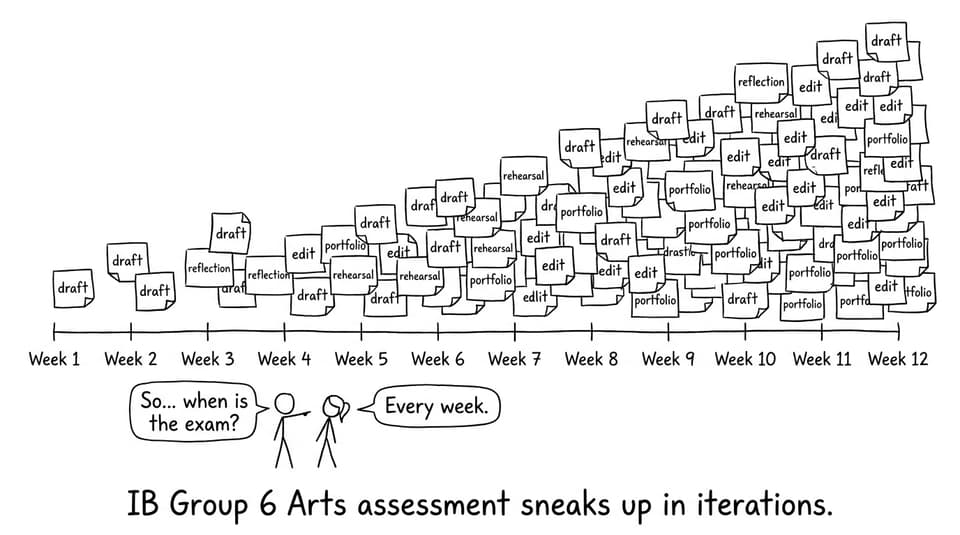
Assessment pressure: in IB Group 6 Arts, assessment often feels “always on” because process is graded.
-
University signaling: HL can matter more for creative degrees (portfolio/audition focused paths).
If you need the bigger IB picture (how HL/SL fits into your six-subject plan), read New Students: How Many IB Subjects Do You Take?.
What “HL” really means (and why it feels heavier)
In most subjects, HL means more content. In IB Group 6 Arts, HL usually means more iterations.
That’s the part students underestimate. You don’t just produce a bigger final outcome; you produce more drafts, more experiments, more commentary, and more moments where you have to explain why your choices were smart.
It’s useful to think of SL as proving you can create effectively and reflect clearly. HL is proving you can do that, plus show range, depth, and intentional development across a longer arc.
If you’re still deciding whether the arts fit your overall goals, Choosing Your Group 6 Subject: A Comprehensive Guide helps you match each subject to your strengths.
IB Group 6 Arts subject-by-subject: where HL and SL diverge
Different arts subjects express HL vs SL differently, but the pattern stays consistent: HL adds breadth and demands sharper thinking.
Film: longer work, wider analysis
Film is one of the clearest examples of HL being “the same, but more.” Typical differences include:
-
SL: a shorter film project (often around 4-5 minutes), analysis of fewer films in independent study, and a shorter oral component.
-
HL: a longer film project (often around 6-7 minutes), analysis of more films, and a longer oral component.
If you’re torn between Film and another pathway, IB Film vs IB Theatre: Which Group 6 Subject Is Right for You? is a grounded comparison.
Visual Arts: deeper documentation and a bigger body of work
Visual Arts is studio practice plus proof of thinking. At both levels, you’re judged on how you develop ideas, not just whether the final piece looks impressive.
HL typically asks for a broader portfolio and more explicit evidence of development. In many schools, HL students also face added reflective or interview-style requirements (or longer written reflection expectations), which makes the documentation side feel heavier.
For a clean overview of what’s actually required, use Requirements for IB Visual Arts.
Theatre, Music, Dance: more performance evidence and longer investigations
In performance-based IB Group 6 Arts, HL often means:
-
longer or more demanding research investigations
-
extended performance/composition requirements
-
additional reflective components and higher expectations for cultural and theoretical context
The difference isn’t just time on stage. It’s the demand to connect practice to artistic intention in a way that holds up under rubric language.
If you want to see how arts assessment “feels” compared to other subjects, read How Do IB Group 6 Assessments Compare to Other Groups?.
The workload truth: HL vs SL is a planning problem
HL isn’t automatically “too hard.” It’s just less forgiving of last-minute energy.
A realistic weekly plan helps. For pacing ideas, see How Many Hours a Week Should You Study for IB Group 6?. And if you’re considering doubling down on the arts, Is It Better To Take Only One Group 6 Subject Or More? is a calm reality check.
This is where RevisionDojo becomes more than advice. Students use RevisionDojo’s Study Notes to clarify terminology and context, then build weekly momentum with Flashcards for key vocabulary, a Questionbank for any written components, and AI Chat to test whether their reflections actually answer the criterion. When grades feel mysterious, the Grading tools make the rubric concrete. And when deadlines bunch up, Mock Exams and Predicted Papers help you rehearse exam conditions without guessing what matters.
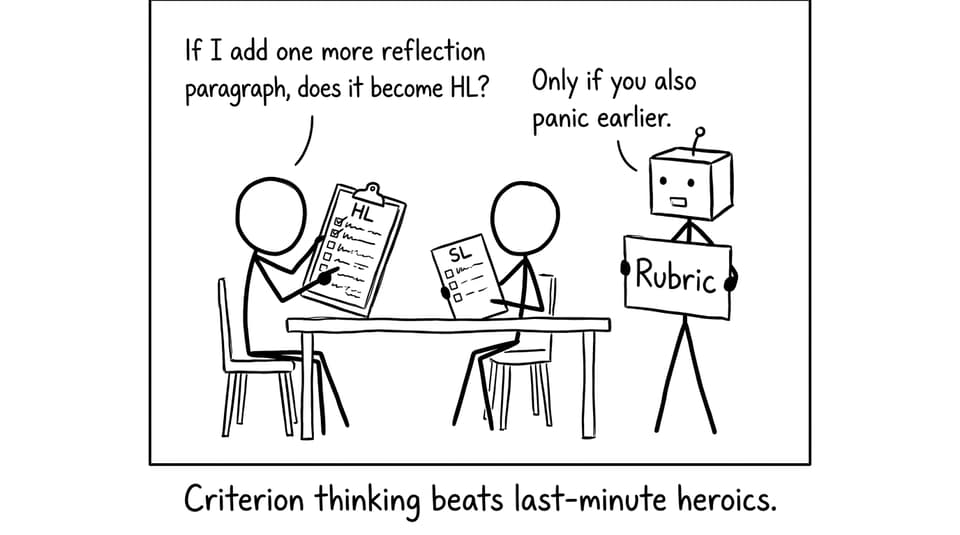
How to choose HL or SL in IB Group 6 Arts
Choose HL if:
-
your university plan is portfolio or audition heavy
-
you want time to develop a coherent artistic voice
-
you can handle a longer cycle of making, feedback, and revision
Choose SL if:
-
you want IB Group 6 Arts as balance, not as your main identity
-
your other HLs are already time-intensive
-
you work best with tighter scope and fewer long projects overlapping
If you’re picking HLs overall (not just Group 6), How Do I Choose My HL Subjects Wisely? helps you decide without regret.
Closing: make the level work for you
The best way to think about HL vs SL in IB Group 6 Arts is this: SL is a disciplined introduction to artistic thinking; HL is a longer proof of identity, range, and reflection.
If you want the choice to feel calmer, build your plan around evidence, not vibes. Use RevisionDojo to keep everything visible: store exemplars in the Coursework Library, practice criterion language with AI Chat, check progress with Grading tools, and keep momentum with Study Notes and Flashcards. When exam season arrives, you’ll want your work to feel like a portfolio you built on purpose, not a pile you survived by accident.