
The night before an IA is due, formatting stops being “a detail” and starts feeling like the whole assignment.
You’ve done the thinking. You’ve collected data or sources. You’ve built an argument. And then your document starts asking petty questions: Footnote or in-text? Where does the comma go? Why are half my citations in one style and the other half… invented?
A clean IA doesn’t just look nicer. It signals academic honesty, makes your reasoning traceable, and helps an examiner trust you faster. The good news: most IA citation stress comes from one fixable problem, not choosing a standard style early, then sticking to it.
IA formatting and citation: a quick checklist
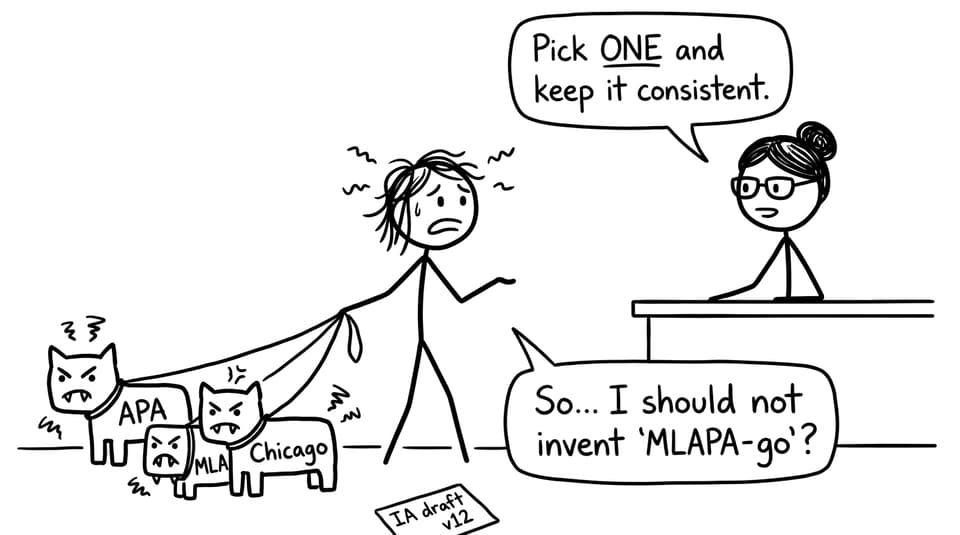
Before you polish your IA, run this quick “calm, boring, effective” checklist:
-
Choose one citation style (Chicago, APA, or MLA are the usual choices).
-
Use that same style for in-text citations/footnotes and the final reference list.
-
Cite quotes, paraphrases, data, images, graphs, and tables.
-
Make sure every in-text citation or footnote matches an entry in the references (and vice versa).
-
Keep formatting consistent: headings, figure captions, page numbers, spacing.
If you want a deeper system, keep How to Cite Sources Correctly in Your IA open while you edit.
Why formatting matters in an IA (more than students expect)
In IB coursework, marks aren’t only about having ideas. They’re about showing your process clearly enough that someone else can follow it.
That’s what formatting and citation do in an IA: they make your work checkable. If a reader can’t trace where your statistics came from, or which historian supports your claim, your analysis feels less reliable even when it’s strong.
This is also why “small” slips can quietly hurt: inconsistent citation style, missing page numbers for quotations, or figures without sources. If you’re unsure what examiners tend to penalize, scan Common Formatting Errors That Lower IA Marks.
Common citation styles used in an IA
The IB doesn’t force one universal citation style for every subject. Schools and departments often set preferences. When they don’t, you choose a recognized style and apply it consistently across the IA.
Chicago style (common in History and some humanities)
Chicago is popular when your IA relies heavily on source work and you want precise, readable referencing.
Chicago typically appears in two systems:
-
Notes and Bibliography: uses footnotes/endnotes plus a bibliography
-
Author-Date: uses in-text citations plus a reference list
Example (Notes and Bibliography)
-
Footnote: John Doe, Title of the Book (City: Publisher, Year), 23.
-
Bibliography: Doe, John. Title of the Book. City: Publisher, Year.
If you’re writing History, this pairs well with the practical guidance in How to Reference Properly in Your IB History IA.
APA style (common in Psychology and social sciences)
APA is built for research writing where dates and publication years matter (because ideas develop over time).
Key features:
-
In-text citations use author + year (and page for direct quotes)
-
A reference list gives full publication details
Example
-
In-text: (Doe, 2024, p. 23)
-
Reference list: Doe, J. (2024). Title of the Book. Publisher.
MLA style (common in English and literature-heavy subjects)
MLA is often used when your IA centers on close analysis of texts, where page numbers guide the reader straight to passages.
Key features:
-
In-text citations use author + page number
-
A Works Cited page lists sources
Example
-
In-text: (Doe 23)
-
Works Cited: Doe, John. Title of the Book. Publisher, Year.
How to choose the right IA citation style
Choosing a style is less about personality and more about context.
-
Follow your teacher/department first. If they say “use APA,” that’s the decision.
-
Match the subject norms. History often leans Chicago; social sciences often lean APA; literature often leans MLA.
-
Choose what you can execute consistently. The “best” style is the one you can apply correctly for every source in your IA.
When in doubt, look at real models. The fastest way is browsing IB Coursework Examples: IA, EE and TOK Exemplars and noticing how strong work handles citations in captions, quotations, and reference lists.
Practical tips to keep your IA clean (without losing a weekend)
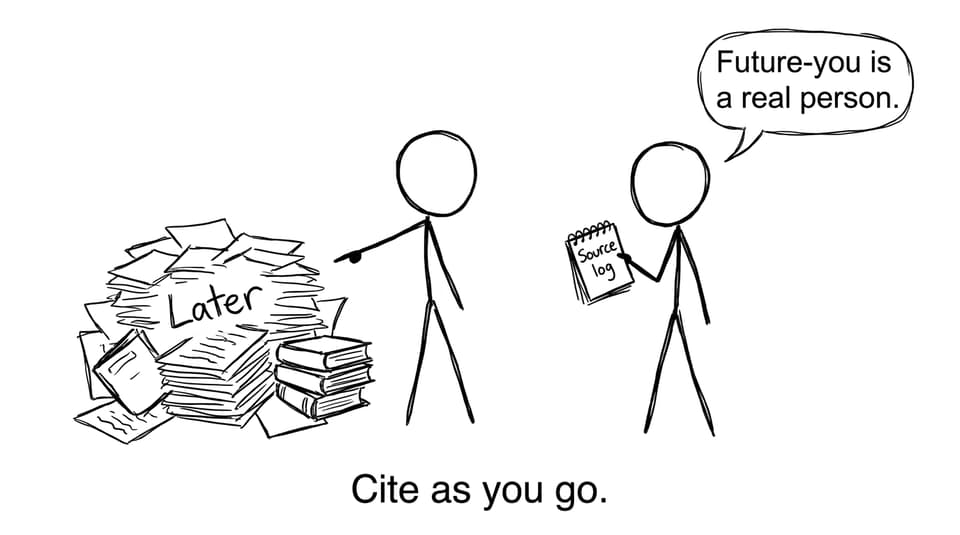
Build a “source log” while you research
Don’t wait until the end. In an IA, the last-minute bibliography is where mistakes multiply. Keep a running list of sources, including page numbers and access dates.
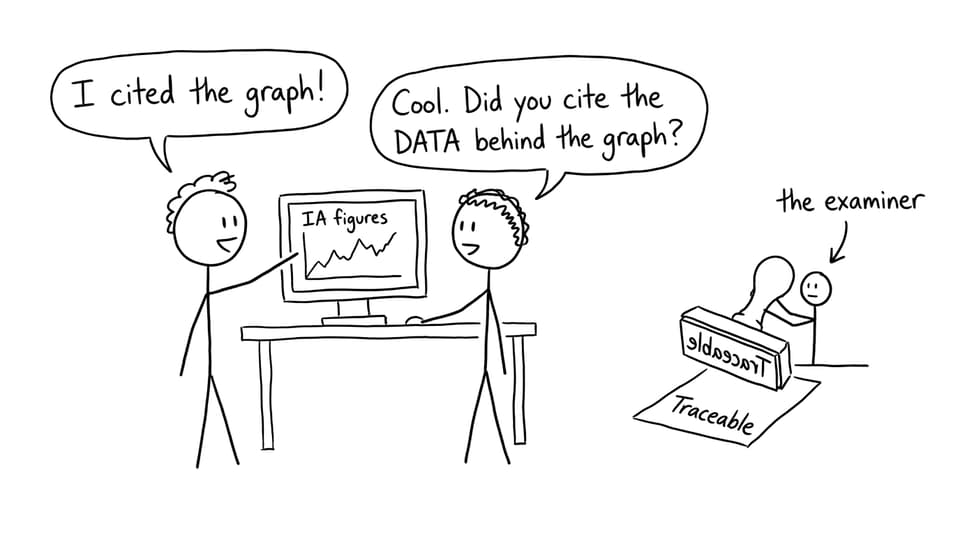
Cite visuals the same way you cite words
A common IA trap: you cite the graph image but not the dataset behind it. In captions, include the source clearly, and ensure it appears in your final references.
Use tools, then proofread like a human
Citation generators can save time, but they can also output weird formatting. Treat them as a draft. Then manually check your commas, italics, capitalization, and missing details.
For presentation polish, borrow from subject-specific guidance like How to Format and Present Your IB Math IA Professionally and How to Create a Strong IA Title Page and Presentation.
Closing: make your IA easy to trust
A strong IA feels calm on the page. Not because it’s simple, but because it’s traceable: your claims point to evidence, your evidence points to sources, and your sources are formatted in one consistent system.
If you want to tighten your IA faster, use RevisionDojo as your home base: browse the Coursework Library for models, refine drafts with the Grading tools, ask AI Chat for citation edge cases, and keep grades rising alongside coursework with Mock Exams and Predicted Papers. Then choose a citation style, commit to it, and let your IA look as serious as your thinking.