
The quiet moment Paper 2 begins
The room goes still, and suddenly your two studied works feel heavier than they ever did in class. In IB English, Paper 2 can feel like that: no extract to lean on, just memory, judgment, and the discipline to compare rather than retell.
That’s why understanding the IB English Paper 2 criteria matters more than any single quote you memorised. The criteria are the examiner’s lens. If you write with that lens in mind, your essay becomes easier to plan, faster to draft, and much harder to derail.
If you want a broader view of the exam itself, pair this with Understanding the IB English A Paper 2 exam structure and the IB English Paper 2 essential guide.
Paper 2 criteria overview (save this checklist)
Before you write a single paragraph in IB English, run this quick rubric checklist:
-
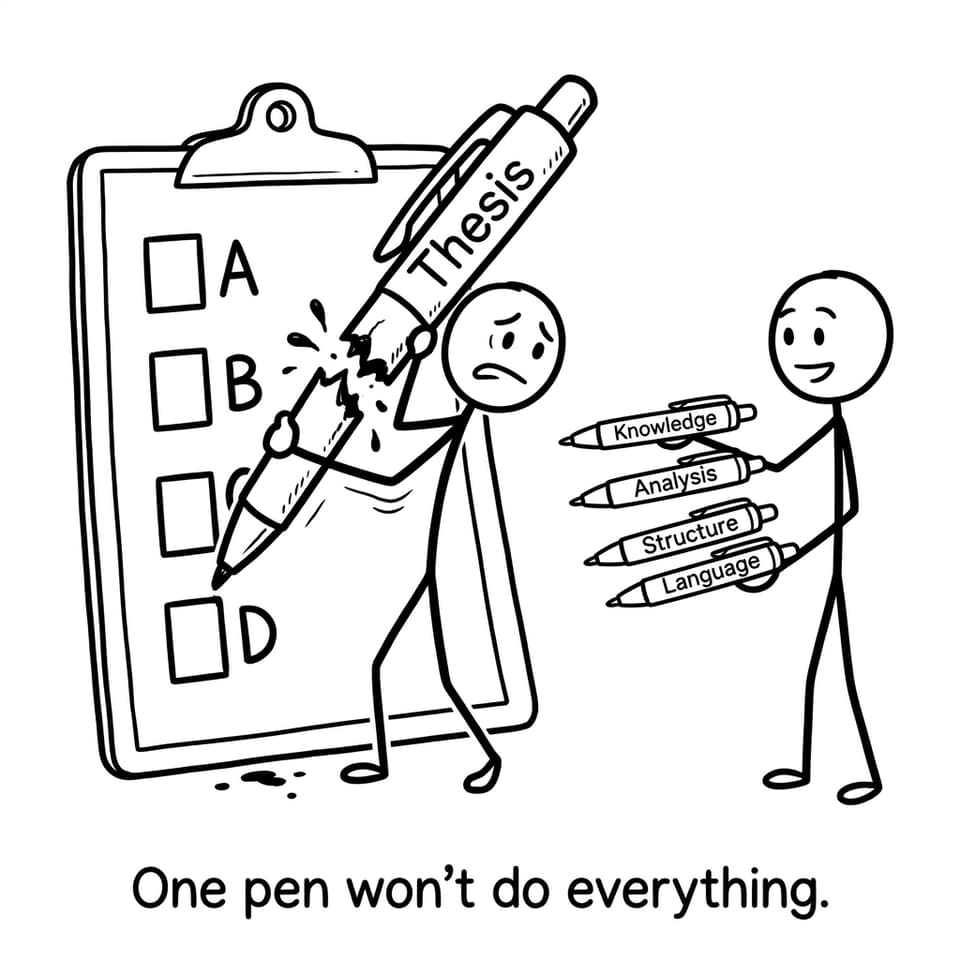
Criterion A (Knowledge and interpretation): Do I clearly understand both works and the prompt?
-
Criterion B (Analysis and evaluation): Do I explain how writers create meaning (methods), and why it matters?
-
Criterion C (Focus and organization): Does my comparison develop logically, with balance across both texts?
-
Criterion D (Language): Is my writing clear, formal, and controlled under time pressure?
For a full cross-task rubric mindset (IO, HL Essay, Paper 1, Paper 2), see How to understand and apply the IB English assessment rubrics.
Criterion A in IB English: knowledge that becomes interpretation
Criterion A rewards accurate, relevant knowledge of both works, but the real word is interpretation. In IB English, high marks come from choosing details that prove an argument, not showing you remember everything.
What usually earns top-band marks:
-
You answer the whole question (especially “to what extent” or “in what ways”).
-
You show confident understanding of characters, themes, and key turning points.
-
You link context when it genuinely clarifies meaning (not as a detached history note).
-
You compare from the start, rather than building two separate mini-essays.
A useful self-check: if your paragraph could be written without naming specific moments from each work, your knowledge is floating. In IB English, Criterion A is strongest when your references feel inevitable, like the argument could not exist without them.
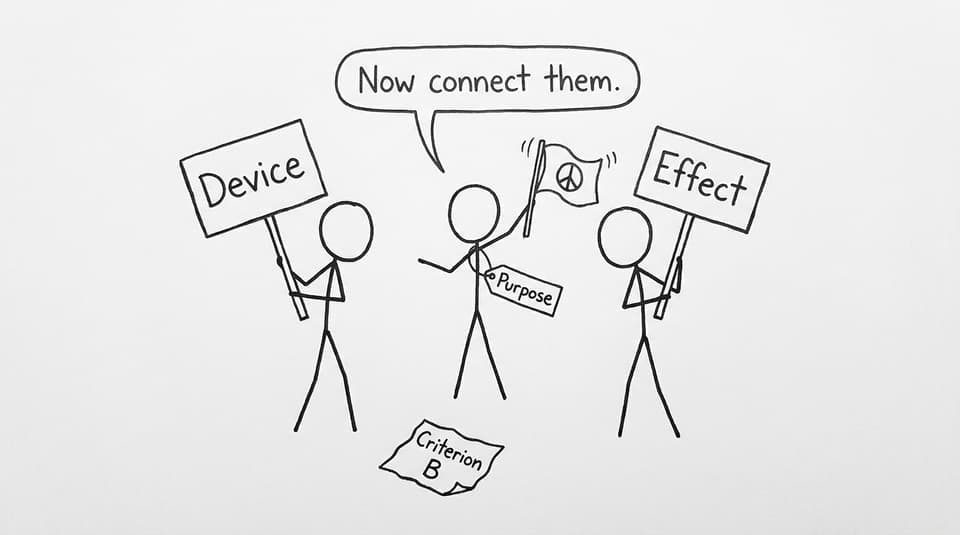
Criterion B in IB English: device + effect + purpose (then compare)
Criterion B is where many IB English essays either lift off or stall out. Examiners are looking for analysis of authorial choices: language, structure, tone, narrative perspective, symbolism, stagecraft, and more.
A dependable method is:
-
Device/choice: what the writer does
-
Effect: what it does to meaning/reader
-
Purpose: why that matters in relation to the prompt
-
Comparison: how the other work aligns or clashes
Two traps to avoid in IB English Criterion B:
-
Feature spotting: listing techniques without explaining their impact.
-
Quote dumping: adding long quotations instead of selecting short, precise evidence and unpacking it.
To build practice that trains real Criterion B thinking, use the IB English A Lang & Lit Paper 2 Questionbank or start from the IB English A Lang & Lit Questionbank hub.
Criterion C in IB English: focus, organization, and comparative development
Criterion C is the “invisible” criterion that changes how an examiner experiences your essay. In IB English, even great ideas can feel weaker if the organization is lopsided or the comparison arrives late.
Strong Criterion C usually means:
-
A thesis that answers the prompt and states a relationship between the two works.
-
Body paragraphs organized by idea (theme/method/perspective), not by text.
-
Topic sentences that are comparative by design.
-
Clear transitions that keep the essay’s line of inquiry moving.
If you tend to lose structure under the clock, borrow planning habits from IB English Paper 2 under time pressure.
Criterion D in IB English: language that signals control
Criterion D is not about sounding “fancy.” It’s about clarity, precision, and an academic register that stays steady even when you’re tired.
In IB English, strong Criterion D often looks like:
-
Specific verbs: suggests, complicates, exposes, undermines, reinforces.
-
Consistent tense and accurate quotation integration.
-
Varied sentence rhythm without becoming unclear.
-
Paragraph endings that link back to the question.
A practical tactic: when you write “this shows,” pause and ask “shows what, exactly?” Then replace it with a more precise claim.
A practical Paper 2 routine (built around the criteria)
Use this short routine to make the IB English criteria feel automatic:
-
10 minutes plan: choose a prompt that allows clear contrasts.
-
Thesis in one sentence: claim + both works + key comparison.
-
3 comparative paragraphs: each with device/evidence from both texts.
-
2-3 micro-quotes per paragraph: short and embedded, then analysed.
-
Final 5 minutes: check balance (both works throughout), tighten topic sentences, correct obvious errors.
For theme-driven practice materials and model structures, explore IB English HL/SL Paper 2 sample papers and exemplar responses notes and the Notes for English Lit Paper 2 Essay.
Common mistakes that quietly cap your marks
These patterns show up again and again in IB English Paper 2:
-
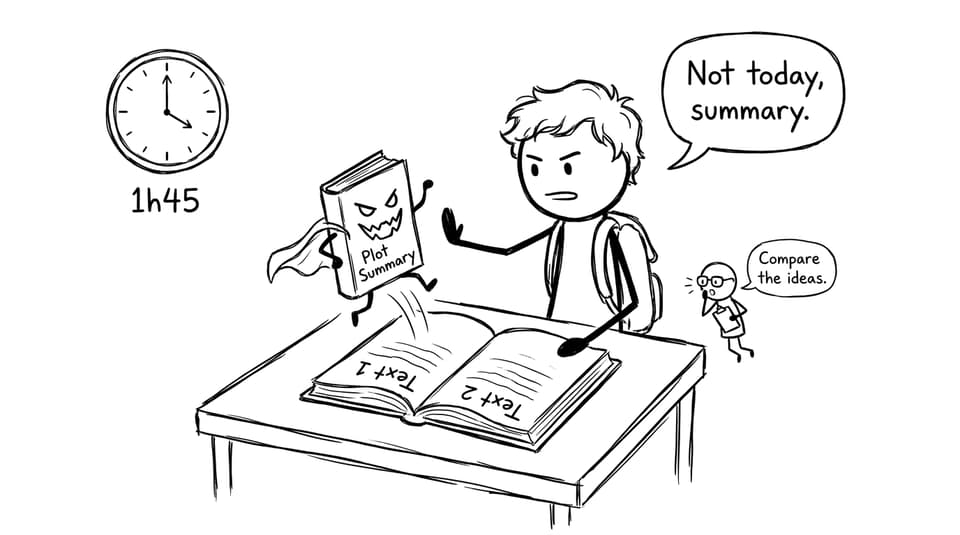
Writing a chronological plot recap instead of an argument.
-
Treating comparison as a final paragraph add-on.
-
Naming techniques without explaining effect and purpose.
-
Forgetting the prompt’s command terms (especially “to what extent”).
-
Uneven coverage: one work becomes the “main” text.
A simple fix: mention both works in every paragraph, even briefly, so the comparison stays alive.
Bring the criteria into your revision plan
The most effective IB English Paper 2 preparation is simple: practice essays, mark them against the criteria, and adjust one skill at a time. On RevisionDojo, you can build that loop with the Questionbank, Study Notes, Flashcards, AI Chat, grading tools, Mock Exams, Predicted Papers, and even Tutors when you want human feedback on a tricky comparison.
When the exam clock starts, you don’t need perfect memory. You need a clear comparison, supported by methods, organized with purpose. That’s what the IB English Paper 2 criteria reward, and what you can train, deliberately, starting today.