


Context is the quiet force behind so many “why” questions in IB English. Why does a character stay silent? Why does the narrator sound bitter, or careful, or strangely formal? In the exam hall, it’s tempting to treat context like a cheat code: drop in a few facts about the time period and hope the essay becomes sophisticated.
But the best IB English analysis does the opposite. It starts small. It notices what’s on the page first, then uses historical and social influences as a lamp, not a substitute, to illuminate authorial choices.
IB English context in one exam-ready checklist
Use this as your quick mental routine before you write (especially for Paper 2 and the IO in IB English):
-
Name the context claim in one line (time period, social norms, cultural tensions).
-
Attach it to a text detail (quote, motif, structural pattern, narrative choice).
-
Explain the effect (on reader/audience + on meaning).
-
Explain the purpose (what the author critiques, questions, or reveals).
-
Keep it brief: 1-2 sentences per paragraph is often enough.
If you want a deeper foundation, keep RevisionDojo’s guide on the role of context in IB English text analysis open while you practise.
Historical influences: how time reshapes meaning in IB English
In IB English, historical context is not a timeline you recite. It’s a pressure system that changes what words can safely say, what characters can imagine, and what an author can risk.
A practical way to think about historical influences is to ask: What was possible, permitted, or punished in this world, and how does the text show that?
What to look for when tracing historical context
-
Power and politics: laws, censorship, war, colonisation, revolution
-
Public anxieties: displacement, scarcity, propaganda, “acceptable” fear
-
Intellectual climate: faith in progress, distrust of institutions, moral panic
-
Everyday constraints: who can work, own property, vote, speak publicly
Then link the history to technique. If the writing becomes fragmented, ask what kind of world produces fragmented thinking. If the narrator is indirect, ask what kind of society rewards indirectness.
For technique-first support, RevisionDojo’s Mastering Literary Devices in IB English Exams helps you convert “context knowledge” into marks.
Social influences: the invisible rules characters live under
Social context is the everyday weather of a text: class expectations, gender roles, racial hierarchies, family duty, reputation, what counts as “normal.” In IB English, social influences matter because characters rarely act in a vacuum. They act inside systems.
A fast question that improves essays: What does this society reward? What does it shame?
Social context prompts that generate strong IB English analysis
-
Which behaviour is treated as “respectable,” and who defines it?
-
What do characters fear losing: status, safety, belonging, identity?
-
Who gets to speak without consequences, and who must translate themselves?
-
Where does the text show tension between private desire and public expectation?
This pairs naturally with setting analysis. If you need that bridge, see How Setting Influences Narrative Development.
How to use context without overloading your IB English essay
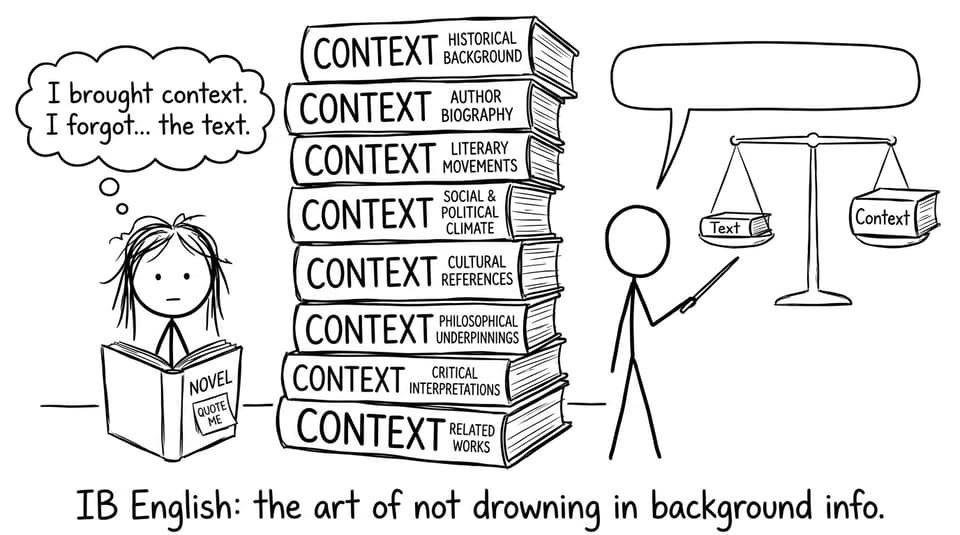
Most students don’t lose marks for having the “wrong” context. They lose marks for letting context replace reading.
A simple rule in IB English: context should earn its place by explaining a choice on the page.
Try this sentence pattern:
“In a society shaped by ___, the author’s use of ___ suggests ___, positioning the audience to ___.”
Notice what it forces you to do: contextualise, identify a method, and interpret.
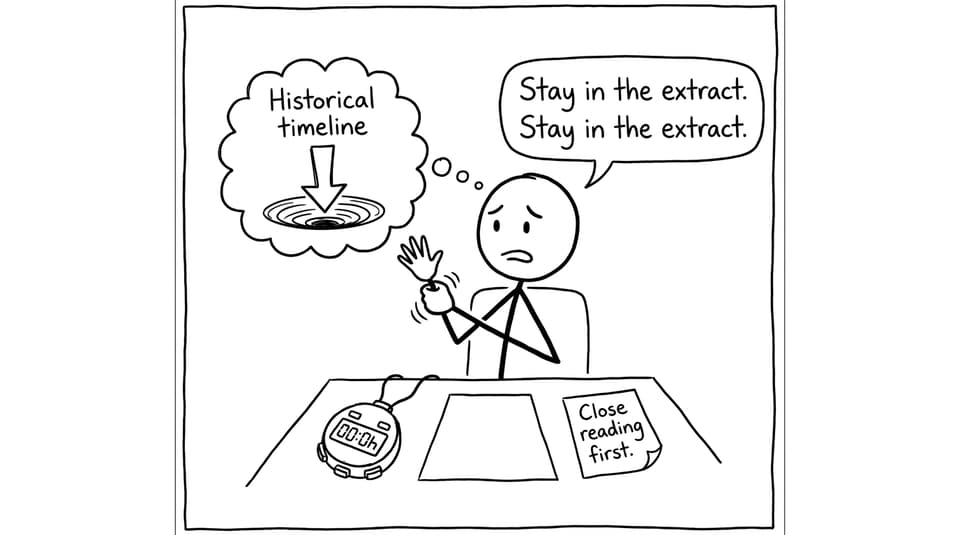
For Paper 1, this matters even more. RevisionDojo’s Close Reading Techniques for Prose and Poetry is a strong reminder that the extract comes first, always.
Context in Paper 1 vs Paper 2 in IB English
Paper 1: earn context from the extract
In IB English Paper 1, you usually don’t “bring” historical background. You infer what the text itself signals: register, allusions, tone, genre conventions, visual language.
If you want a step-by-step structure for this, use Step-by-Step Guide to Revising IB English Paper 1 and practise with timed prompts from the Paper 1 Lang & Lit Questionbank. On RevisionDojo, you can then run your writing through the Paper 1 Grader to see whether your “context sentences” are actually analysis.
Paper 2: context becomes comparative leverage
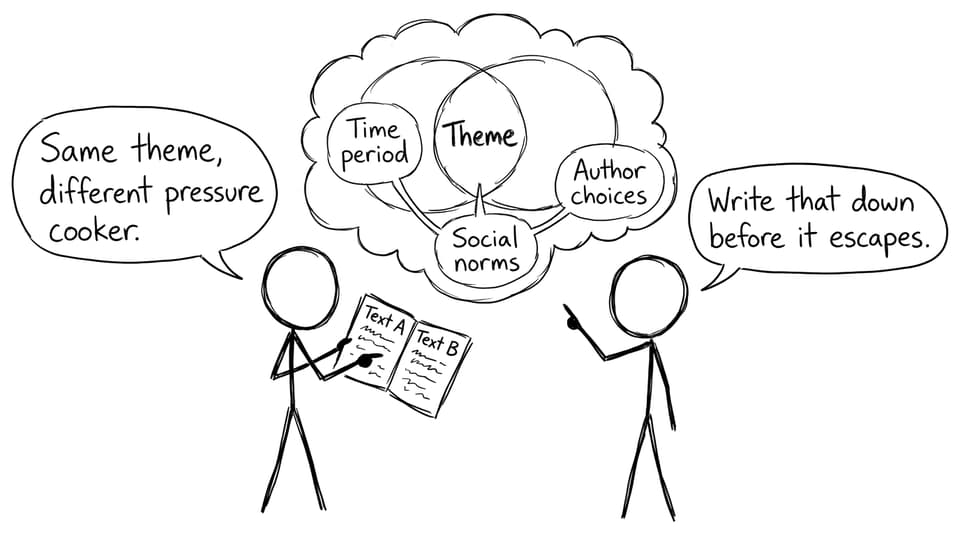
Paper 2 rewards students who can show how two works respond to different pressures. This is where historical and social influences become a genuine advantage in IB English.
Use context to explain differences in:
-
representation of power and conflict
-
narrative voice and reliability
-
symbols and recurring images
-
endings (closure vs ambiguity)
To tighten your comparisons, see Comparative Essay Planning: Theme vs. Form vs. Content and How to Approach Comparative Essays in IB English Paper 2. Then drill with the IB English Paper 2 Questionbank.
Bringing it home: context as a spotlight, not a substitute
The real skill in IB English is balance. Context is powerful precisely because it’s invisible: it shapes characters’ choices, narrators’ voices, and the risks an author can take. But it only earns marks when it helps you see the text more clearly.
If you want to practise that balance consistently, RevisionDojo is built for it: use Study Notes and Flashcards to organise historical and social influences, the Questionbank to apply them under exam conditions, AI Chat to stress-test your thesis, and Grading tools plus Mock Exams to check whether your analysis stays anchored to evidence. Finish your revision with Predicted Papers and targeted support from Tutors, and you’ll walk into exams with context that serves your argument, not one that swallows it.