



The night before a IB Design Technology exam, most students don’t worry about the big ideas.
They worry about smaller things: whether their pen will run out, whether they remember the “right” definition, whether Paper 2 will ask something weird, whether their diagram will look childish.
Here’s the twist. In IB Design Technology, marks don’t disappear because you’re not smart. They disappear because your answer isn’t shaped the way the examiner can reward. The good news is that these mistakes are predictable, and predictable problems are fixable.
If you want a single home base for revision, start with the IB Design Technology Resources page and build outward.
A quick checklist before you revise
Use this list as your last-minute filter for IB Design Technology exam practice:
-
Can I define key terms in one clean sentence?
-
Can I apply each concept to a real product or user?
-
Do I plan answers using the command term and marks?
-
Do I use simple, labeled diagrams to clarify ideas?
-
Am I practicing under time pressure at least weekly?
-
For HL: am I training case-study thinking, not just recall?
RevisionDojo makes this routine easier because you can move between Study Notes, IB Flashcards with Spaced Repetition (SRS), Questionbank drills, and mock-style practice without losing your structure.
Mistake: Treating definitions like “optional background”
In IB Design Technology, definitions are not decoration. They are often the difference between a vague answer and a mark-worthy one.
A common pattern: a student knows the idea, but can’t name it precisely. That forces them into long explanations that still miss the target.
Avoid it: Build a “one-line glossary” and rehearse it with active recall. Then pressure-test it with quick quizzes. Pair your glossary with the platform tools: use IB Flashcards with Spaced Repetition (SRS) for daily recall, then check understanding in the Design Technology (DT) Questionbank.
Mistake: Memorizing content but not applying it
The exam isn’t asking whether you’ve seen the concept before. It’s asking whether you can use it.
In IB Design Technology, that often means:
-
linking an idea to a product decision,
-
explaining a trade-off (cost vs sustainability, strength vs mass, etc.),
-
justifying a choice using criteria.
Avoid it: For every topic you revise, attach one real object: a chair, bottle, bicycle, phone case, packaging, a desk lamp. Ask, “Where does the theory show up here?” If you need help generating exam-style contexts, the IB Design Technology Topic 6. Classic Design page is a good example of structured topic review.
Mistake: Ignoring command terms (and losing capped marks)
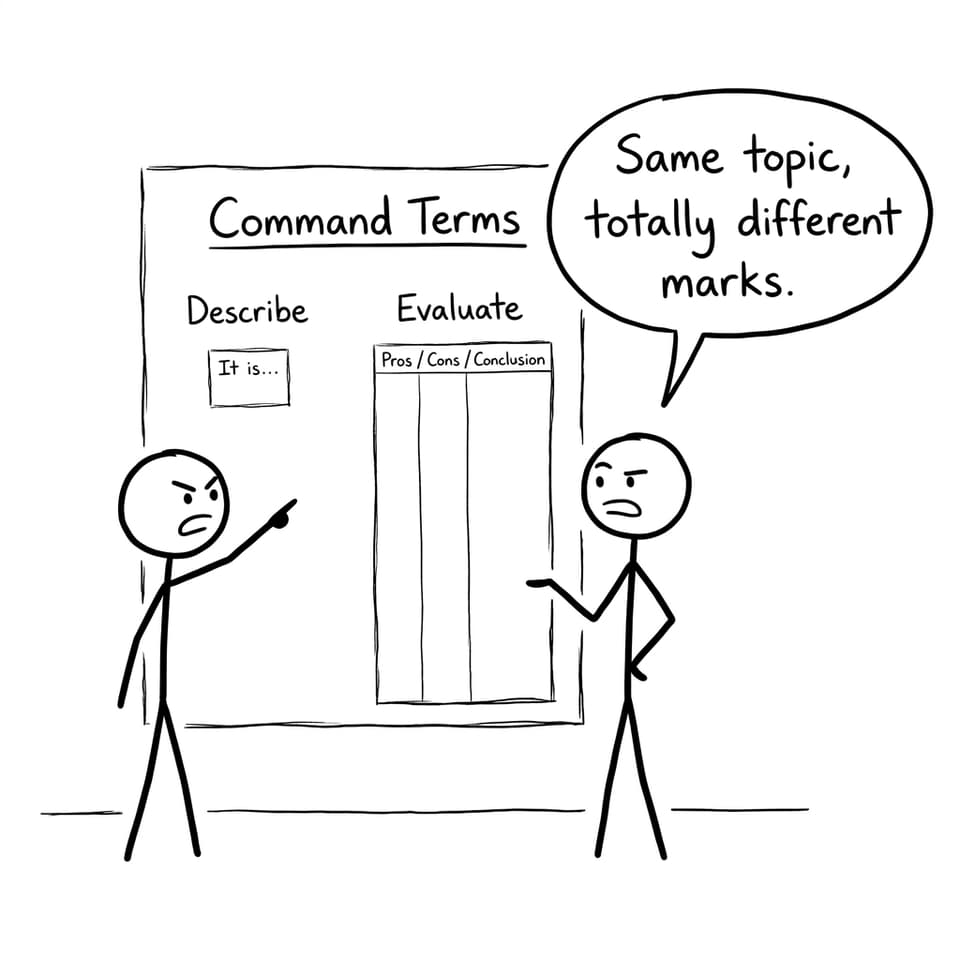
Command terms are quiet, but they control everything. “Describe” is not “evaluate.” “Outline” is not “explain.”
When students miss marks, it’s often because they delivered the wrong shape of answer. The content might be correct, but the thinking skill doesn’t match.
Avoid it: Train a 20-second ritual: circle the command term, underline the topic, check the marks, write a one-line plan.
Use this guide alongside your IB Design Technology practice: How to Use Command Terms Effectively in IB Exams and, for DT-specific patterns, What Command Terms Appear Most in IB Design Technology Exams.
Mistake: Spending marks like time is infinite
Time management failures are rarely dramatic. They’re subtle: two extra minutes here, three extra minutes there, and suddenly your last question gets half an answer.
Avoid it: Use the simplest rule: roughly one minute per mark. Then practice it with repeatable mock sets.
If you want a clean system for building timed sets by weak topic, use Custom IB Mock Exams: Build Practice Tests by Topic. RevisionDojo’s Mock Exams and Predicted Papers features are built for this kind of controlled repetition: same skills, new questions, tighter execution.
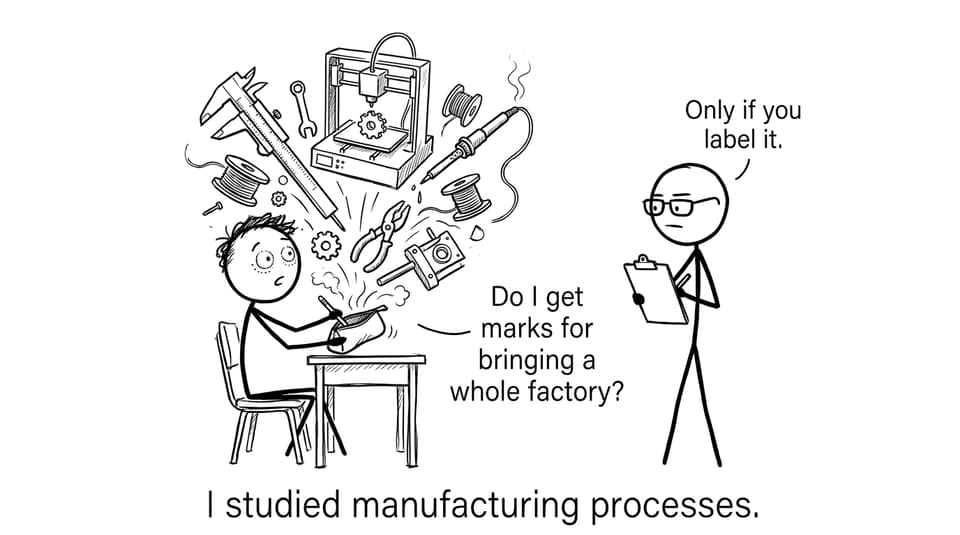
Mistake: Treating sketches as art instead of communication
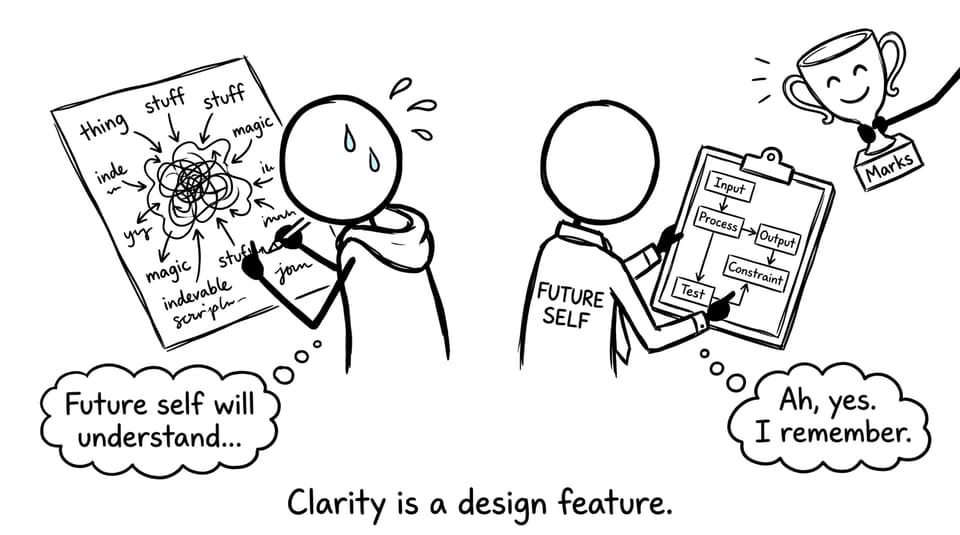
In IB Design Technology, diagrams are a language. The examiner isn’t judging your talent. They’re judging clarity.
Students lose marks when diagrams are:
-
unlabeled,
-
too complicated,
-
disconnected from the written explanation.
Avoid it: Draw the simplest version that proves your point. Label only what matters. If a diagram doesn’t add marks, don’t include it.
Mistake: Underestimating HL case-study thinking
HL students often revise “more content” but practice “the same way.” Case-study style questions reward synthesis: connecting constraints, stakeholders, sustainability, manufacturing, and evaluation.
Avoid it: Practice writing short, structured evaluations: claim, evidence, trade-off, conclusion. If you want strategy guidance, read Best Study Strategies for IB Design Technology Students and keep the IB Design Technology Resources hub open while you practice.
Mistake: Treating coursework as separate from exam skills
Even when you’re focused on exams, your coursework habits shape how you think: iteration, justification, testing, and reflection.
Students who document clearly and evaluate decisions honestly tend to write better exam responses because they’re used to explaining why a choice makes sense.
Avoid it: Build one weekly slot where you practice “design cycle thinking” in exam form: define the problem, propose options, justify one, evaluate limitations. If you need a DT-specific workflow, How to Use RevisionDojo for IB Design Technology Success gives a practical routine.
The calm strategy: make your mistakes boring
The best IB Design Technology exam prep is quiet and repeatable: definitions, application, command terms, timing, clarity.
If you want one platform that ties it all together, RevisionDojo is built for it: Study Notes for understanding, Flashcards for recall, Questionbank for exam-style practice, AI Chat for explanations, Grading tools for feedback, plus Mock Exams, Predicted Papers, a Coursework Library, and Tutors when you want human guidance.
Start with the IB Design Technology Resources hub, then practice until these mistakes stop being mistakes.