

The first time you meet an unreliable narrator, it feels a bit like realizing your group chat has two versions of the same story. Everyone sounds confident. Everyone has “proof.” And yet the details don’t line up.
That uneasy feeling is not a glitch in reading. It’s the point. In IB English, the unreliable narrator is a technique that turns the reader into an active participant. Instead of absorbing a neat timeline, you become a judge of evidence: weighing tone, noticing gaps, and deciding what the text wants you to believe vs what it quietly reveals.
Why unreliable narrators matter in IB English
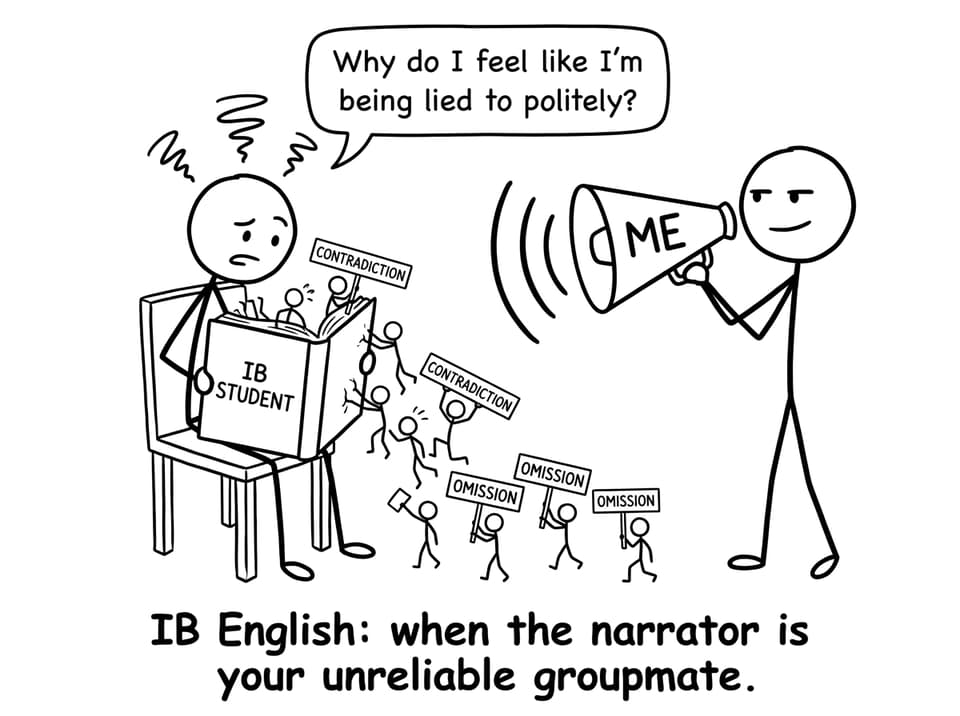
Unreliable narration matters because it changes the basic contract between story and reader. A “reliable” voice offers clarity. An unreliable voice offers persuasion, self-protection, confusion, or manipulation. That shift creates reader engagement: the audience must interpret, doubt, and reconstruct.
In IB English, this is gold because it gives you a direct route to high-level analysis:
-
Narrative voice becomes a method, not just a viewpoint
-
Reader response becomes part of meaning (suspense, irony, empathy)
-
Theme becomes sharper (truth, identity, memory, morality)
-
Structure becomes purposeful (delayed revelations, fragments, contradictions)
If you want a quick framework for perspective work, pair this article with Examining Narrative Voice and Perspective in Novels (IB English).
Quick checklist: spotting an unreliable narrator (fast)
Use this during annotation for IB English Paper 1 or when planning Paper 2.
-
Contradictions (what they claim vs what happens)
-
Omissions (what they glide past, or “forget”)
-
Overconfidence (“obviously,” “everyone knows,” “trust me”)
-
Emotional distortion (jealousy, shame, fear shaping description)
-
Other characters subtly undermining them
-
A structure that withholds key information until late
For a wider structural lens, bookmark Structure in Prose: IB Notes.
What actually makes a narrator unreliable?
Unreliability isn’t one dramatic lie. It’s a pattern. In IB English, you’ll sound more precise if you name the type of unreliability you see.
Limited knowledge (and the illusion of certainty)
A narrator can only report what they experience, but they may narrate as if they understand everyone else’s motives. That mismatch creates tension: the reader notices the overreach.
Bias and self-justification
Some narrators aren’t “lying” so much as building a case for themselves. They select details like a lawyer, not a camera. In exam terms, you can link this to characterization and tone.
Self-deception and psychological pressure
Memory doesn’t just fade. It edits. Trauma, guilt, or pride can reshape narration into something safer to live with. Reader engagement increases because we’re reading for what’s underneath the surface story.
Intentional manipulation
Sometimes the narrator knows exactly what they’re doing. They perform innocence, charm, or authority. In IB English, this is where you can discuss ethics of narration and reader complicity.
If you want an example-driven angle, explore the Lolita: IB Notes and the companion Lolita Plot Summary: IB Notes.
How writers signal unreliability (without announcing it)
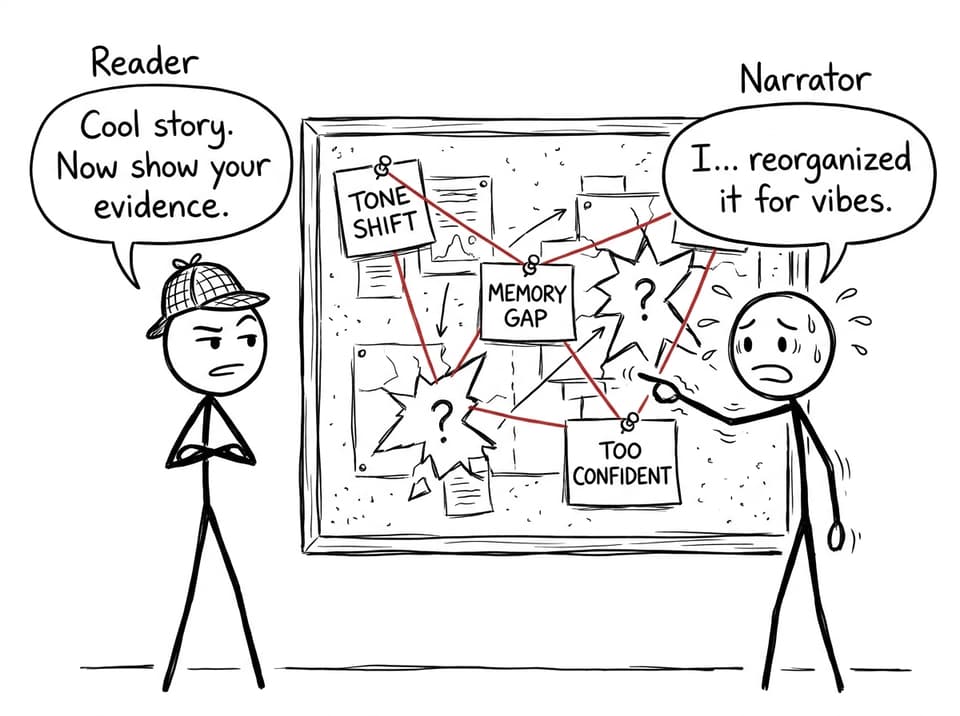
Most authors don’t put a warning label on the first page. Instead, they create small fractures that the reader learns to track.
Tone shifts that feel defensive
Watch for sudden sarcasm, forced humor, or moral certainty. In IB English, tone is often the earliest “tell” that a narrator is protecting something.
Gaps between dialogue and narration
If other characters react as if something is wrong, but the narrator insists everything is fine, you’ve found a useful contrast to analyze.
Structure that delays clarity
Flashbacks, nonlinear sequences, or fragmented scenes can mirror the narrator’s instability. That structure also increases reader engagement by turning reading into a puzzle.
Want to connect this directly to exam writing? Use Mastering IB English Paper 1: A Complete Guide and Structuring Your IB English Paper 2 Essay.
Reader engagement: why this technique keeps readers hooked
Unreliable narration works because it makes reading active. You don’t just ask “what happened?” You ask “why is this being told like this?”
In IB English, you can describe reader engagement through these effects:
-
Suspense: truth becomes delayed, not delivered
-
Dramatic irony: the reader begins to suspect more than the narrator admits
-
Tension: meaning sits in the gap between claim and evidence
-
Empathy: we understand limitations even while doubting accuracy
A strong exam sentence might sound like: The narrator’s certainty increases reader suspicion, creating a double-layered experience in which the reader interprets both events and the voice describing them.
How to turn unreliability into exam-ready paragraphs
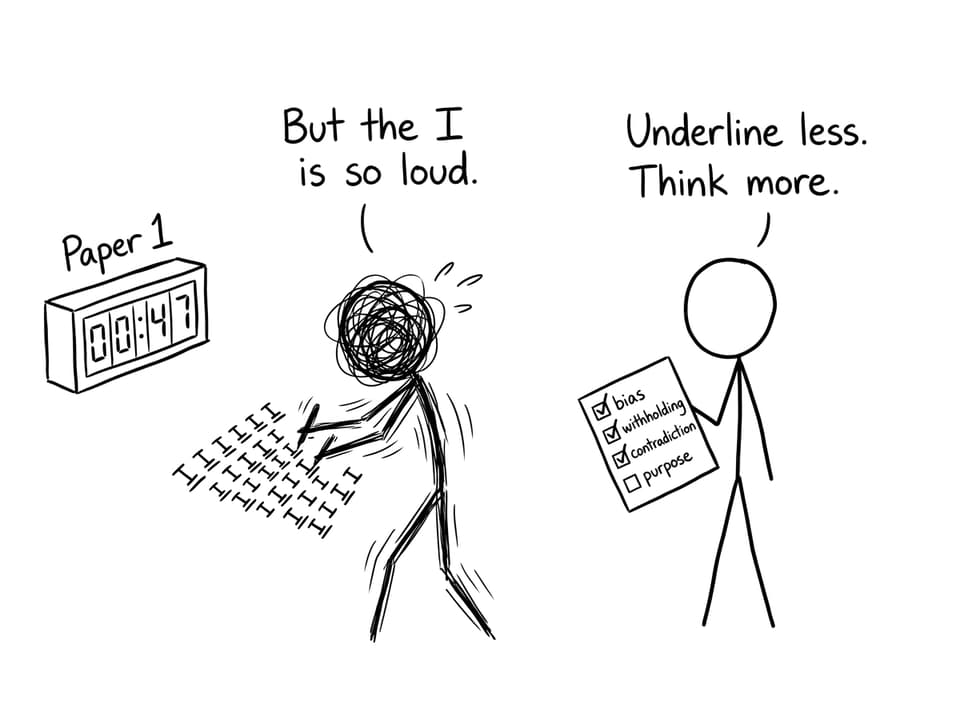
The key in IB English is disciplined proof. Don’t claim “unreliable” as a vibe. Prove it as a pattern.
Try this mini-structure:
-
Point: Name the unreliability (bias, omission, limited knowledge)
-
Evidence: A contradiction, a loaded adjective, a strange shift in tone
-
Effect: How it shapes reader engagement (doubt, suspense, irony)
-
Purpose: What it reveals about theme (truth, identity, morality)
To practice quickly, build timed prompts with the IB English A Lang & Lit Questionbank or go specific with the Paper 1 Lang & Lit Questionbank and English Paper 2 Questionbank.
Conclusion: make the reader-work your advantage
Unreliable narrators are not just a clever twist. They’re a training ground for the exact skills IB English rewards: close reading, evidence-based interpretation, and clear explanation of how authorial choices shape reader engagement.
If you want to turn that skill into marks, build a routine with RevisionDojo: revise concepts through IB English A Lit Resources and IB English A Lang & Lit Resources, drill technique with the Questionbank, lock in definitions with Flashcards, and pressure-test your writing with AI Chat and grading tools. Add Mock Exams and Predicted Papers when you want realism, then refine using Study Notes, the Coursework Library, and Tutors.
In IB English, the most engaging narrators are often the least trustworthy. Your job is to show the examiner you can enjoy the story and still read it like an investigator.