Gender and sexuality can feel like the kind of topic that either makes your commentary soar, or makes you worry you’re “reading too much into it.” In IB English, that tension is exactly the point. Literature is one of the few places where societies argue with themselves in public: about who gets power, who gets believed, who gets named, and who gets punished for wanting the “wrong” things.
When you learn to analyze gender and sexuality with discipline, you stop writing essays that sound like opinions and start writing essays that sound like interpretations. The difference is evidence: authorial choice, technique, and effect. That is what earns marks in IB English Paper 1 and Paper 2.
Why gender and sexuality matter in IB English
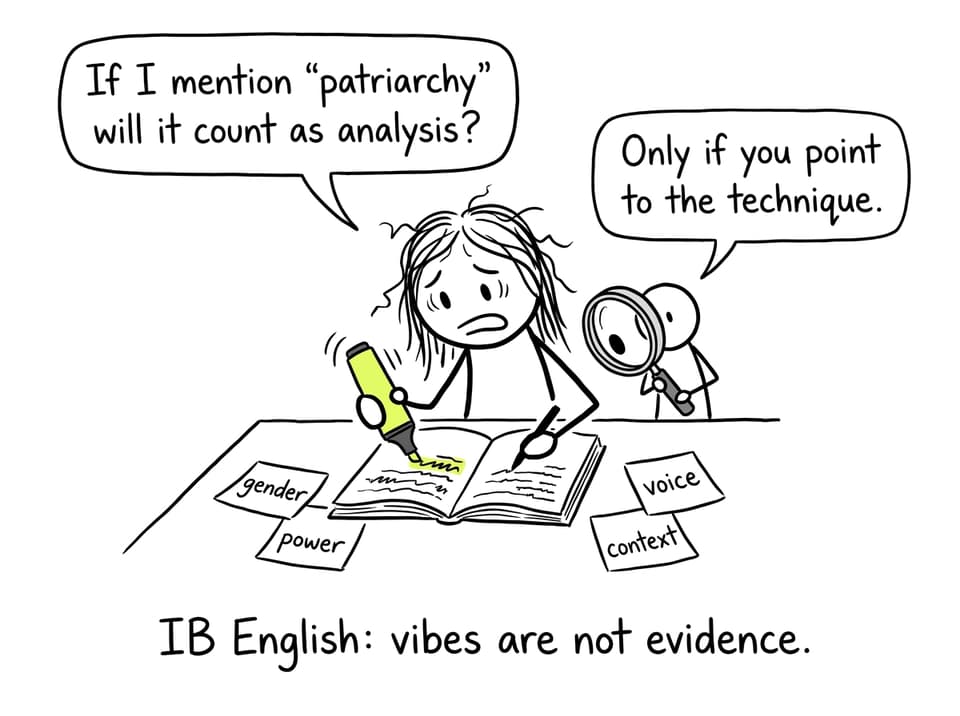
In IB English, gender and sexuality are rarely “extra themes.” They are often the engine of characterization and conflict. A character’s options may shrink or expand based on how the world reads their body, their desires, or their role. That pressure shows up in the text as craft: narrative voice, imagery, dialogue patterns, symbolism, and structure.
This lens also helps you meet the IB’s expectation for context without falling into biography or sociology. You’re not writing a history essay. You’re explaining how the text constructs a world, and how that world rewards or punishes certain identities.
If you want a clean exam framework for staying technique-first, build the habit using RevisionDojo’s guides on Mastering IB English Paper 1 and the Step-by-Step Guide to Revising IB English Paper 1. Both are designed to keep your IB English writing anchored in choices, not vibes.
Quick checklist: a gender and sexuality lens you can actually use
Use this checklist before you draft any paragraph in IB English:
-
Identify the norms the text assumes (what is “proper,” “acceptable,” or “natural” in this world?).
-
Track power: who speaks, who is interrupted, who is watched, who is believed.
-
Notice labels: names, pronouns, titles, insults, euphemisms, silence.
-
Look for desire on the page: is it explicit, coded, symbolic, denied, or punished?
-
Link each observation to a technique (diction, imagery, syntax, focalization, structure).
-
Write one sentence that states the effect on the reader.
A strong IB English paragraph can be built from just one line of dialogue if you explain why it was written that way.
How authors construct gender (without announcing it)
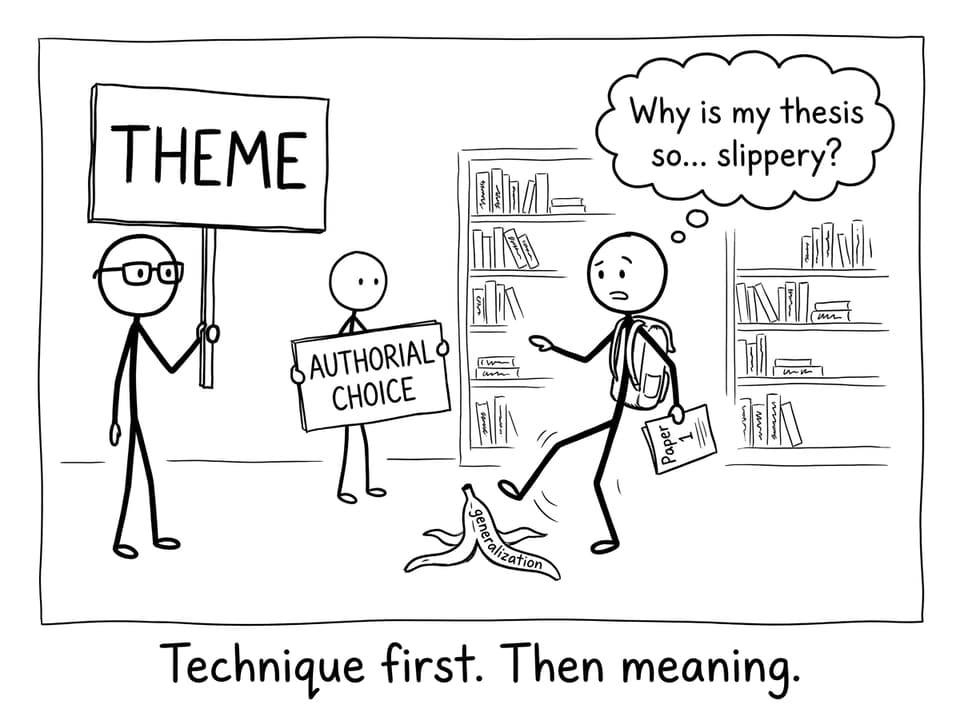
Gender in literature is often built through patterns that are easy to miss when you only summarize plot. In IB English, try to notice how the text “teaches” you to read a character as masculine, feminine, both, neither, or unstable.
Characterization and dialogue
Dialogue can reveal who is allowed to be direct, who must be polite, and who is punished for certainty. Notice the distribution of questions and commands. Notice who gets the last word. If a character constantly softens statements (“maybe,” “I suppose,” “if you don’t mind”), that might be a survival strategy in a gendered hierarchy, and it’s still a deliberate authorial choice.
For a structured way to write this in exam conditions, revise characterization tools via IB English A Lang & Lit Characterization & Dialogue.
Narrative perspective and focalization
Ask: whose interiority do we get? Who is described from the outside? A text can turn a character into an object simply by refusing them a private voice. In Paper 1, this might show up as shifts in pronouns, free indirect discourse, or the distance of the narrator.
To sharpen this skill, keep a technique ladder nearby. RevisionDojo’s Mastering Literary Devices in IB English Exams is a reliable map for moving from device to meaning without drifting into summary.
Sexuality as a narrative force (not just romance)
In IB English, sexuality often functions like electricity: sometimes visible, sometimes hidden, always shaping the atmosphere. It can create vulnerability, rebellion, intimacy, disgust, or social panic. And it’s frequently communicated indirectly.
Subtext, symbolism, and what cannot be said
Many texts write desire through absence: a pause, a euphemism, a recurring image, a glance described too carefully. If the text avoids naming something, don’t jump straight to conclusions. Instead, explain the avoidance as technique. What does silence do? Does it produce tension, shame, danger, irony, or longing?
Structure: what the text rewards and what it punishes
Look at consequences. Are characters punished for desire? Are they rewarded for conformity? Does the ending restore the “proper” order, or fracture it? In Paper 2, this becomes powerful comparative material: two works can treat similar desires but resolve them differently, revealing different cultural anxieties.
If you’re building Paper 2 comparisons, RevisionDojo’s IB English Paper 2: Essential Guide for Success helps you turn big identity themes into controlled comparative claims, a core IB English skill.
How to write it in IB English exams (Paper 1 and Paper 2)
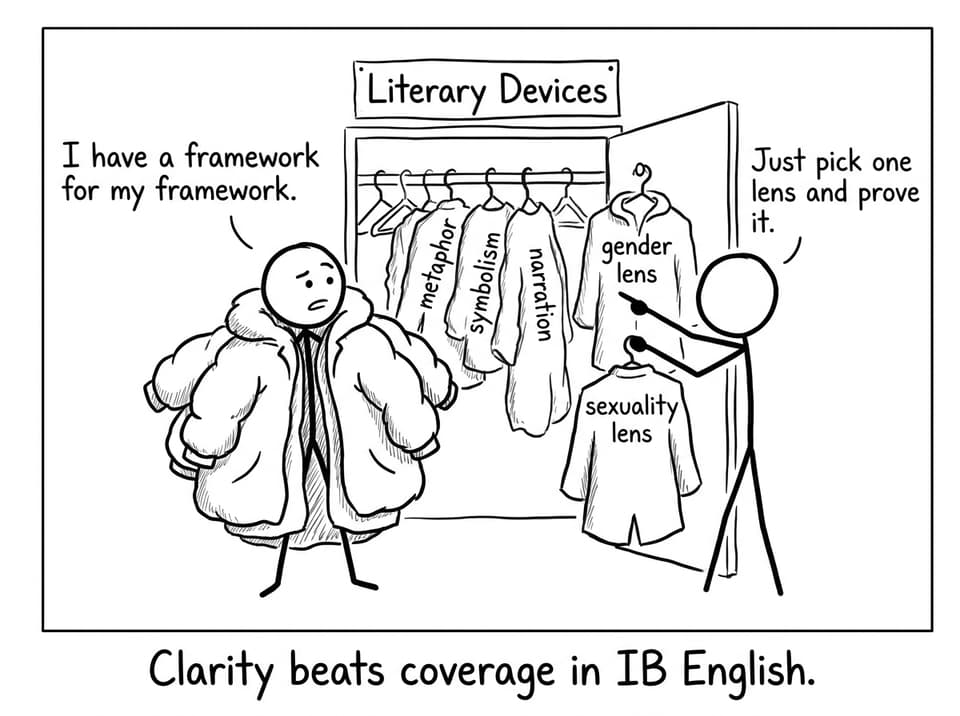
The exam room rewards one thing: controlled interpretation. Here’s how to keep gender and sexuality analysis precise in IB English.
Paper 1: technique-first micro-arguments
In Paper 1, you don’t need to solve the whole text. You need to argue that specific choices build specific meanings. A good sentence frame is:
The writer’s use of [technique] constructs [gender/sexuality dynamic], positioning the reader to [effect].
Then prove it with a short quotation and careful unpacking. If you need a steady process for this, use RevisionDojo’s Close Reading Techniques for Prose and Poetry to anchor yourself quickly under time pressure.
Paper 2: comparative insight, not two mini-essays
In Paper 2, gender and sexuality often appear in prompts about identity, relationships, power, or culture. Your job is to compare methods, not just messages. One text might use satire to expose gender performance; another might use tragedy to show the cost of constraint. That difference is your argument.
For targeted practice, build timed sets with the IB English A Lang & Lit Paper 2 Lang & Lit hub and train your exam muscles using the IB English A Lang & Lit English Paper 2 Questionbank.
Using RevisionDojo to strengthen gender and sexuality analysis
Most students don’t struggle because they “don’t get” gender and sexuality. They struggle because they can’t turn insights into marks. RevisionDojo closes that gap.
-
Use Study Notes to build vocabulary and frameworks fast: Study Notes.
-
Practice exam-style writing with the Questionbank on your specific paper: IB English Lit Paper 1 Questionbank or IB English A Lang & Lit Paper 1 Questionbank.
-
Turn recurring mistakes into spaced repetition with Flashcards: IB Flashcards and topic sets like Flashcards for English Paper 2.
-
Draft, submit, and improve with Grading tools like the Paper 2 rubric grader: IB Language A Paper 2 Grader.
And when you want everything in one place, start from the central IB English course pages: IB English A Lang & Lit Resources.
Closing: the mark-winning habit
The best IB English essays don’t sound like they’re trying to be “deep.” They sound like they noticed what was deliberate. Gender and sexuality analysis becomes powerful when it’s specific: one technique, one effect, one meaning, then a clear link back to the text’s larger logic.
If you want to practice that habit until it’s automatic, make RevisionDojo your default workspace: use Study Notes to learn the lens, Questionbank to apply it, Flashcards to retain it, AI Chat to test your thesis logic, and Grading tools to polish your exam voice. In IB English, insight is great, but evidence is what turns insight into marks.



