
A strange thing happens in IB English when the clock starts screaming: smart ideas get messy. You remember the quote. You can even explain the technique. But your argument arrives in fragments, like pages dropped in a hallway. Structure is what turns those fragments into a trackable line of thinking an examiner can reward.
And in IB English, “trackable” is not a vibe. It is marks.
Why structure matters in IB English analytical writing
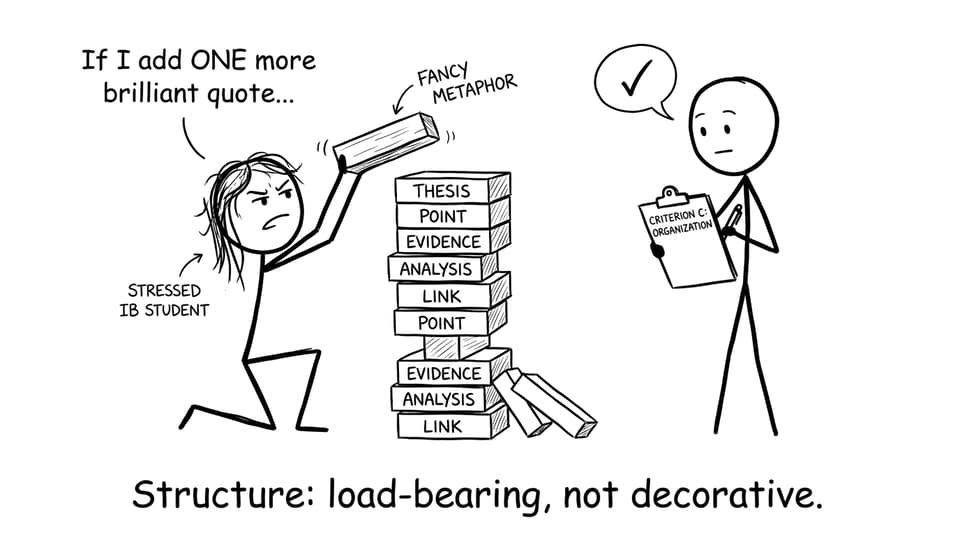
Structure is the quiet advantage because it serves two masters at once: your reader’s clarity and the rubric’s logic. In Paper 1 and Paper 2, organization strengthens focus, makes comparison visible, and reduces the risk of drifting into summary.
If you want a focused blueprint for comparative writing, keep Structuring Your IB English Paper 2 Essay open while you practice. Pair it with Understanding the IB Marking Criteria: What Examiners Look For so you can see exactly why structure earns credit.
A quick structure checklist (save this)
Use this before any timed IB English practice:
-
Thesis answers the question and names the main lens (theme + method)
-
3 strong body points (not 6 weak ones)
-
Each paragraph has Point -> Evidence -> Analysis -> Link (PEEL/PEA)
-
Clear comparative moves (Paper 2) in every paragraph
-
Conclusion synthesizes, not repeats
For a repeatable essay method, see How to Write a Good Essay for IB English Literature.
Top IB English strategies for clarity (and higher bands)
Build paragraphs with PEEL, not plot
A high-scoring IB English paragraph is a small argument, not a plot recap. Start with a claim that clearly answers the question. Use short evidence (a precise quote or reference). Then spend most of your space on analysis: how the technique creates meaning, shapes reader response, and connects to your thesis.
When you need extra practice with unseen analysis structure, use Mastering IB English Paper 1: A Complete Guide and Step-by-Step Guide to Revising IB English Paper 1.
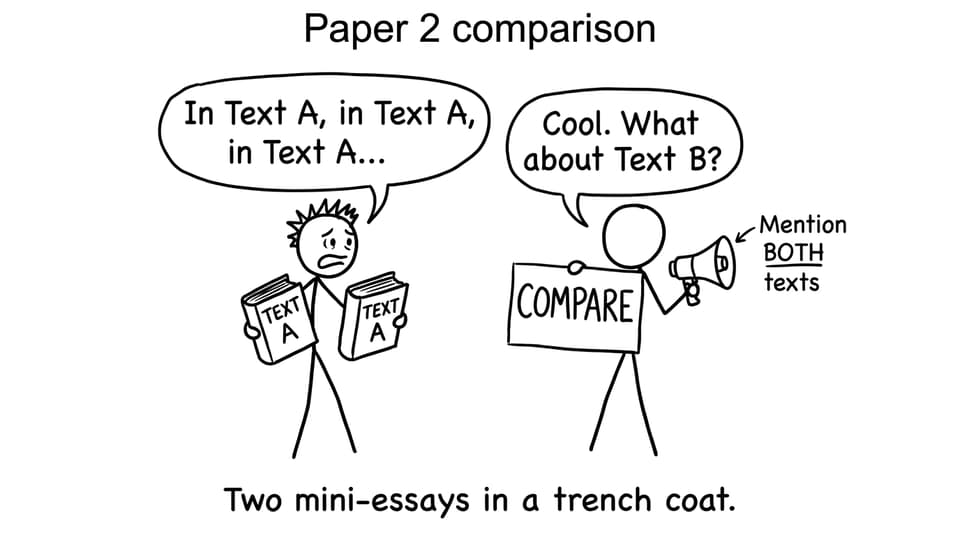
Make comparison “continuous” in Paper 2
Many students lose marks by writing Text A, then Text B, then hoping the examiner connects them. Instead, compare inside the paragraph: idea in Text A -> matching/contrasting idea in Text B -> what the difference reveals.
To train this under pressure, read IB English Paper 2 Under Time Pressure: RevisionDojo and keep the bigger picture in IB English Paper 2 Structure: Lang & Lit Guide.
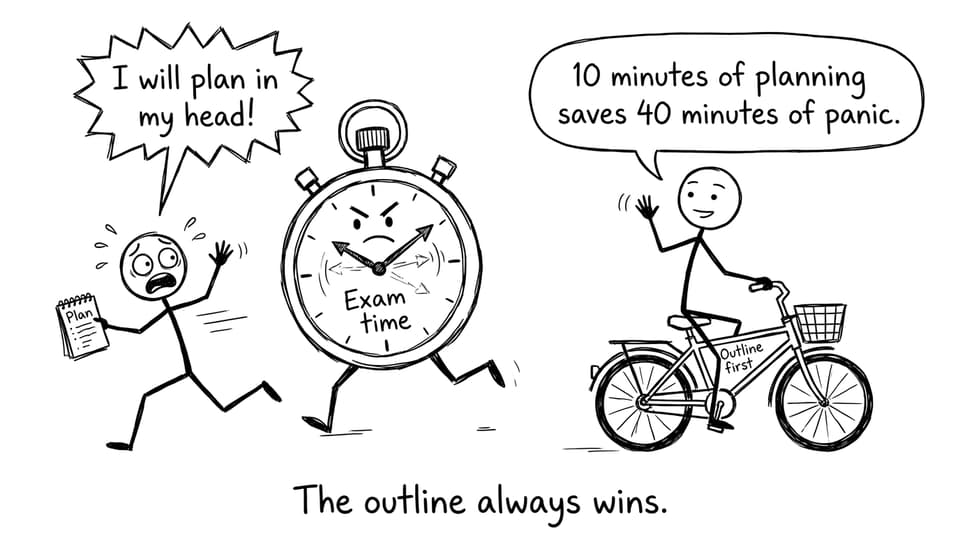
Plan for 10 minutes to save your whole essay
In IB English, planning is not optional. A quick outline forces decisions: which points matter, where evidence fits, and how each paragraph advances the thesis. If you plan properly, your transitions become easier because the logic is already set.
RevisionDojo helps you rehearse this loop with exam-style practice in its Questionbank, plus fast recall via Flashcards and targeted feedback using Grading tools. When you want quick clarification mid-study, AI Chat can help you tighten a thesis or refine a paragraph focus without rewriting your voice.
Conclusion: structure is how your thinking earns marks
In IB English, structure is the difference between “I know this” and “I can prove this clearly.” Use a thesis that commits, paragraphs that run on PEEL, and a plan that keeps your argument calm under time pressure.
When you want structure you can repeat, RevisionDojo is built for it: Questionbank drills for exam practice, Study Notes for quick clarity, Flashcards for recall, AI Chat for refining ideas, and Grading tools plus Mock Exams and Predicted Papers to test whether your structure holds when it counts. If you are working on coursework too, the Coursework Library and Tutors can help you turn drafts into disciplined, high-band writing.