


The quiet advantage most IB Math students ignore
A week before exams, a student once told me something honest: they were "revising formulas" the way people revise passwords. Repeating them, hoping they stick, and quietly fearing the moment their mind goes blank.
That fear is familiar in IB Math because the syllabus is wide, the questions are layered, and time pressure is real. But there’s a tool sitting in plain sight that changes the game: the formula sheet (officially, the IB Mathematics formula/data booklet). Used well, it doesn’t just give you equations. It gives you mental space.
The importance of formula sheets in IB Math exams is not that they save you from learning. It’s that they let you spend your limited exam energy on decisions: what method to use, how to structure a solution, and how to communicate it in a way that earns marks.
Quick checklist: how to make the IB Math formula booklet work for you
-
Know which papers include the booklet, and plan your memorisation accordingly.
-
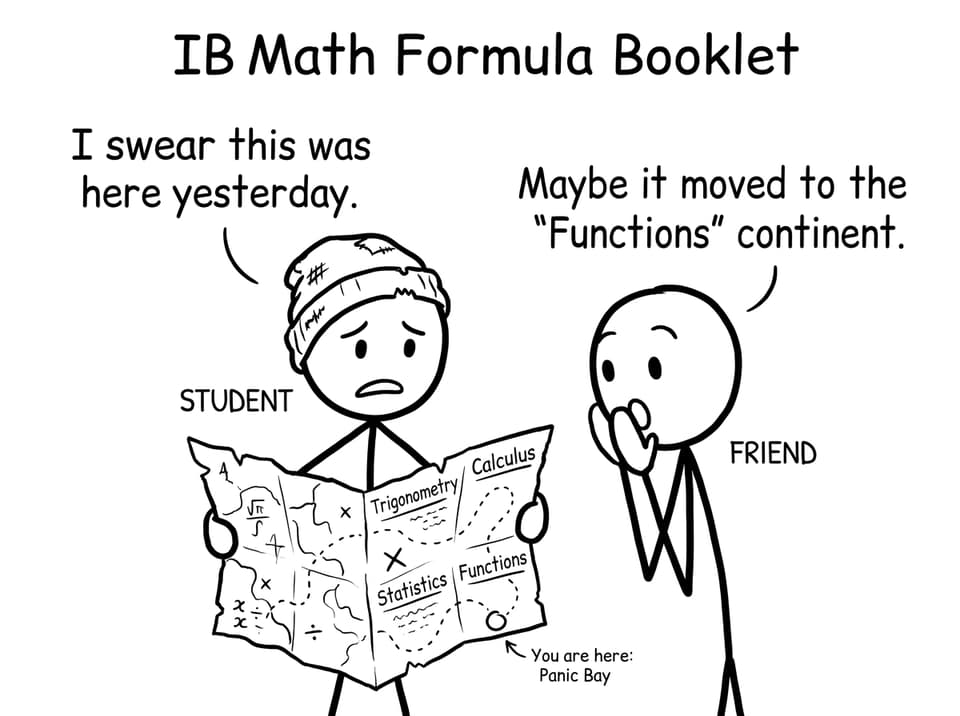
Build “navigation speed”: practise finding key sections under time.
-
Treat formulas as prompts for methods, not magic spells.
-
Always show working: formula sheets support marks, but don’t replace method marks.
-
Pair formula practice with exam-style questions from a trusted source.
If you want a clean starting point, keep RevisionDojo’s hubs open while you revise: IB Mathematics Analysis and Approaches Resources and IB Mathematics Applications and Interpretation Data Booklet.
What formula sheets actually are in IB Math
In IB Math, the official formula sheet is the booklet provided in calculator-allowed papers (and HL extension papers where applicable). It includes core results across algebra, functions, geometry/trigonometry, calculus, and statistics/probability.
One underrated point: the booklet is the same document across AA and AI, but not everything inside is equally relevant to your course. That’s why your skill isn’t “memorising the booklet.” Your skill is recognising what a question is really asking, then pulling the right tool quickly.
For a deeper explanation of what students mean when they say “formula booklet” or “data booklet,” see: What Is the IB Math Data Booklet? Explained for Math AA and AI.
Why formula sheets matter in IB Math exams
They reduce cognitive load (which reduces mistakes)
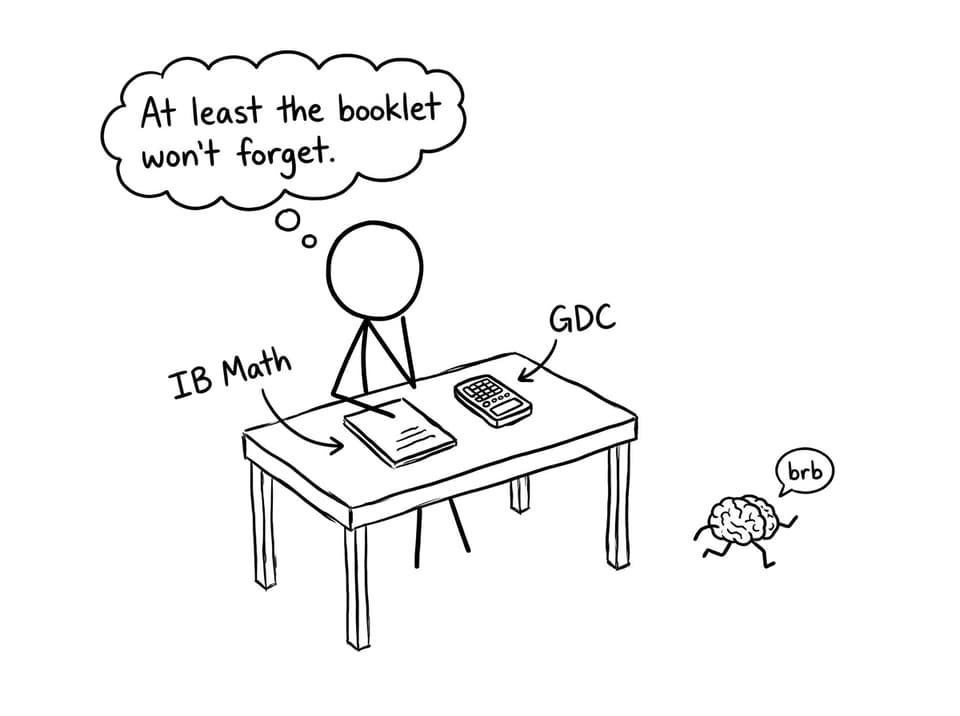
Exam performance is often limited less by knowledge and more by bandwidth. Under stress, your brain spends energy on managing time, interpreting language, and staying calm. Formula sheets in IB Math remove one heavy burden: perfect recall.
That matters because many lost marks come from tiny breakdowns: a missing negative, a wrong coefficient, a derivative remembered “almost correctly.” The formula sheet acts like a stabiliser. You still need to know the method, but you’re less likely to sabotage yourself with avoidable memory errors.
They speed up method selection
A strong IB Math student often looks like they’re “fast,” but the real speed is earlier: they choose a workable method quickly.
The booklet helps because its structure is a map of topics. When you spot a distribution formula, you’re nudged toward the statistics framework. When you see a trig identity, you’re reminded the examiner expects simplification, not brute-force calculation.
They build confidence through certainty
Confidence isn’t positive thinking. It’s knowing you have a fallback.
When you’ve trained with the formula sheet, you walk into Paper 2 or HL extension questions with a quiet certainty: if you freeze, you can re-anchor. That changes how you pace yourself and how willing you are to attempt the harder parts.
How to use formula sheets effectively for IB Math
Practise navigation like it’s a skill (because it is)
Many students only “meet” the booklet during mocks. That’s like learning a calculator during the exam.
Instead, build repetition:
-
During timed practice, force yourself to locate formulas rather than relying on memory.
-
Learn landmarks: where calculus tables live, where distributions sit, where vector results appear.
-
Revisit the same sections until you can find them without a search-pattern panic.
A practical way to do this is to run targeted practice sets in a structured system. RevisionDojo’s IB Math: Targeted Revision Using the Questionbank shows how to turn practice into feedback loops (not just question collecting).
Train with an annotated practice copy (but respect exam rules)
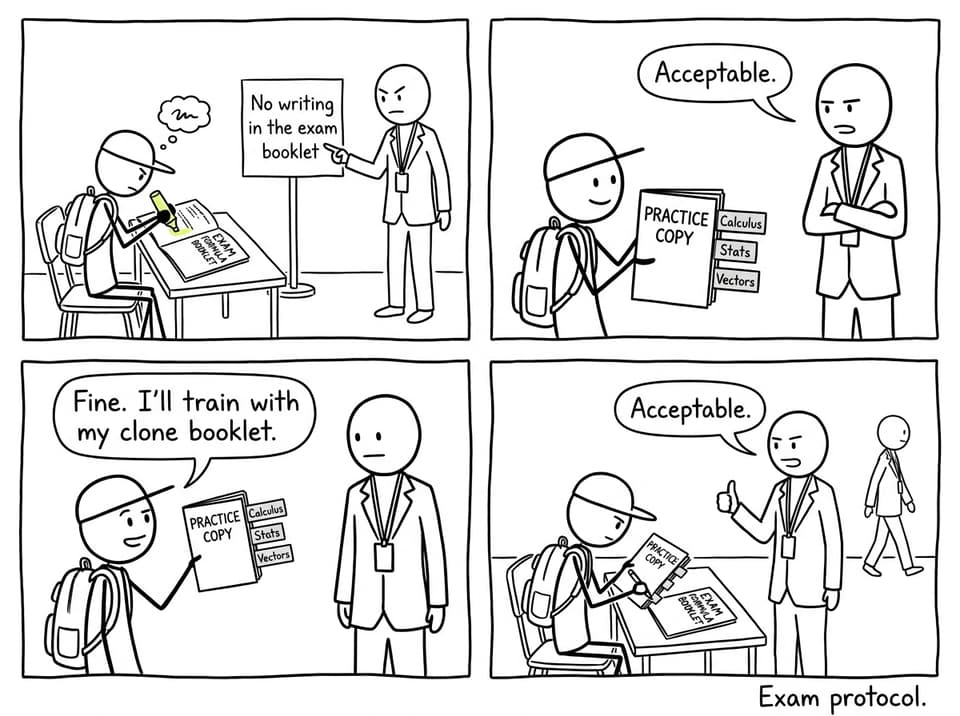
You can’t write on the exam booklet. But you can absolutely annotate a revision copy to accelerate learning.
Good annotations are reminders of meaning, not extra formulas:
-
“Use when asked for mean/variance”
-
“Goes with normal distribution”
-
“Pairs with chain rule”
If you want a clean, syllabus-aligned version to train from, use IB Mathematics Analysis and Approaches Data Booklet and pair it with topic practice.
Learn what the formula sheet does NOT give you
This is where many IB Math students lose marks: they have the correct formula but not the correct explanation.
Formula sheets do not supply:
-
command-term thinking (justify, verify, hence)
-
reasoning steps
-
interpretation
-
clear mathematical communication
If your solutions are thin, RevisionDojo’s AI Chat is useful for asking, “What would the examiner want written here?” Then lock it in with Flashcards (turn your mistake pattern into one recall prompt) and drill it using the Questionbank.
Connect the booklet to paper strategy
Formula sheets matter differently depending on paper:
-
Paper 1 is where fluency and memorisation matter more (no booklet).
-
Paper 2 rewards using the booklet calmly while still showing method.
-
HL extension papers reward stamina: the booklet is there, but the question design still demands judgement.
To align your revision, use these RevisionDojo guides:
Common formula-sheet mistakes (and how to avoid them)
-
Using the formula sheet as a crutch: If you can’t explain what each symbol represents, the formula won’t rescue you.
-
Losing time flipping: If you need 45 seconds to find something, practise navigation until it’s 10.
-
Skipping working: In IB Math, marks live in method. The booklet helps you start correctly, but you still must show the path.
-
Ignoring exact vs approximate answers: The booklet doesn’t decide whether to leave an answer exact. The question context does.
If your weakness is “I know the math but my exam answers don’t score,” RevisionDojo’s Grading tools (plus Mock Exams) are the fastest way to see what the markscheme rewards in real time.
A calm final thought (and a practical next step)
In IB Math, the formula sheet is not a shortcut. It’s a signal from the examiners: “We care less about whether you can store every equation in your head, and more about whether you can think with them under pressure.”
So treat the booklet like a skill. Practise finding, choosing, and applying formulas while writing solutions that earn method marks.
If you want a complete setup for that, RevisionDojo is built for it: Study Notes for clarity, Flashcards for recall, AI Chat for stuck moments, the Questionbank for targeted drills, Grading tools to learn what earns marks, and Mock Exams plus Predicted Papers to rehearse the real thing. Start by opening the IB Mathematics Analysis and Approaches Data Booklet and pairing it with one timed Questionbank set today.