


A door closes in chapter one. Nothing dramatic. Just a sound in a hallway.
Then, fifty pages later, you realise the entire story has been quietly leaning on that click.
That moment is why IB English rewards students who notice how writers control time. Foreshadowing and flashback are not decorative techniques you name in a sentence and move on. They are structural decisions that shape tension, pace, character, and theme. And in IB English, structure is often where the highest marks are hiding: not in what happened, but in why the author chose to reveal it this way.
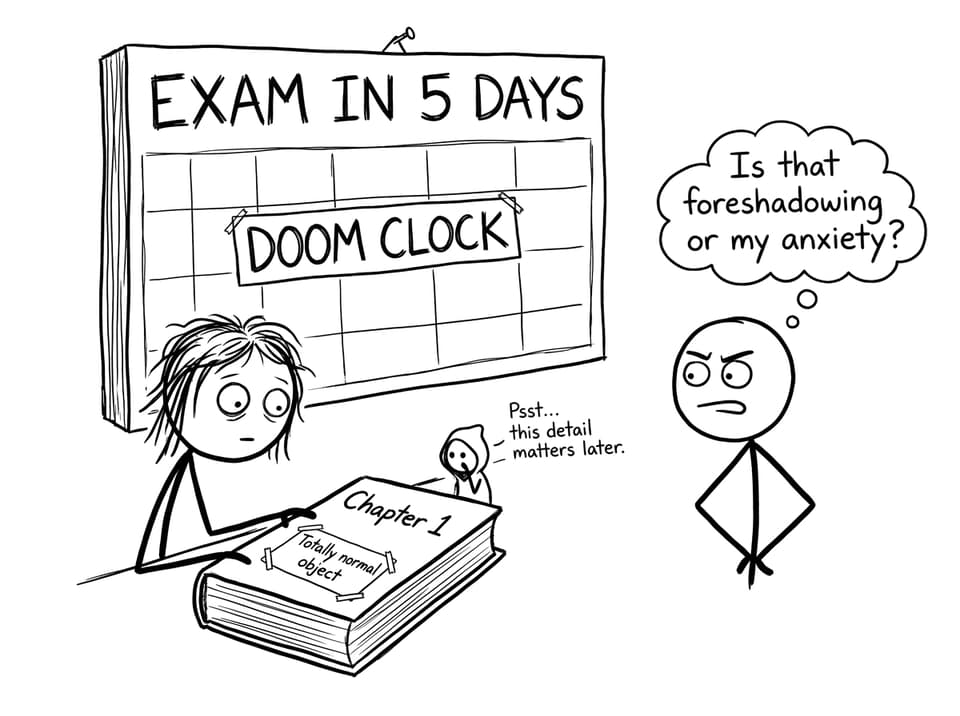
The IB English checklist for foreshadowing and flashback
Use this fast scan in IB English Paper 1, Paper 2, and even when building an Individual Oral line of inquiry:
-
Identify the time move: foreshadowing (forward pull) or flashback (backward reveal).
-
Quote the trigger: a repeated image, a line of dialogue, a tense shift, a sudden memory.
-
Explain the immediate effect: suspense, irony, dread, intimacy, uncertainty.
-
Explain the delayed effect: how it changes later scenes or re-colours earlier ones.
-
Link to a theme: fate, memory, guilt, identity, consequence.
If you want a bigger Paper 1 method to hold this together under time pressure, pair this article with Mastering IB English Paper 1: A Complete Guide.
Foreshadowing in IB English: the art of controlled anticipation
Foreshadowing is the author placing a small weight on the reader’s mind. We might not know what it means yet, but we feel that it matters. In IB English, your job is to show how that weight is planted and what it trains the reader to expect.
What foreshadowing usually looks like
Foreshadowing can be loud, but it is more often quiet. Look for:
-
Symbolic details: objects, colours, weather, recurring motifs that gather meaning.
-
Loaded dialogue: warnings, jokes that turn bitter later, oddly specific statements.
-
Atmospheric foreshadowing: tone that signals instability before events do.
-
Structural emphasis: a detail placed at the start or end of a paragraph, scene, or chapter.
A useful habit for IB English Paper 1 is to ask: Why did the writer spend words on this? If a detail receives unusual attention, it often has structural work to do.
To sharpen your ability to describe that work in exam language, keep Mastering Literary Devices in IB English Exams open when you practise.
What foreshadowing does to reader psychology
Foreshadowing creates a second story in the reader’s head: the story of prediction. We start scanning for confirmation. We start bracing. In IB English, this is gold because it lets you write analysis that is specific to reader response:
-
It stretches tension by delaying payoff.
-
It creates dramatic irony when readers know more than characters.
-
It suggests inevitability, making outcomes feel earned rather than random.
-
It can build thematic resonance, where the ending feels like a completion of earlier patterns.
If you need language for discussing how structure affects tension and pace, these Structure in Prose notes are a strong reference point.
Flashback in IB English: memory as narrative evidence
A flashback is not just “backstory.” It is a timed release of information. It interrupts the present to reshape how we interpret the present. In IB English, you earn marks when you explain why the author chooses this moment to look back.
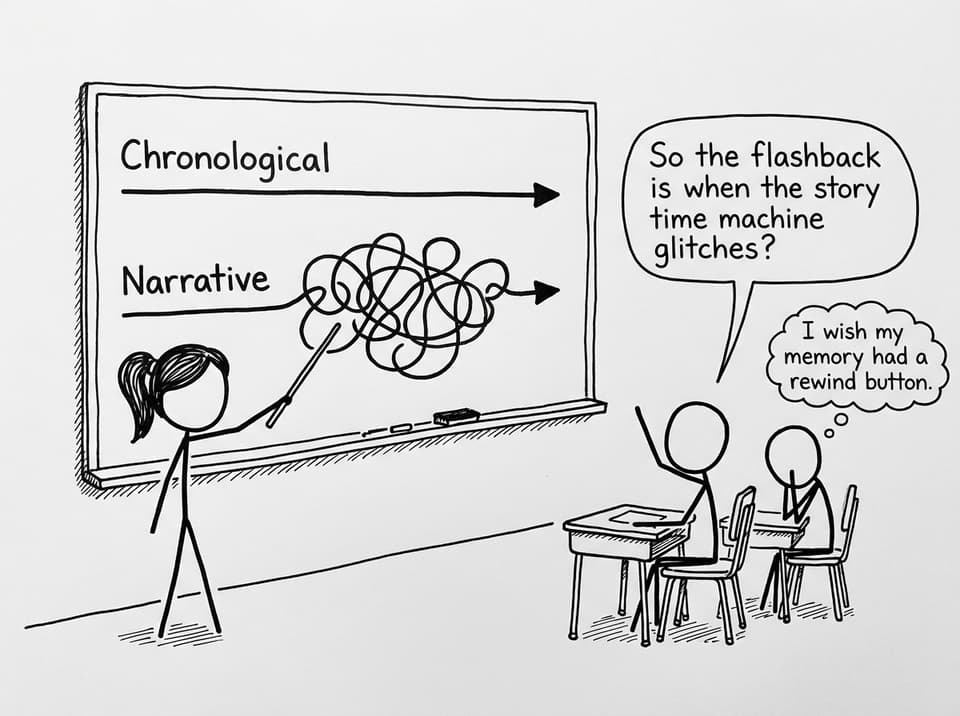
Common signals that a flashback is happening
Flashbacks can be obvious, but they can also slide in quietly. Watch for:
-
Tense shifts (especially into past perfect or a sudden change in rhythm)
-
Setting jumps (new location without transition)
-
Perspective shifts (a memory voice, a younger self, free indirect style)
-
Sensory triggers (smell, sound, object) that “unlock” a scene
If you want quick definitions to keep terminology clean in IB English, use the English Lang & Lit glossary to avoid fuzzy phrasing.
What flashback does to structure, not just content
Flashback changes narrative pacing in two directions at once. It slows the present action, but it can intensify tension by reframing stakes. A flashback placed right before a decision can:
-
delay the outcome (suspense)
-
explain a motive (emotional logic)
-
expose guilt or trauma (theme)
-
complicate sympathy (character depth)
That is why IB English examiners respond well to sentences that connect time shifts to meaning, not just plot.
If you are practising prose extracts, the Prose Fiction notes offer a reliable analysis framework you can reuse.
When foreshadowing and flashback work together
Writers often braid these techniques. A hint in the present may only make sense after a flashback. Or a flashback might plant new foreshadowing by showing a pattern repeating.
In IB English, this is a strong paragraph move: you can argue that time manipulation is not random, but patterned. For example:
-
repeated flashbacks can suggest a character cannot escape an earlier event
-
heavy foreshadowing can create an atmosphere of fate or doom
-
alternating time layers can show how identity is built from memory rather than linear growth
If you are revising for comparative writing, connect this to Paper 2: how do different authors handle memory, fate, or consequence through structure? For structure help, see IB English Paper 2: Essential Guide for Success.
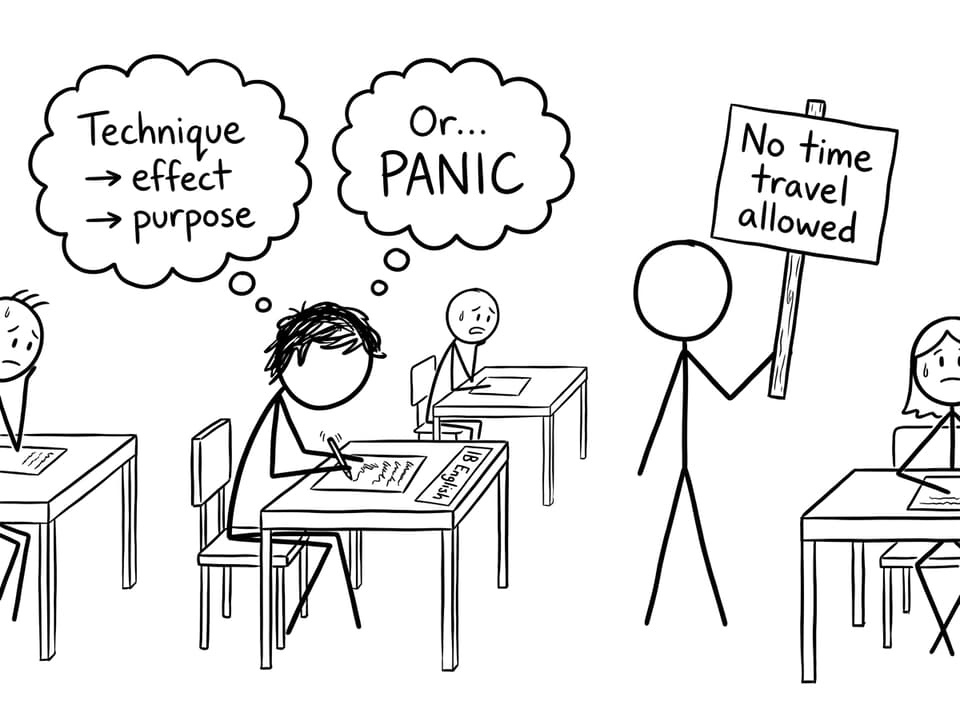
How to write about foreshadowing and flashback in exams
In IB English, the safest formula is simple and repeatable:
Technique -> evidence -> effect -> purpose -> theme
Name foreshadowing or flashback precisely, embed a short quotation, and then explain the reader effect and the author purpose. If you find yourself writing “this builds suspense,” force yourself to add: how? Suspense because information is withheld? Because tone becomes ominous? Because the detail creates expectation?
To practise this with feedback, RevisionDojo’s Questionbank is built for repetition without drifting. You can also drill course-aligned questions in the IB English A Lang & Lit Paper 1 Questionbank and the IB English A Lang & Lit Paper 2 Questionbank.
Closing: time control is meaning control
Foreshadowing and flashback matter because they prove a quiet truth: narrative time is never neutral. Writers arrange it to guide your expectations, shape your sympathy, and make themes feel inevitable rather than stated. When you can explain that arrangement clearly, your IB English analysis stops being a list of techniques and becomes an argument about design.
If you want that skill to become automatic, build a loop: practise in the Questionbank, refine with Study Notes, turn recurring patterns into Flashcards, and use AI Chat and grading tools to test whether your paragraphs actually explain effect and purpose. RevisionDojo is built to make that routine feel calm, repeatable, and exam-ready for IB English.


