



Sustainability in IB Design Technology is one of those topics that feels obvious until you sit down to write an exam response. Then the words “eco-friendly” show up like filler, and you realize the question is really asking for something sharper: evidence, trade-offs, and a clear view of impact across a product’s whole life.
For IB students preparing for exams (first exams in 2027), sustainability in IB Design Technology is not a side chapter. It is a lens. It changes how you justify materials, manufacturing, energy use, and end-of-life decisions.
A quick sustainability checklist for IB Design Technology
Use this as your default before you write any response in IB Design Technology:
-
Define sustainability in the context of the scenario (not in general).
-
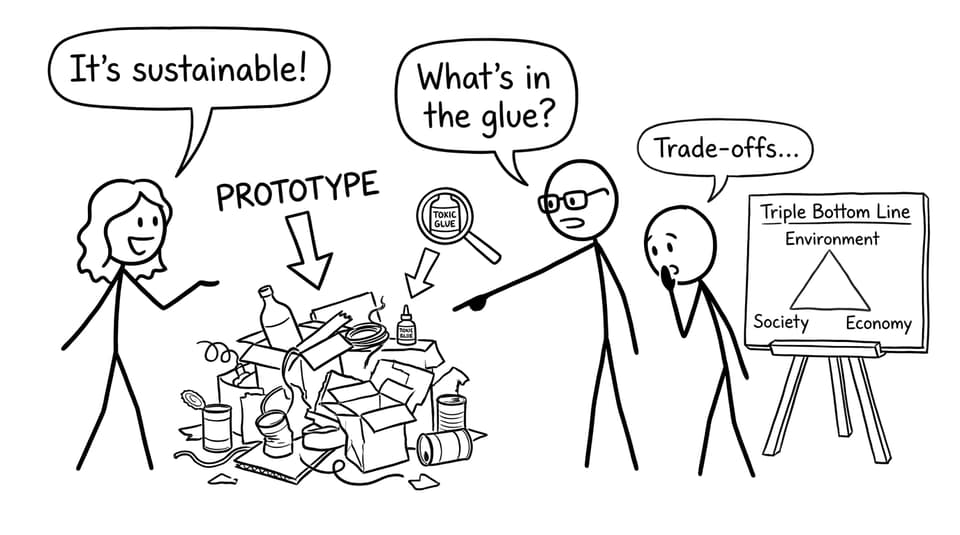
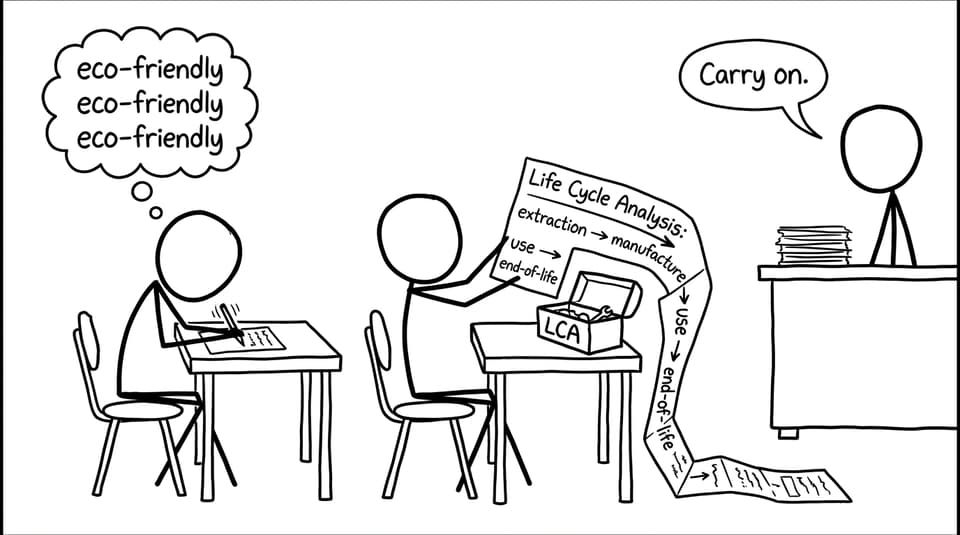
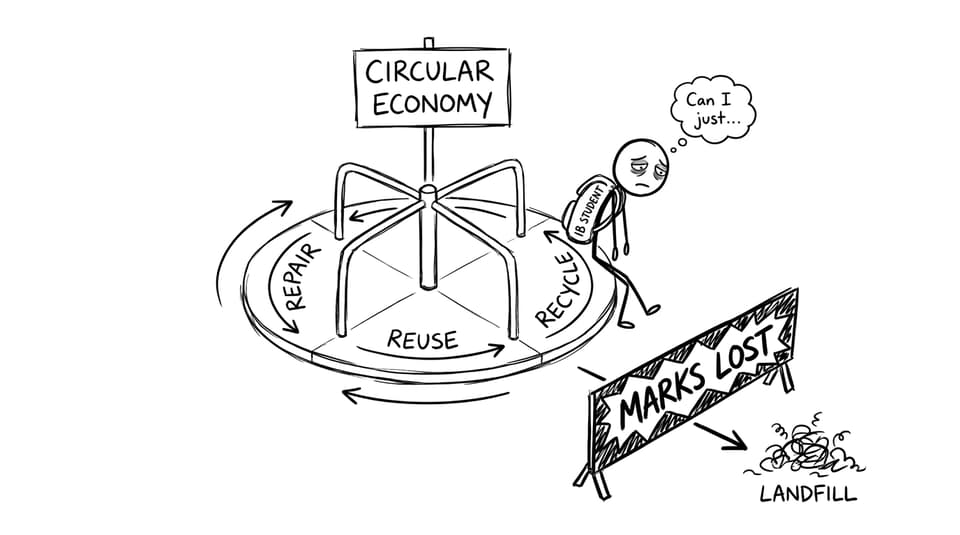
Mention at least one tool: life cycle analysis (LCA), circular economy, or triple bottom line.
-
Compare options and explain trade-offs (what improves, what gets worse).
-
Link decisions to user needs, resources, and production realities.
-
End with a justified recommendation, not a slogan.
If you want a syllabus-aligned home base, start at the IB Design Technology resources page.
What sustainability means in IB Design Technology (beyond “green”)
In IB Design Technology, sustainability is about designing products and systems that reduce harm while staying realistic about constraints. Examiners reward students who can explain impact across:
-
Materials (renewable vs non-renewable, recyclability, toxicity, embodied energy)
-
Production (waste, energy demand, transport, efficiency)
-
Use phase (durability, repairability, energy consumption, maintenance)
-
End-of-life (reuse, recycling, disassembly, composting, landfill risk)
A good way to frame this is the triple bottom line: environmental, social, and economic outcomes. RevisionDojo’s dedicated topic page helps you anchor that language quickly: C2.1.3 The Triple Bottom Line (TBL).
How sustainability shows up in exams and coursework
Sustainability in IB Design Technology is tested in more than one “type” of thinking.
Definitions and short application (Paper 1 style thinking)
You might be asked to distinguish renewable/non-renewable, explain LCA, or identify a waste mitigation strategy. Precision matters, so build a definition loop using tools like RevisionDojo Flashcards and Study Notes within the IB Design Technology hub.
Evaluation and trade-offs (Paper 2 and HL case-study style thinking)
Extended responses often want comparison: “Assess the sustainability of…” or “Evaluate the choice of…” Practice writing two-sided arguments with a clear conclusion, not just a list.
For targeted practice, use RevisionDojo’s Questionbank sets and feedback loops, then widen to timed practice through Mock Exams and Predicted Papers:
Coursework and IA alignment
Your design project gets stronger when sustainability is visible in decisions, not just in the final paragraph. If you’re unsure how to frame it, this article is a useful reference for how questions are worded and what they reward: How does sustainability appear in IB Design Technology questions?
Sustainable IA project angles that actually score
Strong IB Design Technology sustainability projects usually do one thing well: they make sustainability measurable.
Examples:
-
Compostable or mono-material packaging: compare barrier performance vs end-of-life outcomes.
-
Solar-powered study accessory: evaluate use-phase energy savings vs manufacturing footprint.
-
Reusable filtration system: prioritize maintenance, durability, and local material availability.
-
Modular furniture: show how repair and part replacement extend product life.
If you need idea sparks that are achievable, start here: IB Design Technology Project Ideas for Students.
How to study sustainability in IB Design Technology (fast, but not shallow)
Build vocabulary with use-cases
Terms like LCA, circular economy, cradle-to-cradle, and embodied energy score best when attached to an example product. Use C2.1 Design for sustainability notes to learn the wording, then drill recall with Flashcards.
Learn one framework deeply
Datchefski’s principles are a reliable way to structure evaluation in IB Design Technology. When you can apply a framework calmly, your answers stop sounding like opinions.
Practice under exam conditions with feedback
RevisionDojo is built for this loop: Study Notes for clarity, Questionbank for volume, AI Chat when you get stuck, Grading tools to understand what earns marks, then Predicted Papers and Mock Exams for stamina.
If you want a simple weekly structure, borrow from: Best Study Strategies for IB Design Technology.
Conclusion: turn sustainability into marks, not vibes
Sustainability in IB Design Technology is where vague language goes to die. The subject rewards students who can think like designers: measure impact, compare options, and explain trade-offs with calm clarity.
If you want a single system to learn, practise, and improve quickly, RevisionDojo brings it together with Study Notes, Flashcards, Questionbank, AI Chat, Grading tools, Predicted Papers, Mock Exams, a Coursework Library, and access to Tutors. Start with the IB Design Technology hub and build your sustainability answers until they sound like decisions, not slogans.