
The quiet reason your IB scores jump after the right mock
The first time most students sit a full IB mock, they don’t lose marks because they “don’t know the content.” They lose marks because the exam asks for a specific kind of thinking at a specific speed. It’s like training for three different sports while wearing the same school uniform.
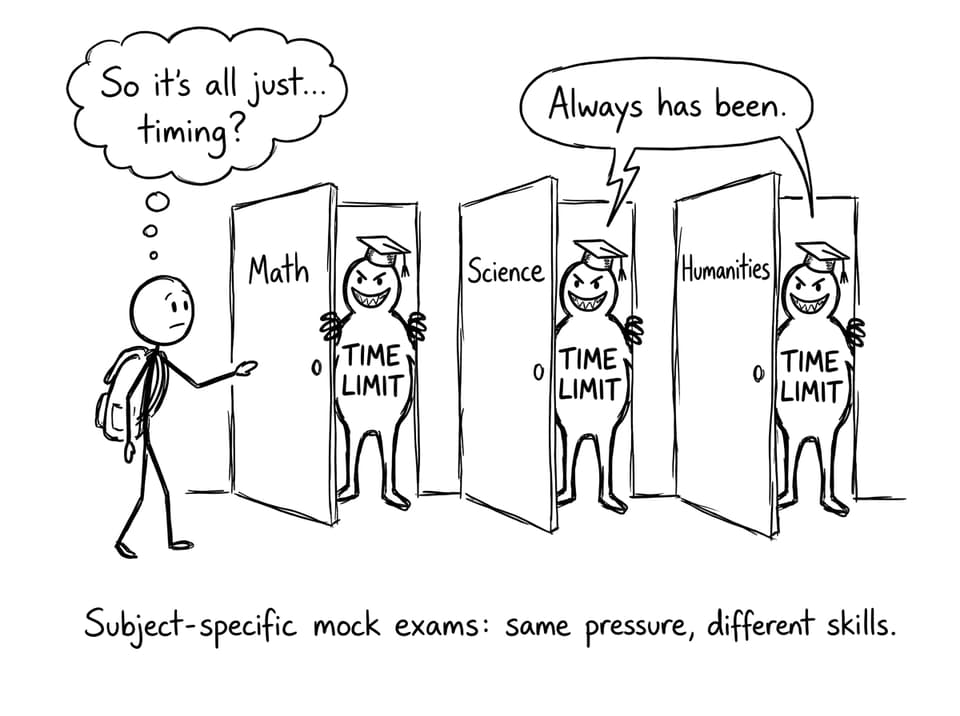
That’s why IB subject-specific mock exams work so well. They don’t just test what you remember. They train how you perform in Math, Science, and Humanities when the clock is loud, your handwriting gets worse, and every question starts to look like it has a hidden trap.
Quick checklist: what a good IB subject mock should include
Use this as your filter before you spend an evening on a mock:
-
IB-style structure (paper feel, question variety, command terms)
-
Real timing (no pausing, no “just checking one thing”)
-
Marking + feedback (rubric-aware, not vibes)
-
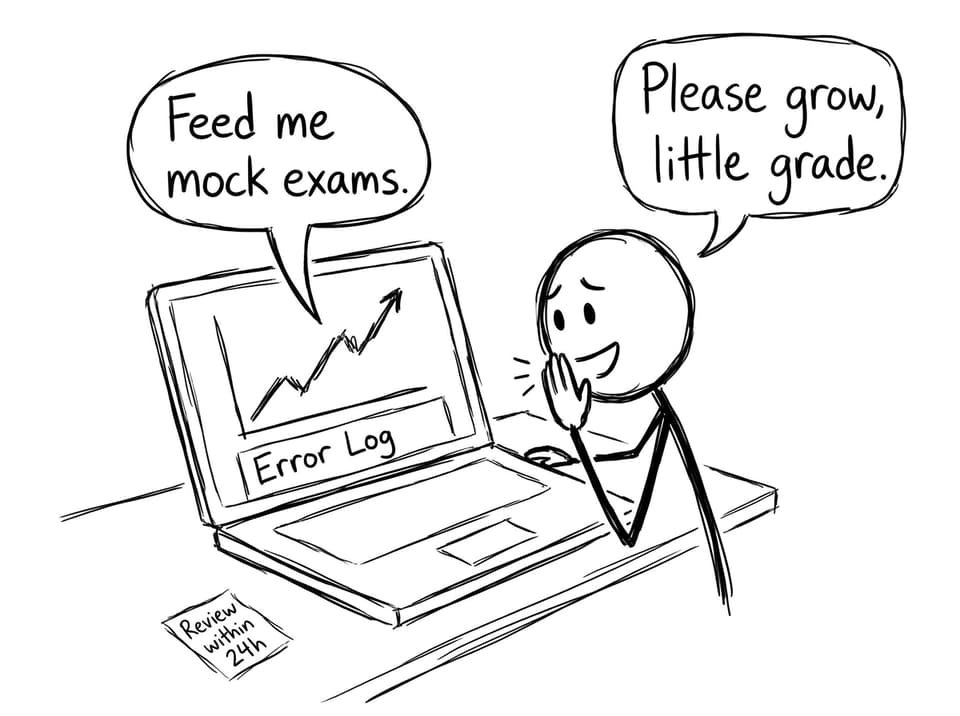
An error log that turns mistakes into repeatable rules
-
A retest plan within 48 hours
If you want a system that’s built around this loop, RevisionDojo’s tools make it straightforward: Mock Exams, Grading tools, AI Chat, and analytics that point to your next best step.
A helpful pacing companion is Timed IB Practice Tests: Boost Exam Stamina and Speed.
IB Math mock exams: speed is a skill, not a personality trait
In IB Math, subject-specific mock exams are less about “more practice” and more about better constraints. The paper rewards clean method, accurate algebra, and calm pacing.
A strong IB Math mock should force you to practice:
-
Choosing methods fast (not trying three approaches per question)
-
Showing work efficiently (enough for method marks, not a novel)
-
Recovering after a mistake without losing five more minutes
If you’re building your own sets, use a targeted approach like Custom IB Mock Exams: Build Practice Tests by Topic. On RevisionDojo, you can combine the Questionbank with Mock Exams so your weaknesses in functions, calculus, or statistics get tested under pressure, not just reviewed.
IB Science mock exams: data, diagrams, and disciplined explanations
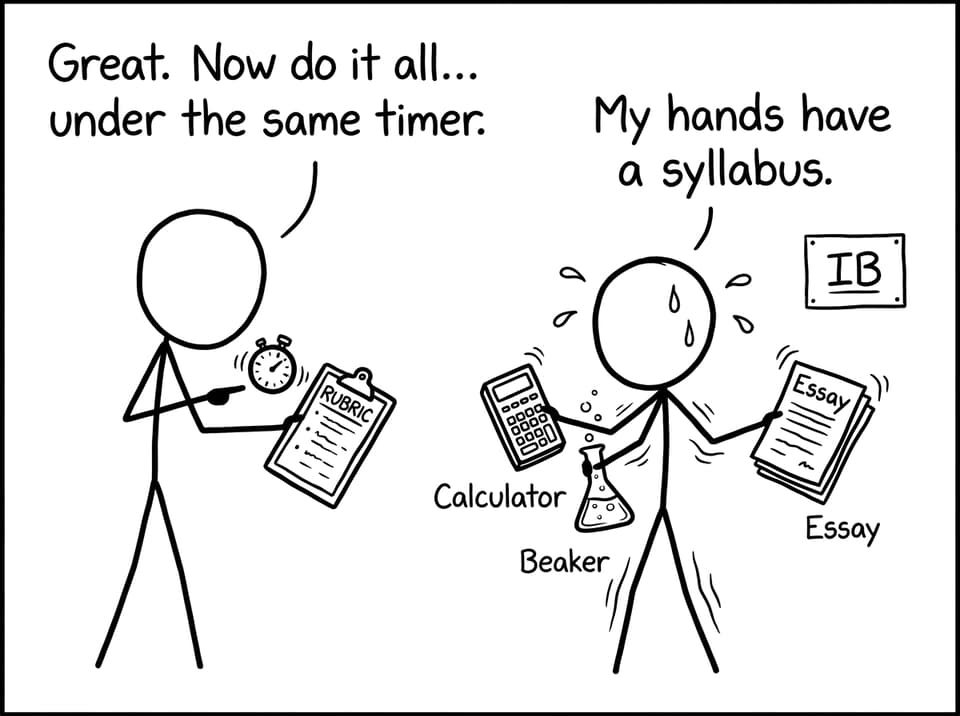
In IB Sciences, students often revise like the exam is a memory contest. Then the mock arrives and asks them to interpret messy data, justify a conclusion, and label a diagram like an adult.
Subject-specific IB Science mock exams are powerful because they train the real scoring behaviors:
-
Reading the question like a scientist (variables, controls, uncertainty)
-
Writing explanations that earn marks (key terms + logic, not fluff)
-
Handling data response without panicking at tables or graphs
RevisionDojo helps here because you can move from Study Notes (clarity), to Flashcards (recall), to the Questionbank (application), and then into Mock Exams (performance). When you get stuck on why your answer lost marks, AI Chat can help you debug the reasoning step-by-step.
IB Humanities mock exams: structure beats inspiration
In IB Humanities, mocks reveal a hard truth: you can know the topic and still lose marks if your argument is unclear. The paper doesn’t grade effort. It grades decisions: what you select, how you organize it, and whether you actually answer the prompt.
Subject-specific IB Humanities mock exams should train:
-
Thesis discipline (one claim you can prove)
-
Evidence selection (the right examples, not the most examples)
-
Paragraph control (point, support, analysis, link back)
For TOK-focused students, frameworks from TOK Areas of Knowledge (AOK) Exploration Explained with Examples can double as timed writing prompts. And for English A students, practicing under pressure pairs well with Cracking the Individual Oral: The Ultimate Guide for IB Students.
How to review subject-specific IB mocks (the 20-minute method)
Your score improves most after the mock. The review is where patterns become visible.
Try this 20-minute loop:
-
5 minutes: Sort mistakes into buckets (content gap, misread, timing, structure).
-
10 minutes: Write 3-5 “error rules” (example: “If the question says evaluate, I must weigh pros/cons.”).
-
5 minutes: Schedule a retest using targeted drills.
If you need a broader reset after a disappointing performance, Failed Mock Exams? You Can Still Pass IB is a grounding guide. And if timing is your recurring issue, How Long Are IB Exams? Time Breakdown Explained helps you convert duration into pacing rules.
The call that matters: make your IB mocks specific, then make them repeatable
Subject-specific IB mock exams are less about proving you’re smart and more about making your performance predictable. Math rewards method under pressure. Science rewards disciplined interpretation. Humanities rewards structure and evidence.
If you want one place to run the whole loop, start at RevisionDojo for IB and build your routine around Questionbank, Study Notes, Flashcards, Mock Exams, Predicted Papers, AI Chat, Grading tools, the Coursework Library, and Tutors when you want a human strategy check.
Do one subject-specific IB mock this week. Review it like an analyst. Then retest the exact weakness. That’s how scores move.