



In a quiet way, the most confusing global headlines all tell the same story: the world rarely moves because one government decides it should. A policy shifts after a viral campaign. A conflict escalates because a militia funds itself. A trade rule changes because a corporation threatens to relocate. In IB Global Politics, that messy reality becomes manageable once you can separate state actors from non-state actors and then explain how they collide, cooperate, and blur.
If you are revising IB Global Politics for exams, this distinction is not a definition question. It is an analysis skill.
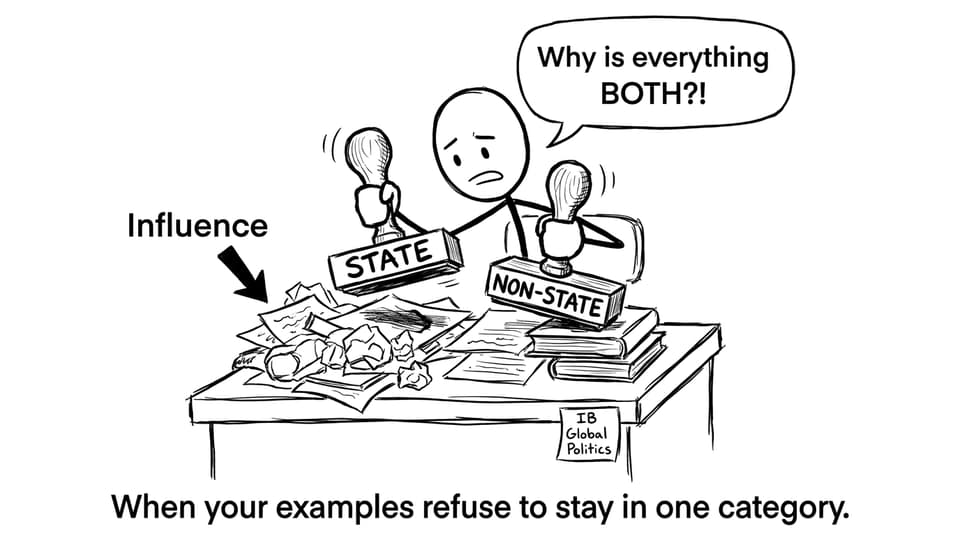
The fast checklist (before you write)
Use this mini-plan in IB Global Politics essays and source responses:
-
Define state actors and link them to sovereignty
-
Define non-state actors and link them to influence without sovereignty
-
Identify the mechanisms of influence (law, money, norms, violence, information)
-
Evaluate legitimacy (legal authority vs perceived credibility)
-
Add a judgement: who matters most in this issue, in this context?
For quick concept refreshers, start from the IB Global Politics Resources hub and jump into the relevant notes.
State actors in IB Global Politics: power with sovereignty
A state actor is a sovereign political entity (a country and its institutions) with recognized authority over a territory and population. In IB Global Politics, states are still central because they can make and enforce laws, collect taxes, control borders, negotiate treaties, and command armed forces.
The keyword that turns this into an exam-ready definition is sovereignty: the right and capacity of the state to govern itself without external interference. That single concept lets you explain why states have a special legal status, even when they are weak or unstable.
If sovereignty feels slippery, keep a clean definition ready using What Is Sovereignty in Global Politics? and reinforce it with the IB Global Politics Glossary.
Non-state actors in IB Global Politics: influence without flags
Non-state actors are groups or individuals that shape political outcomes without being part of a national government. In IB Global Politics, the common categories include:
-
IGOs (created by states, but operating across states)
-
NGOs and civil society groups
-
Multinational corporations (MNCs)
-
Media networks and influential individuals
-
Violent groups such as terrorist organizations or rebel movements
They do not have sovereignty. But they can still change what governments do by shifting incentives, information, or public legitimacy.
To lock in the categories with examples, use the syllabus-aligned notes on Violent and non-violent state and non-state actors and the overview of Intergovernmental Organizations notes.
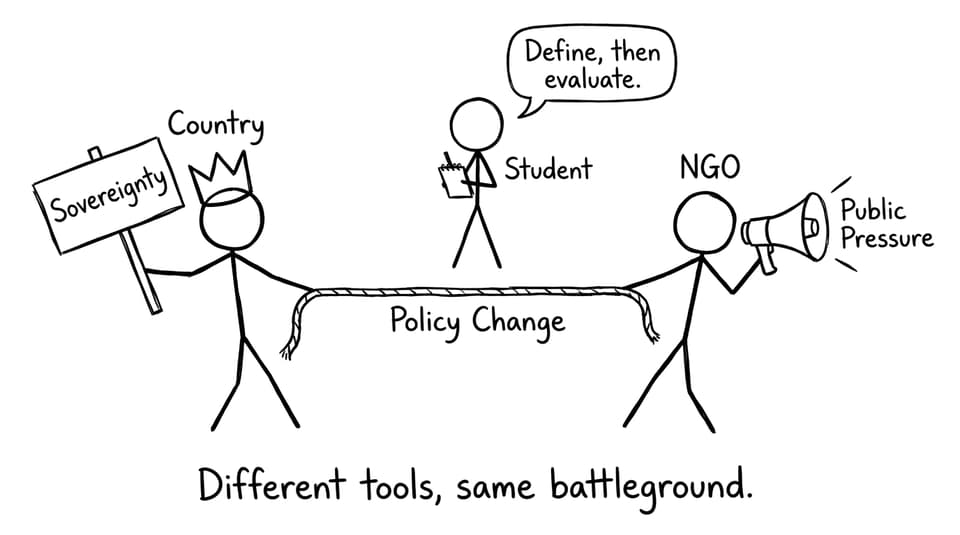
The exam-winning contrast: legitimacy and methods of influence
In IB Global Politics, top answers compare more than “states vs NGOs.” They compare legitimacy and tools.
Legitimacy
States usually claim legitimacy through law, elections, constitutions, and international recognition. Non-state actors often build legitimacy differently: expertise, effectiveness, moral authority, transparency, or public trust. This is why an NGO report can embarrass a government even without any legal power.
To practise this concept directly, the Legitimacy questionbank and Legitimacy flashcards on non-state actors help you memorise definitions and then apply them.
Methods of influence
-
States: diplomacy, law, sanctions, aid, coercion, military force
-
Non-state actors: lobbying, campaigns, market pressure, expertise, norm-setting, disruption, information warfare
If you want a clean “mechanisms” paragraph you can reuse, revise with How Do Non-State Actors Influence Global Politics? and plug those mechanisms into your case study.
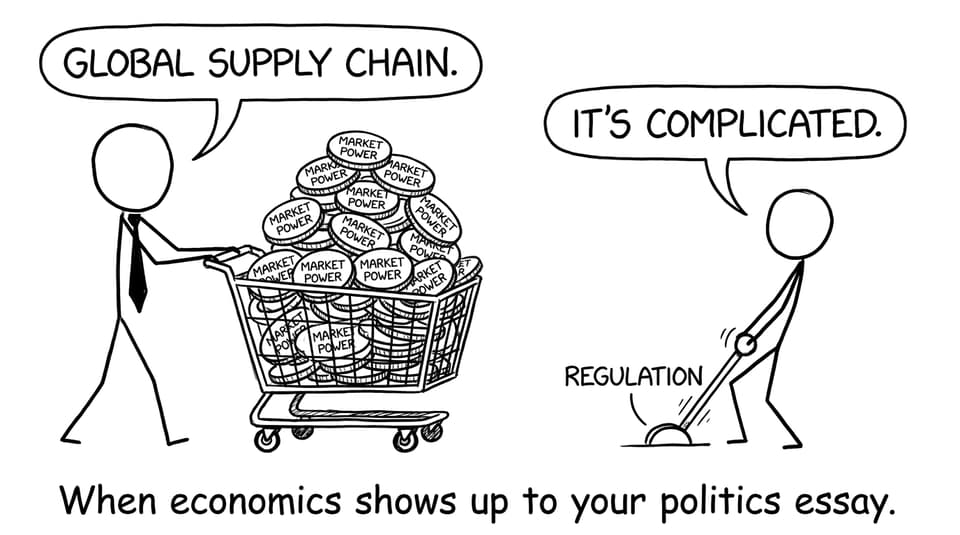
How to use this distinction in Paper 1 and Paper 2
For IB Global Politics exams, this topic is a structure tool.
-
In Paper 1, quickly map each source to an actor type and a motive, then evaluate what that actor can realistically achieve. Pair this with How to Answer IB Global Politics Paper 1 Questions.
-
In Paper 2, build paragraphs around a contest: state authority vs non-state pressure, then judge which matters more under which conditions. Use How to Structure IB Global Politics Paper 2 Essays.
When you practise, RevisionDojo makes the loop simple: learn the concept in Study Notes, test it in the Questionbank, drill it with Flashcards, refine your writing with AI Chat and Grading tools, then simulate time pressure with Mock Exams and Predicted Papers. If you are working on your engagement activity or examples, the Coursework Library and Tutors can help you choose sharper, more defensible case studies.
Closing: the simple sentence that upgrades your analysis
When you are stuck in IB Global Politics, come back to one sentence: states have sovereignty, but non-state actors have leverage. Your job in exams is to show how those two forces interact in the specific issue you are analysing.
If you want to turn this into marks quickly, use RevisionDojo to practise the same skill in different formats: concept definitions in the Glossary, active recall via Flashcards, structured explanations in Study Notes, timed application through Mock Exams and Predicted Papers, and feedback using AI Chat and Grading tools. That is how IB Global Politics stops feeling like endless content and starts feeling like a system you can control.