

Social class is one of those forces in stories you can feel before you can name. A character walks into a room and suddenly the air changes: who speaks first, who apologizes, who gets believed, who gets watched. In IB English, that moment matters because class is rarely decoration. It is a system that shapes desire, shame, ambition, and conflict, and authors know exactly how to make that system visible.
When you learn to track social class, you stop writing essays that sound like plot summaries and start writing essays that sound like arguments: precise, evidence-based, and aware of power.
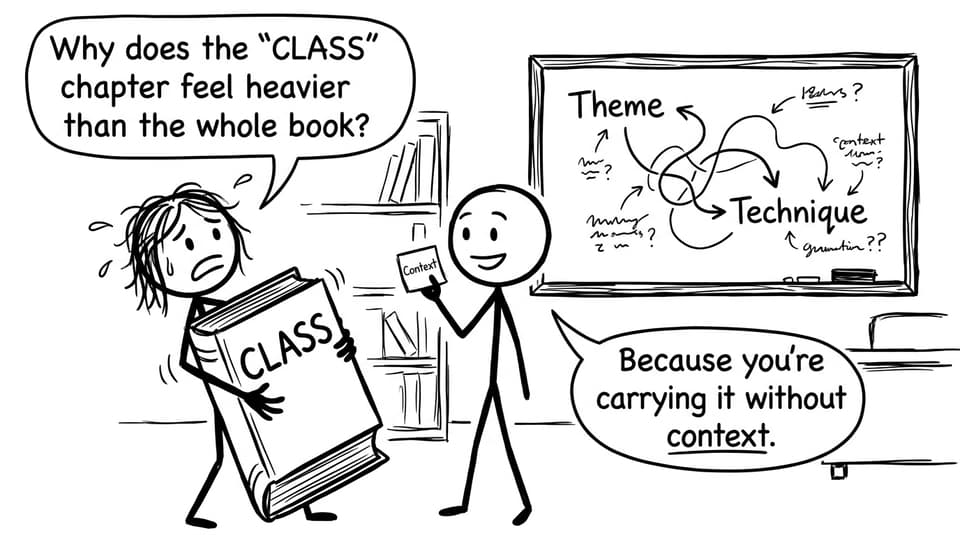
Quick checklist for social class analysis in IB English
Use this as your 60-second reset before you write a paragraph in IB English:
-
Identify who has status, who lacks it, and who is trying to change it.
-
Track what the text treats as “normal” (manners, education, taste, speech).
-
Zoom in on setting details that signal money, labor, or exclusion.
-
Find the pressure point: where class becomes conflict (romance, work, family, law).
-
Name the authorial choices: diction, tone, narration, symbolism, contrast, structure.
If you want an exam-ready method for turning observations into claims, pair this with Close Reading Techniques for Prose and Poetry.
Social class and characterization: who gets to be “complicated”? (IB English)
A quiet trick of class representation is that it decides who is allowed depth. Some characters are written as fully interior, contradictory, reflective, morally mixed. Others are reduced to types: “servant,” “social climber,” “snob,” “outsider.” In IB English, your job is to show how the text creates that imbalance.
Look for:
-
Dialogue and diction: education, confidence, irony, or deference can be built into sentence style.
-
Body language and etiquette: who sits, who stands, who waits, who interrupts.
-
Access to privacy: interior monologue, letters, and narration often signal whose inner life “counts.”
-
Material anchors: clothes, food, objects, and spaces that act as shorthand for rank.
To strengthen technique-focused writing, use Mastering Literary Devices in IB English Exams and turn repeated class cues into a repeatable device-to-effect pattern.

Setting as a class map: space tells the truth
Setting is never just scenery. It is a social diagram.
In class-driven texts, pay attention to how spaces are divided:
-
crowded vs spacious interiors
-
polished public rooms vs hidden work areas
-
borders (gates, thresholds, “back entrances”)
-
distance from centers of power (schools, courts, employers, “respectable” streets)
In IB English, a strong move is to link setting to consequence: not just “the house is large,” but “the house creates isolation,” or “the cramped room turns privacy into surveillance.”
For Paper 1 specifically, practice turning setting into structured commentary using IB English Paper 1 Revision: A Step-by-Step Guide.
Class conflict and power: what the text punishes and rewards
Class conflict in literature can look loud (open discrimination, exploitation) or quiet (polite dismissal, social exclusion). Either way, the core question is power: who can risk honesty, who must perform, and who pays for mistakes.
Common class-conflict patterns you can use in IB English essays:
-
gatekeeping: institutions or groups that decide who belongs
-
moral double standards: the same behavior judged differently by class
-
romance as a social transaction: love framed as risk, rescue, or reputation
-
labor invisibility: work that sustains the “elite world” but stays off-stage
When you write, keep your thesis anchored to authorial choices. If you need a fast structure template, borrow the approach from The Importance of Structure in IB English Analytical Writing.
Mobility, aspiration, and identity: the emotional cost of “moving up”
Social mobility plots are rarely only about money. They are about identity pressure.
Characters who aspire upward often face:
-
self-invention (changing speech, taste, relationships)
-
shame or impostor feelings
-
betrayal of origins (real or perceived)
-
disillusionment when the new world still withholds belonging
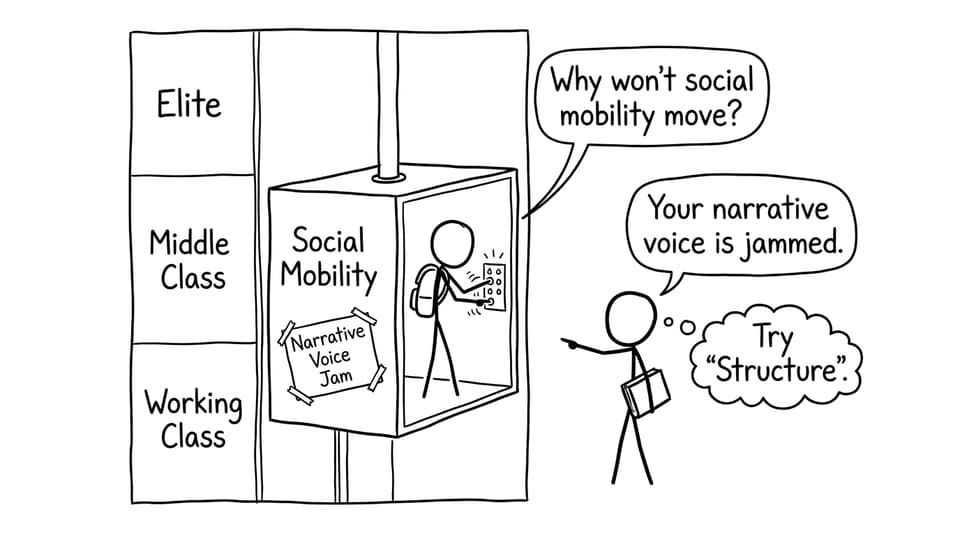
In IB English, you can elevate your analysis by linking mobility to narrative form: does the narration admire the climb, mock it, or mourn it? Does structure create a “rise and fall” arc? Does irony expose the dream as fragile?
How to turn class analysis into exam marks (RevisionDojo workflow)
Here’s a practical loop you can run all week for IB English:
-
Train technique spotting with IB English: Write a Top-Scoring Paper 1 Commentary.
-
Build a sharper argument using IB English Thesis Statements: A Clear Writing Guide.
-
Practice prompts with RevisionDojo’s Questionbank, then use AI Chat to pressure-test interpretations.
-
Draft one paragraph and run it through RevisionDojo’s Grading tools to see which criterion is weakest.
-
Convert recurring mistakes into Flashcards.
For a central hub that connects notes, practice, and planning, bookmark IB English A Lang & Lit Resources and use the Study Notes, Mock Exams, Predicted Papers, and Tutors when you need targeted feedback.
Conclusion: make class an argument, not a label
Social class analysis is not about spotting “rich vs poor.” It is about showing how a text builds a world where opportunity, dignity, and belonging are distributed unevenly, and how characters adapt, resist, or break.
If you want to score higher in IB English, treat class as a lens that forces precision: in characterization, setting, narrative voice, and conflict. Then practice that precision with RevisionDojo: use the Questionbank for exam-style prompts, Study Notes for technique refreshers, AI Chat for quick feedback, and Grading tools to align your writing with the criteria. When your analysis becomes repeatable, your confidence follows.


