



Revision can feel strangely productive when it is actually avoiding the difficult work. You reorganize a folder, highlight a study, or rewrite a definition. The page looks better, but your ability to answer a question has barely changed.
So, does RevisionDojo cover IB Psychology? Yes. RevisionDojo provides dedicated Psychology resources for SL and HL, including Study Notes, lessons, Flashcards, a Questionbank, AI-supported feedback, exam-building tools, Predicted Papers, and resources organized around specific syllabus areas. The important detail is choosing the correct course version for your examination session, because the IB Psychology assessment structure changes for first assessment in 2027.
This guide explains what is covered, how the biological, cognitive, and sociocultural approaches are supported, and which tools are useful for each paper.
RevisionDojo IB Psychology coverage at a glance
Students can begin from the main IB Psychology resource hub, then move between learning, recall, application, and timed practice.
The platform covers:
- Biological, cognitive, and sociocultural approaches
- Research methods and ethical considerations
- SL and HL course material
- Paper-specific question practice
- Study Notes, lessons, videos, and Flashcards
- Questionbank practice with feedback
- Predicted Papers, Mock Exams, and an exam builder
- AI Chat and essay-grading support
- Psychology coursework guidance and tutoring support
- Separate pathways for the course assessed through 2026 and the revised course first assessed in 2027
That last point matters. A resource can explain psychology accurately yet still prepare you for the wrong task. Always confirm your examination session before building a revision plan.
Coverage of the three IB Psychology approaches
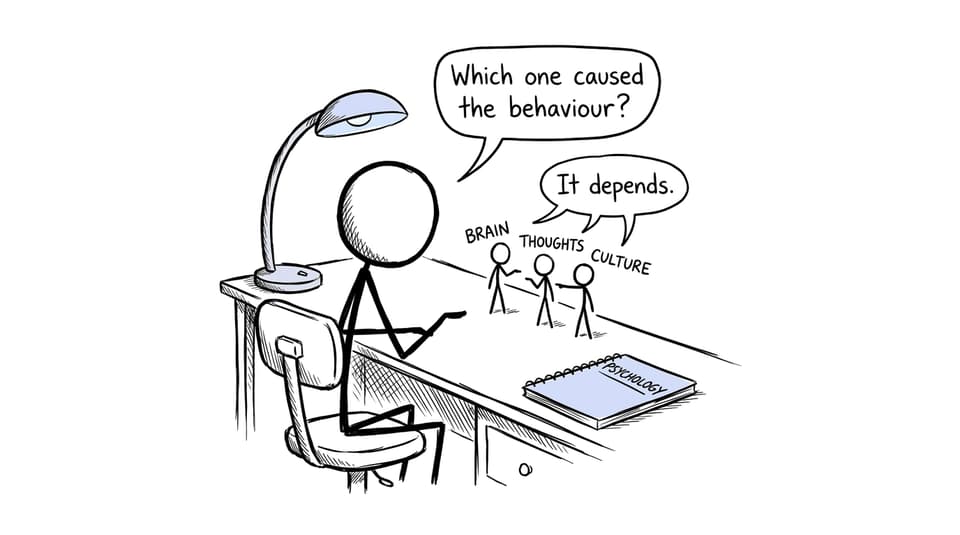
The three approaches are not simply folders of facts. They are different lenses for explaining behaviour, and strong answers recognize both the usefulness and limitations of each lens.
Biological approach
The biological approach explores how physiological processes contribute to behaviour. Depending on the applicable syllabus, this includes areas such as brain function, neuroplasticity, neurotransmission, hormones, genetics, research techniques, animal models, and biological reductionism.
RevisionDojo brings lessons, questions, notes, and recall resources together in its Biological Approach topic hub. Students can then use the dedicated Biological Approach Questionbank to practise moving from a biological concept to a precise explanation supported by appropriate research.
That movement is essential. Memorizing the name of a hormone is not enough. You need to explain the proposed mechanism, connect it to a specified behaviour, use evidence appropriately, and evaluate what the evidence can establish.
Cognitive approach
The cognitive approach examines mental processes such as memory, thinking, perception, decision-making, and the use of cognitive models. The revised course also names content including anchoring bias, confirmation bias, schema theory, cognitive load theory, conditioning, and dual-process explanations.
The Cognitive Approach resource collection supports topic learning, while the newer course pathway includes Cognitive Approach revision notes organized around the updated content.
A useful cognitive revision question is not merely, “Can I define this model?” It is, “Can I use this model to explain unfamiliar behaviour, and can I judge the quality of the research supporting it?” That is the difference between recognition and exam-ready understanding.
Sociocultural approach
The sociocultural approach considers how groups, culture, identity, norms, and social environments shape behaviour and cognition. Relevant areas include social identity, social learning, conformity, cultural dimensions, enculturation, acculturation, cognitive dissonance, and emic and etic perspectives.
RevisionDojo provides focused Sociocultural Approach lessons and a Sociocultural Approach Questionbank. These are useful for practising a common challenge: avoiding broad statements about culture and instead making carefully supported claims tied to a theory, concept, or study.
The best answers also resist treating the approaches as competitors. Human behaviour rarely belongs entirely to biology, cognition, or culture. Evaluation often becomes stronger when you acknowledge interaction without losing focus on the question.
Paper-specific coverage depends on your exam session
As of 2026, two structures are relevant. Students completing the course in a remaining 2026 examination session follow the earlier assessment model. Students first assessed in 2027 follow the revised model introduced for teaching from 2025.
RevisionDojo separates these routes through its established Psychology hub and its IB Psychology first-exam-2027 hub. Check the label before opening notes or building a practice set.
| Assessment route | Paper-specific focus |
|---|---|
| Through 2026 | Paper 1 assesses the core biological, cognitive, and sociocultural approaches. Paper 2 assesses option topics. Paper 3 is an HL-only research-methods paper. |
| First assessment 2027 | Paper 1 integrates concepts, content, and contexts. Paper 2 assesses class practicals and evaluation of an unseen study. Paper 3 is HL-only and focuses on data analysis and interpretation connected to HL extensions. |
Paper 1 for the course assessed through 2026
Under the earlier model, Paper 1 is taken by SL and HL students. It contains short-answer questions on the three core approaches and an extended response selected from a choice of approach-based questions. HL responses may also draw on additional HL material.
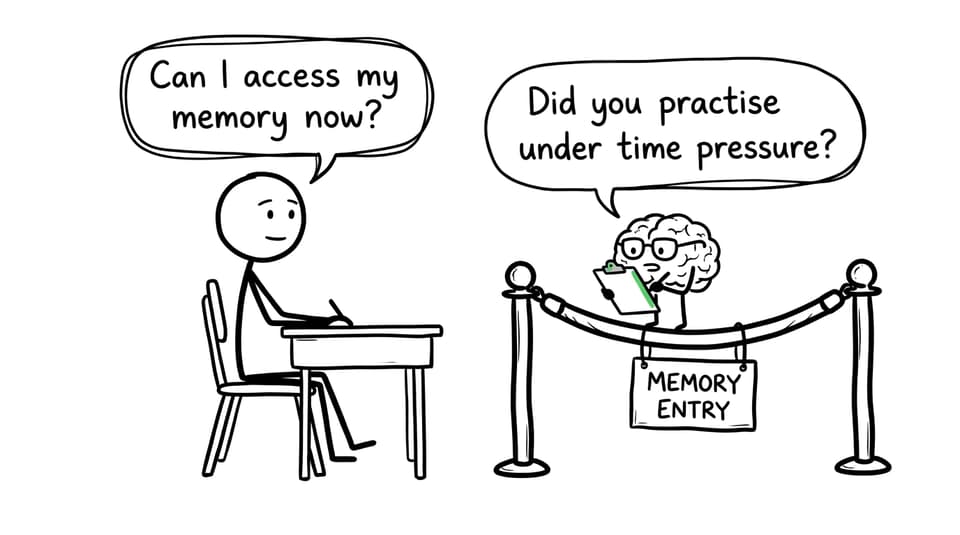
Preparation should therefore combine compact recall with developed argument. Use Flashcards for terminology, research aims, procedures, findings, and evaluation points. Then use Questionbank prompts to practise selecting only the evidence that answers the specific command term.
Paper 2 and Paper 3 through 2026
Paper 2 focuses on applied option topics. SL students prepare one option, while HL students prepare two. RevisionDojo’s Psychology resources include areas such as abnormal psychology, developmental psychology, health psychology, and human relationships.
Paper 3 is for HL students and assesses approaches to research. The IB Psychology Paper 3 resource area provides focused practice for interpreting research scenarios and applying methodological and ethical understanding.
Paper 1 from first assessment 2027
The revised Paper 1 lasts 1 hour 30 minutes for both SL and HL and is worth 35 marks. It integrates three content areas: biological, cognitive, and sociocultural, with concepts and four contexts: health and well-being, human development, human relationships, and learning and cognition.
Section A contains two compulsory short-answer questions from two content areas. Section B asks students to apply content to unseen situations. Section C requires one concept-based extended response chosen from two questions.
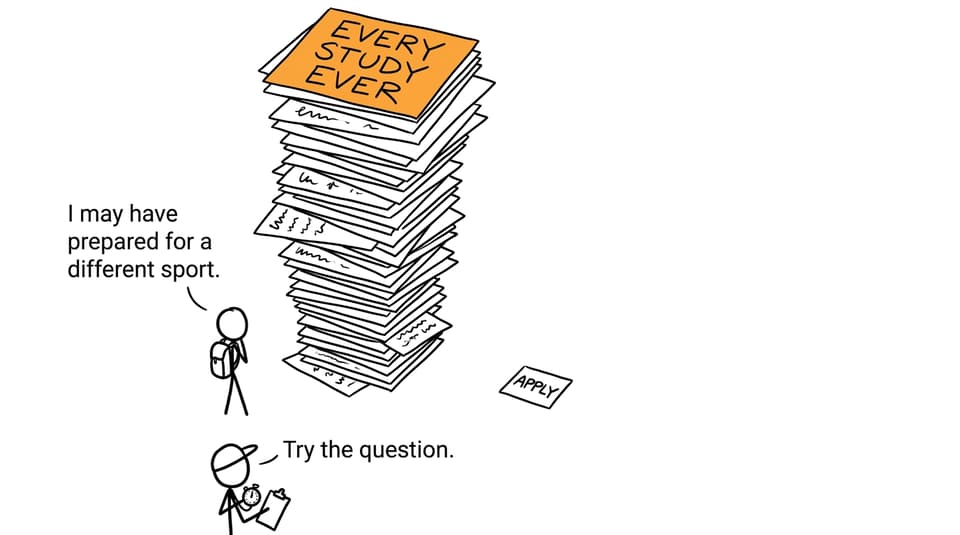
This structure rewards flexible knowledge. Instead of preparing one fixed paragraph for every topic, practise applying the same theory to different contexts and discussing concepts such as bias, causality, change, measurement, perspective, or responsibility.
Paper 2 from first assessment 2027
Revised Paper 2 also lasts 1 hour 30 minutes and is taken by SL and HL students. Section A focuses on class practicals. Section B requires evaluation of an unseen research study using two or more relevant concepts.
Your revision should therefore include the decisions made during practical work: method, sampling, procedure, measurement, ethics, bias, and possible improvements. The goal is not to recite a generic list of strengths and limitations. It is to explain why a methodological feature matters in the specific research context presented.
Paper 3 from first assessment 2027
Revised Paper 3 is HL-only, lasts 1 hour 45 minutes, and uses source-based questions involving quantitative and qualitative findings. Its focus comes from one of the HL extensions: culture, motivation, or technology.
Students need to interpret evidence, connect it to psychological content, and evaluate what the data justify. Targeted Questionbank work is helpful here, but it should eventually be followed by complete timed sections.
How to use RevisionDojo effectively
Having many resources is useful only when each one has a clear job. A productive sequence is:
- Learn: Read one section of the Study Notes or complete a lesson.
- Retrieve: Close the material and use Flashcards to recall concepts and research.
- Apply: Answer several questions from the Psychology Questionbank.
- Review: Use AI feedback or Grading tools to identify content, structure, and evaluation gaps.
- Retest: Return to the same weakness after a delay.
- Simulate: Complete a timed section using Mock Exams or IB Psychology Predicted Papers.
Jojo AI Chat can help when a concept remains unclear, but use it to sharpen your thinking rather than replace it. Ask for a distinction between causation and correlation, an explanation of why a method creates bias, or feedback on whether a paragraph answers the command term.
For written work, RevisionDojo’s Grading tools can shorten the feedback loop between an attempt and a revision. Its Coursework Library and Psychology IA guidance can also help students understand structure and assessment expectations, while Tutors provide human support when repeated independent practice is not resolving a problem.
A practical weekly Psychology routine
A sustainable week might contain two content sessions, two question sessions, one research-methods session, and one timed response. Keep an error log with three categories: missing knowledge, weak application, and weak evaluation.
That distinction prevents wasted effort. If you forgot a definition, use Study Notes and Flashcards. If you knew the theory but could not use it in an unseen context, practise application questions. If your conclusion exceeded what a study could establish, focus on research design and critical thinking.
The answer is yes, but coverage is only the beginning
RevisionDojo covers IB Psychology across the major approaches, paper-specific skills, research methods, SL and HL requirements, and both relevant assessment routes. More importantly, it connects resources that students often use separately: Study Notes for understanding, Flashcards for retrieval, the Questionbank for application, AI and Grading tools for feedback, and Mock Exams or Predicted Papers for realistic rehearsal.
Start by confirming whether you are following the course assessed through 2026 or the revised course first assessed in 2027. Then choose one weak area, learn it, retrieve it, apply it, and review the result. Revision becomes much less mysterious when every session produces evidence of what you can actually do.