


A hook: the moment you realise plot is the least interesting part
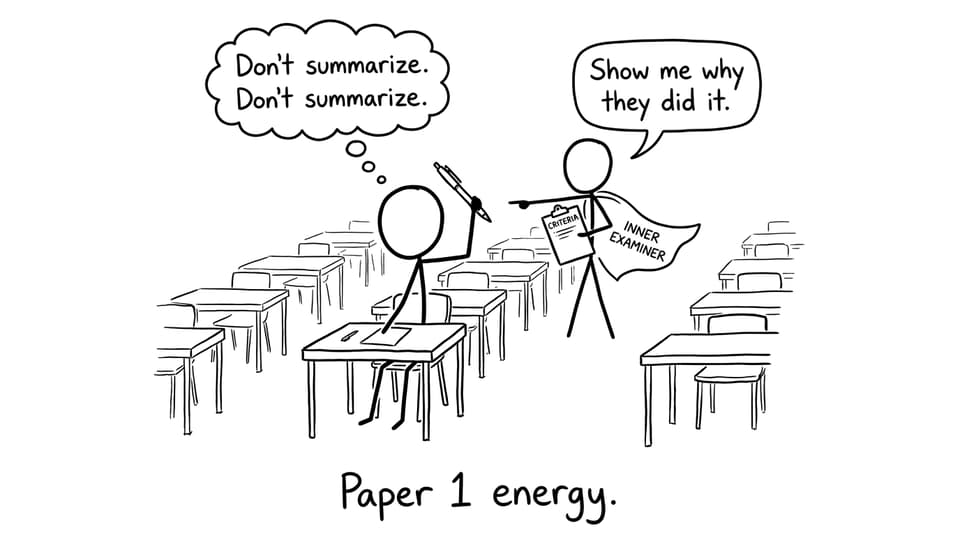
There’s a specific kind of panic that shows up in IB English revision week. You reread a scene you’ve known for months, and it suddenly feels… flat. Not because the writing is bad, but because your brain is stuck in what happened. Someone leaves. Someone lies. Someone forgives. You can retell it perfectly, yet your paragraph still reads like a summary.
The fix is almost always the same: start reading for motive. In IB English, the strongest analysis is quietly obsessed with a question most students only ask once: Why would a person do that? Not in a judgemental way. In a craft-based way. Because when you can explain motive, you can explain tension, structure, symbolism, and authorial purpose.
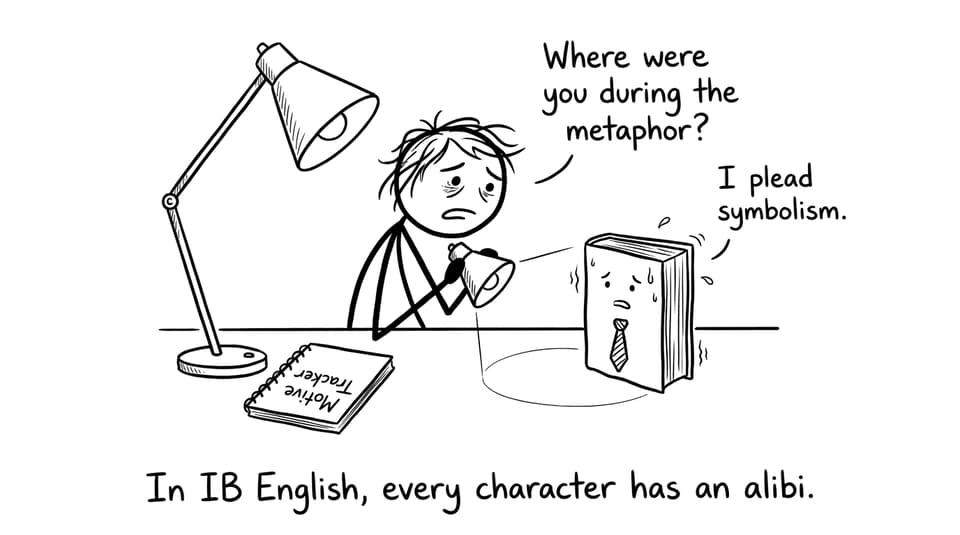
The IB English motive checklist (save this for timed practice)
Use this quick routine before you write any body paragraph in IB English:
-
Name the character’s surface goal (what they say they want).
-
Identify the pressure (what blocks them: society, fear, another character, time).
-
Spot a contradiction (words vs actions, public vs private self).
-
Find the clue type: diction, imagery, silence, structure, narration.
-
Convert motive into meaning: “This suggests… therefore the text explores…”
If you’re training for exams, pair this with a method-first Paper 1 routine in Mastering IB English Paper 1: A Complete Guide and the workflow ideas in IB English Study Techniques That Actually Work.
What “motive” really means in IB English
In IB English, motive is not a random guess about psychology. It’s an inference grounded in textual method. Think of motive as a bridge:
-
On one side: character behaviour (dialogue, choices, reactions).
-
On the other: authorial design (theme, structure, perspective, social critique).
That bridge is what examiners reward. It’s also why motive works across every task: Paper 1 close reading, Paper 2 comparison, the Individual Oral, and the HL Essay.
For a broader craft toolkit, keep IB English Character Analysis: How to Analyze a Character nearby when you practise.
Explicit vs implicit motive: how writers hide the engine
Some texts hand you motive directly: confessions, monologues, or blunt dialogue (“I want revenge”). In those moments, IB English analysis shifts from discovering motive to testing it: does the character’s behaviour actually match their claim? Does the language complicate it? Does the structure undercut it?
More often, motive is implicit. It leaks out through:
-
Emotional overreactions (anger that’s too big for the situation).
-
Micro-choices in diction (formal language when intimacy is expected).
-
Symbolic habits (collecting, destroying, hoarding, cleaning).
-
Silence and omission (what isn’t answered matters).
RevisionDojo’s notes on characterization can help you name these moves fast, especially under time pressure: IB English A Lang & Lit Characterization and Dialogue Notes.
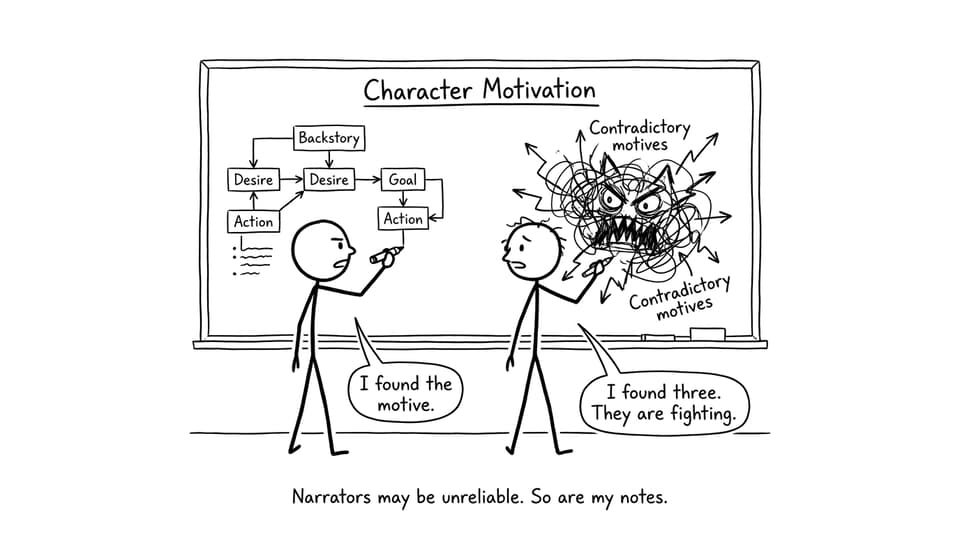
Contradictory motives: the easiest way to sound sophisticated
Most real people want two incompatible things at once: freedom and approval, love and control, honesty and safety. Fictional characters are built from the same friction. In IB English, contradictions are not “inconsistencies” to fix. They are evidence that the writer is building complexity.
Try framing it like this:
-
Claim: The character appears driven by X.
-
Complication: Yet their actions reveal Y.
-
Meaning: This conflict exposes… (theme) and creates… (tension/structure).
If you want an extra layer, archetypes are a quick way to describe a character’s role while still focusing on motive: IB English Archetypes: Heroes, Villains, Antiheroes.
Motive and narrative perspective: who controls what we know?
Perspective decides how motive is revealed. That’s why narrative voice is such a high-yield angle in IB English.
First-person narrators
They can be honest, self-deceiving, or strategic. Pay attention to:
-
what they justify repeatedly,
-
which details they skip,
-
where the tone turns defensive.
Those are motive fingerprints.
Third-person limited
You see action and selected thoughts, which means motive is shaped by what the narration chooses to access. Look for moments where behaviour is clear but interior explanation is withheld.
Unreliable narrators
Here, motive analysis becomes a double-layer: the character’s motive in the story, and the narrator’s motive in telling it that way.
To practise writing this clearly in exam form, use targeted prompts from the IB English A Lang & Lit Questionbank and self-check with RevisionDojo grading tools.
Social pressure is also a motive (and it’s often the biggest one)
A common IB English mistake is treating motive as purely personal: “they’re jealous” or “they’re scared.” Sometimes that’s true. But many texts are built to show how the social world writes itself into the self.
Ask what the character is trying to survive:
-
class expectation,
-
gender roles,
-
cultural tradition,
-
institutional power,
-
political fear,
-
family reputation.
When you connect motive to context, you’re no longer analysing a person. You’re analysing the text’s argument about human behaviour.
For Paper 2, this becomes a strong comparative lever because you can compare how two works build pressure differently. Use IB English Paper 2 Structure: Lang & Lit Guide and practise prompts in the IB English A Lang & Lit English Paper 2 Questionbank.
Closing: motive is where IB English stops being summary
Reading for motive changes how you study IB English. Plot becomes the surface. Motive becomes the engine. When you can show what a character wants, what they’re afraid of, and how the text reveals that through technique, your commentary turns into interpretation.
If you want to train this skill deliberately, build practice sets in RevisionDojo’s Questionbank, turn recurring motive patterns into Flashcards, and use Study Notes to sharpen terminology. For essay work, lean on the AI Chat for quick checks on evidence-to-meaning links, then use the Grading tools to see how close your paragraphs are to top-band criteria. Add Mock Exams and Predicted Papers to simulate pressure, and if you need a calm human voice, RevisionDojo Tutors can help you turn “I get it” into “I can write it.”
In the end, IB English is not asking whether you liked the character. It’s asking whether you noticed what the writer built inside them, and why.