


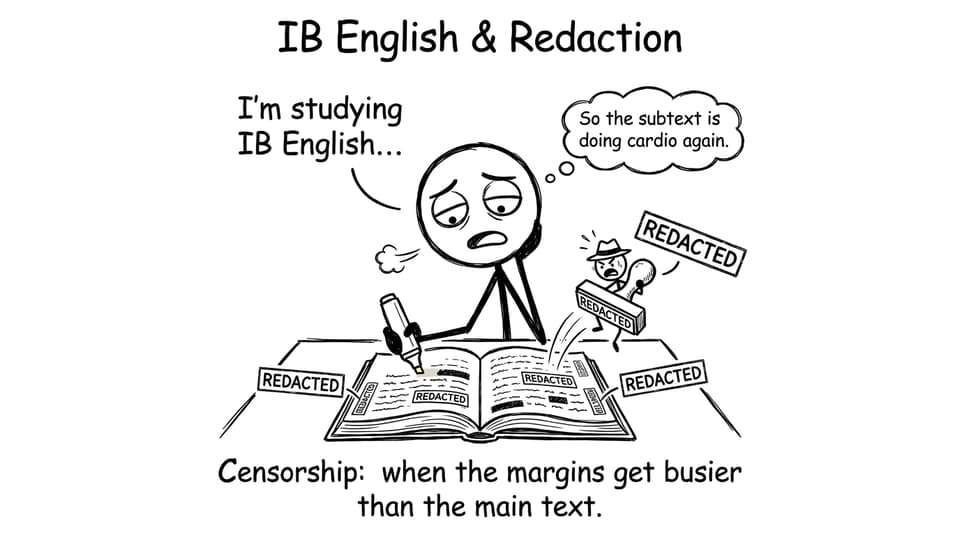
Censorship rarely arrives as a dramatic knock on the door. More often, it slips in quietly: a publisher suggests a change, a school board removes a chapter, a government office “recommends” revisions, or a culture teaches writers which topics will cost them their safety.
For IB English students, that quiet pressure is not just historical context. It is a reading strategy. When you notice constraint, you start noticing design: why a scene fades to black, why a narrator suddenly sounds careful, why politics shows up wearing the costume of myth.
In other words, literary censorship doesn’t only decide what gets said. It shapes how literature is built.
Quick checklist for spotting censorship in IB English
Use this fast checklist before you start writing any IB English paragraph about censorship:
-
What restrictions existed (political, religious, legal, social, economic)?
-
What feels oddly indirect or unusually vague?
-
Where do you see substitution (symbol, allegory, coded dialogue)?
-
What is missing (silence, gaps, abrupt endings, unnamed forces)?
-
How does the constraint change form: structure, voice, genre, perspective?
If you want a structured way to train these habits, build your routine around RevisionDojo’s Study Notes, Flashcards, and Questionbank practice loops in the IB English A Lang & Lit Resources hub.
Why literary censorship matters in IB English
In IB English, the highest marks rarely come from announcing “this text is censored.” They come from showing what censorship does to the writing. Censorship is a force that bends literature. Like wind shaping a tree, it affects the visible form (structure, style, voice) and the hidden architecture (theme, tension, conflict).
When you frame censorship as pressure, you can write analytical sentences that examiners love:
-
Because direct critique is risky, the writer relocates conflict into private spaces.
-
Because naming power is forbidden, the text builds a pattern of substitutes: symbols, euphemisms, and strategic ambiguity.
-
Because speaking is dangerous, silence becomes an active technique rather than an absence.
This aligns neatly with the skills demanded in Paper 1 and Paper 2. If you’re revising those skills, pair this article with Close Reading Techniques for Prose and Poetry and How to Analyze Language and Style in Unseen Texts (Paper 1).
How censorship reshapes form (not just meaning)
Form is the writer’s safest hiding place. When content is policed, authors often move their argument into structure.
Common censorship-shaped formal moves you can track in IB English:
Allegory and fable logic
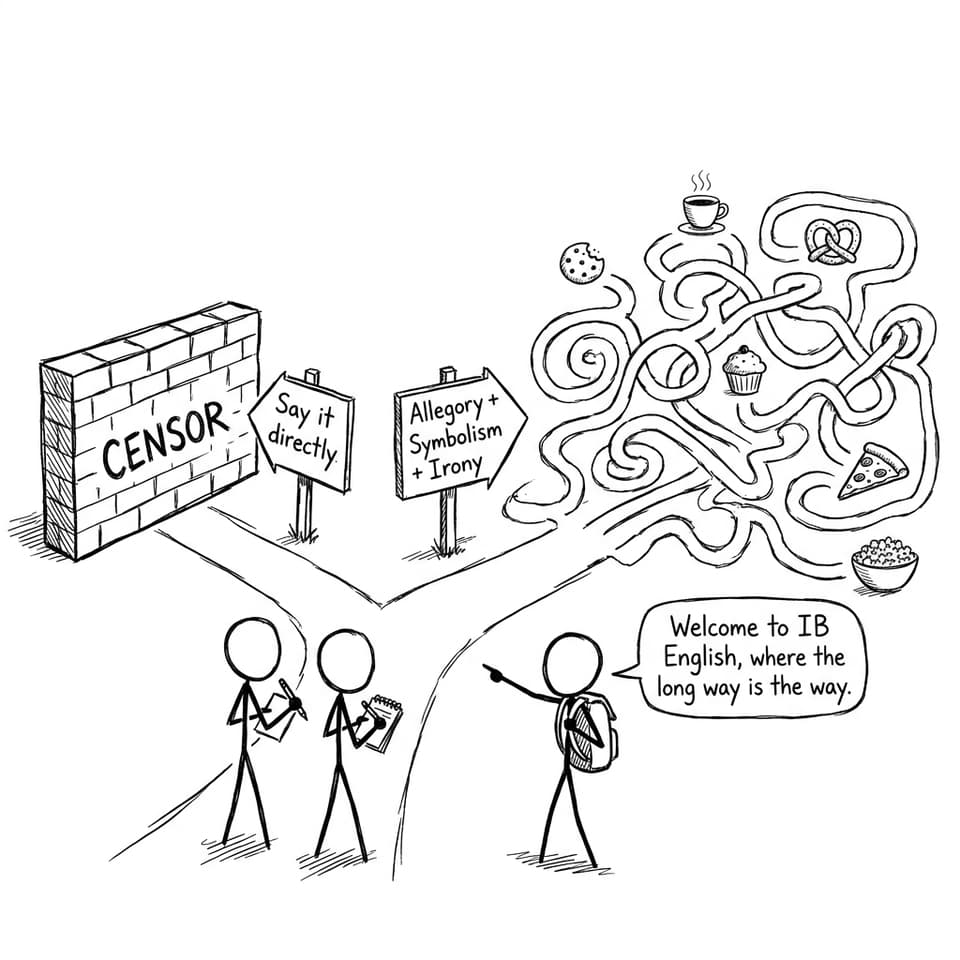
A story about animals, distant kingdoms, or invented religions can carry political critique without “naming names.” In analysis, focus on mapping: what does each symbolic system stand in for, and what does the substitution allow the writer to say?
Fragmentation and gaps
Broken chronology, abrupt scene shifts, and unresolved endings can be a craft choice that mirrors a surveilled world. The gaps aren’t laziness. They can be the trace of pressure.
Multiple perspectives
When a single truth is unsafe, texts often split into competing voices. Multiple narrators or layered frames (“found documents,” letters, transcripts) create plausible deniability and invite the reader to do the risky interpretive work.
To practise writing about structure quickly, it helps to train with timed prompts. RevisionDojo’s IB English Paper 1 revision guide is built for that exact skill: noticing choices fast, then explaining effects clearly.
How censorship reshapes content (what gets moved, softened, or disguised)
Censorship often targets politics, sexuality, religion, violence, and criticism of national identity. But in literature, the banned topic doesn’t always disappear. It changes costume.
Here are content shifts to watch for in IB English essays:
Coded dialogue and euphemism
Characters speak in safe phrases, indirect jokes, or over-polite language. The “real” argument lives in implication. Track repetition, loaded terms, and what characters refuse to name.
Domestic space replacing public space
When public critique is dangerous, conflict shrinks into kitchens, bedrooms, friendships, and family structures. That shrinkage is itself political. The personal becomes the last safe arena where power can be examined.
Myth, folklore, and historical distance
Writers may place critique in another era or in legend. In analysis, explain how distance creates safety, and how parallels bring the critique back to the writer’s present.
When you’re building evidence banks for Paper 2, this is where RevisionDojo’s Coursework Library and Study Notes can save time: you can store key moments and tags (power, silence, repression) so you’re not rebuilding your memory under exam stress. For Paper 2 structure support, see Structuring Your IB English Paper 2 Essay and How to Prepare for the IB English Paper 2 Exam Under Time Pressure.
Subtext: the real battleground in IB English
If censorship is pressure, subtext is the release valve. Writers often create two texts at once: the “safe” surface and the dangerous undertow.
In IB English, train yourself to write subtext analysis as a chain:
Technique -> Evidence -> Effect -> Hidden meaning -> Why it must be hidden
This last step is the censorship link many students forget. You’re not only proving interpretation. You’re proving necessity.
A practical way to train this is to drill short responses and get feedback. Use RevisionDojo’s Questionbank and the Grading tools to practise turning a subtle observation into a defensible claim. When you get stuck, AI Chat can help you test alternate readings without drifting into unsupported guessing.
Narrative voice under censorship: cautious, slippery, strategic
Censorship doesn’t just limit topics. It changes the sound of the text.
A censored or censorship-aware narrator may become:
-
overly factual (reporting without interpreting)
-
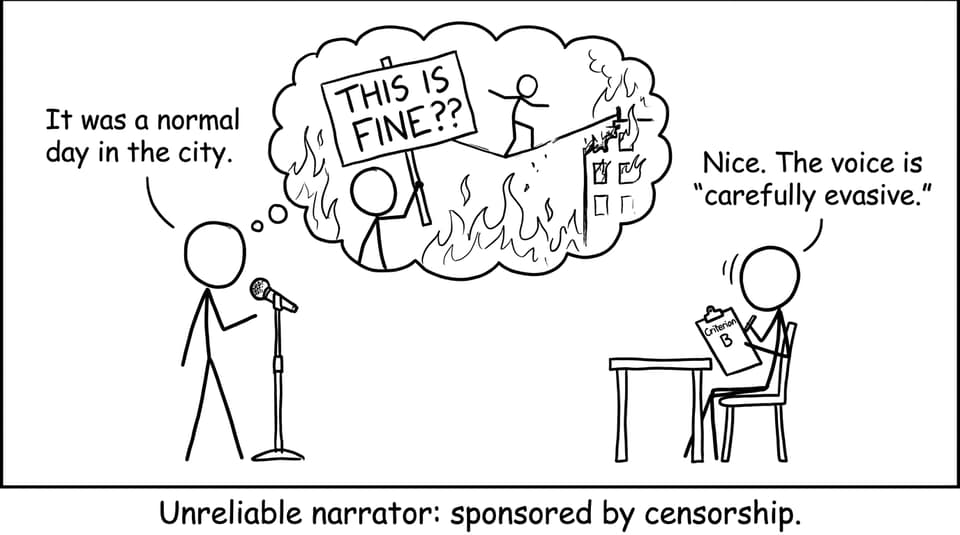
evasive (circling the point)
-
unreliable (truth displaced into contradiction)
-
fragmented (memory and speech interrupted)
These are not only character traits. They can be survival strategies embedded in voice.
If you want to sharpen the vocabulary for describing these effects in IB English, Tips for Improving Vocabulary and Style in IB English Essays pairs well with voice analysis.
Closing: turn pressure into precision (with RevisionDojo)
Literary censorship is one of those topics that makes IB English feel bigger than an exam. It reminds you that form is never neutral and that silence can be authored.
If you want to turn that insight into marks, practise the skills that censorship demands: close reading, technique-to-effect writing, and controlled comparisons. RevisionDojo helps you do that in one place: Study Notes to learn patterns fast, Flashcards to retain analytical language, Questionbank and Mock Exams to build timing, Predicted Papers for realistic practice sets, AI Chat for clarifying interpretations, and Grading tools to tighten your paragraphs before they become habits. Start exploring through the IB English tag page and build a revision system that makes IB English feel steady, even when the texts you study were written under pressure.