


It happens in the quietest, most annoying way.
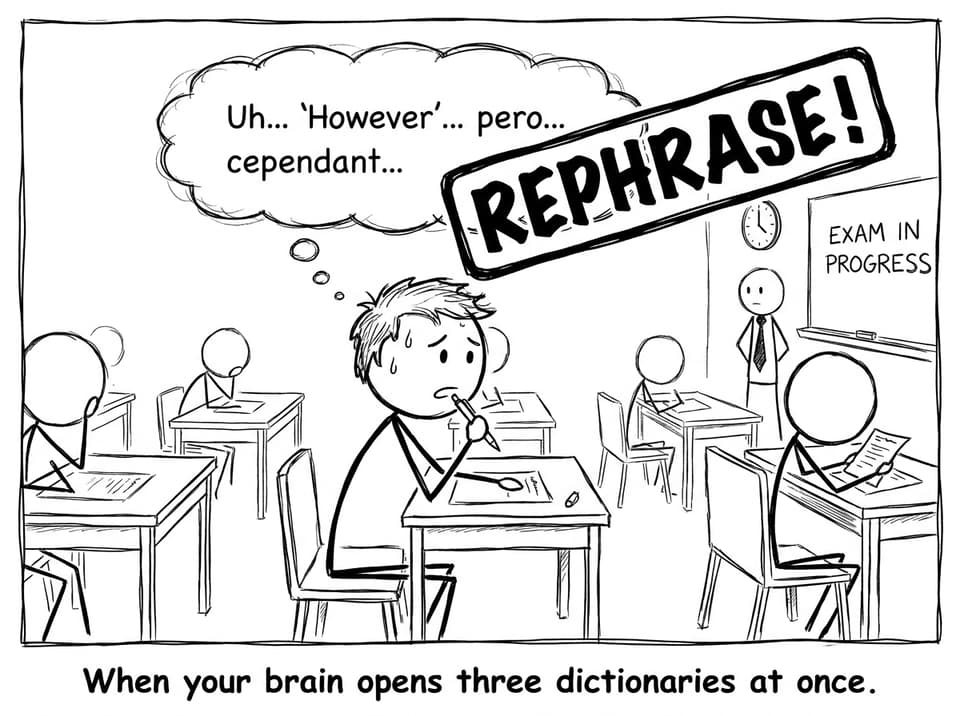
You’re mid-sentence. You can see the idea clearly. And then the exact word you need in your target language disappears, like it was never yours.
So you do what your brain is designed to do under pressure: you borrow. A word from English. A phrase from your home language. A half-remembered connector from last week’s vocab list. And now you’re wondering if IB Languages actually allows this, or if you’ve just sabotaged your grade.
The quick answer for IB Languages: yes, but be strategic
In IB Languages, mixing languages (often called code-switching) is normal in real life. In exam life, it depends on the task.
Use this simple rule:
-
Speaking: a tiny amount of code-switching can keep you moving, but too much reduces the evidence of your language ability.
-
Writing: avoid it unless the task is explicitly multilingual (rare). In most IB Languages writing tasks, mixed language usually reads like an error, not a strategy.
If you want the bigger picture of how the course is assessed and where communication matters most, start with the IB Languages hub: IB Languages posts.
A practical checklist: what to do the moment you’re stuck
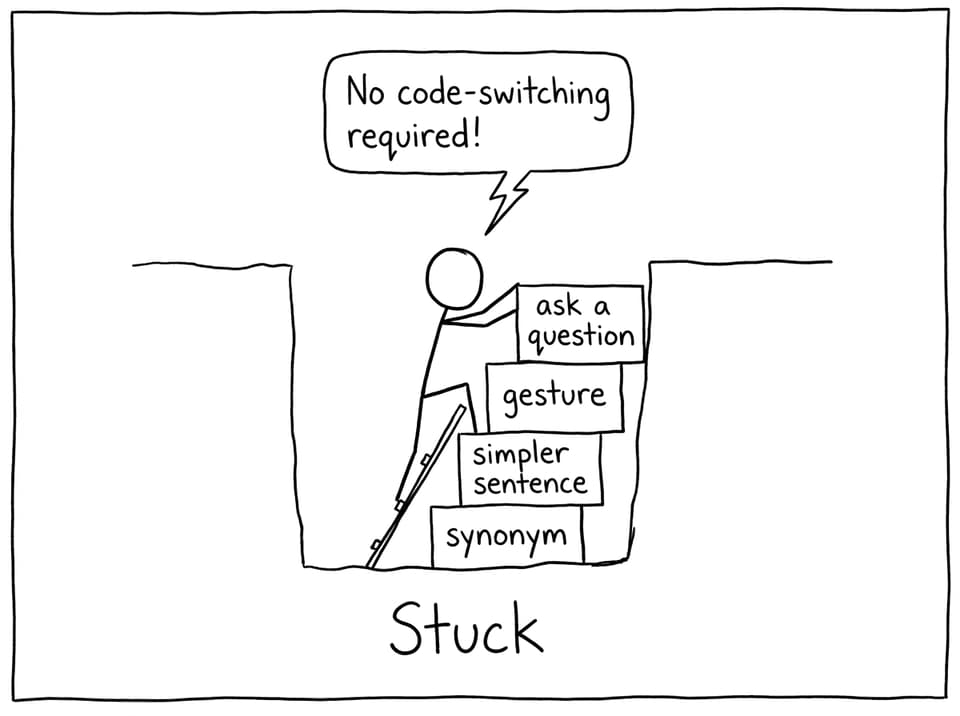
When you freeze, your goal is not “perfect vocabulary.” Your goal is “keep producing clear meaning.” Try this ladder, in order:
-
Rephrase using simpler words you already know.
-
Use a synonym (even if it’s less precise).
-
Shorten the sentence and rebuild.
-
Use a safe connector (however, because, therefore) and pivot.
-
Only then, use a quick code-switch as a temporary bridge.
This is exactly how high scorers treat pressure: not as a crisis, but as a decision tree.
When mixing languages helps (and when it quietly harms)
When it helps IB Languages performance
Code-switching can help you in IB Languages when it does one of these:
-
Preserves fluency: you keep your rhythm, which matters in speaking assessments.
-
Protects your idea: you don’t abandon a strong point just because one noun is missing.
-
Buys time: you use one borrowed word while you quickly return to the target language.
A good example is during oral practice: you drop one word, then immediately repair the sentence.
When it harms IB Languages performance
It starts to hurt when it becomes a habit:
-
It signals dependency: the examiner hears you reaching for the “easy exit.”
-
It disrupts accuracy: grammar and syntax drift when you keep switching.
-
It reduces evidence: in IB Languages, marks come from what you demonstrate, not what you meant.
If you want a stronger sense of how timing and structure affect language marks, read: IB Language B Paper 1 vs Paper 2: Timing and Strategy.
The “repair phrase” trick: stay in the target language without panicking
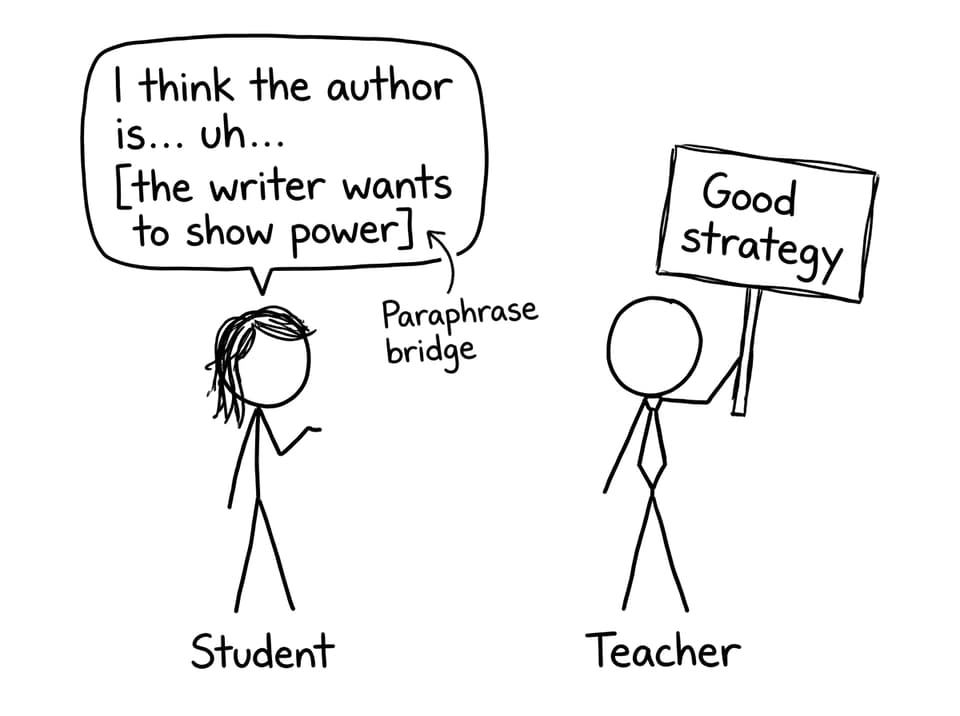
Here’s the skill most students forget to train: repair.
Instead of switching languages, memorize a few “move phrases” in your target language that let you recover:
-
“Let me rephrase that…”
-
“What I mean is…”
-
“To be more precise…”
-
“From another perspective…”
These phrases turn a blank moment into a controlled moment. You’re not hiding the gap; you’re managing it.
For a fuller exam strategy across reading, listening, writing, and speaking, use: IB Language B Exams: Format, Timing, Strategy.
How RevisionDojo trains IB Languages without turning it into chaos
Most students try to “do more language.” The better approach is to do more loops.
On RevisionDojo, your IB Languages loop can look like this:
-
Build clarity with Study Notes (so you know what good responses look like)
-
Lock in phrases with Flashcards (repair phrases, connectors, theme vocab)
-
Create exam instincts with the Questionbank (targeted practice)
-
Get unstuck fast using AI Chat (ask for rephrases, corrections, better phrasing)
-
Train performance using Mock Exams and Predicted Papers
-
Use Grading tools to see what actually improves your score
-
Pull exemplars from the Coursework Library when you need models
-
Add Tutors when you need a human to push your speaking and feedback deeper
If your study system feels scattered, this helps reset it: RevisionDojo App: The Smarter Way to Prep for IB Exams.
The bottom line: IB Languages rewards recovery, not perfection
Mixing languages when you’re stuck isn’t a moral failure. It’s a signal: your brain wants to keep the meaning alive.
In IB Languages, the smarter move is to treat code-switching like a temporary bridge, not a home. Train repair phrases, paraphrase routes, and short sentence rebuilds so you can stay in the target language under stress.
If you want a calm, exam-shaped way to practice, build your routine inside RevisionDojo: Study Notes for clarity, Flashcards for retrieval, AI Chat for quick repairs, and the Questionbank plus Mock Exams and Predicted Papers for performance. Start here for the wider system: How to Build a Full Self-Study Language Plan for One Year.