

IB Design Technology has a strange reputation in most schools: one student calls it “the chill subject,” another looks like they’ve aged a decade during the IA. The truth is quieter than both takes. IB Design Technology is rarely hard because the ideas are impossible. It’s hard because it asks for a different kind of effort: the kind where you must explain your thinking, defend trade-offs, and keep a project alive for months.
If you’re preparing for exams, that distinction matters. It tells you what to practise, what to stop doing, and why “just revise more” often doesn’t move your grade.
A quick checklist: what makes IB Design Technology feel hard?
Use this as a fast diagnostic. IB Design Technology tends to feel difficult when you’re doing any of the following:
-
Treating DT like a memorisation-only subject
-
Writing descriptive answers instead of analytical ones
-
Skipping justification (the “why this, not that”)
-
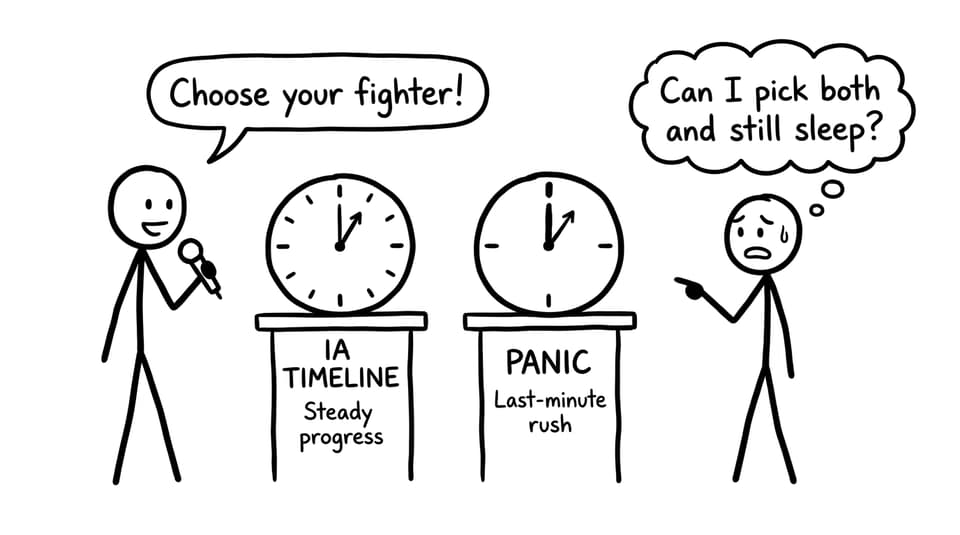
Letting the IA become a last-minute rescue mission
-
Practising too few scenario-based questions under time pressure
A good starting point is the IB Design Technology hub, because it shows you the subject as an interconnected system: Study Notes, Flashcards, Questionbank, and exam practice tools in one place.
What actually makes IB Design Technology challenging?
Students often expect DT to reward neat notes and familiar definitions. Those help, but they aren’t the finish line. IB Design Technology is built around decision-making.
That means exam questions and coursework both push you to:
-
Apply theory to unfamiliar products and contexts
-
Use precise command terms (explain, analyse, evaluate, justify)
-
Compare options using clear criteria (users, sustainability, cost, materials, manufacture)
-
Reflect honestly on what failed and what you changed
If you want to see how this logic shows up in content, skim topic areas like Classic Design (Topic 6) or more conceptual sections like Design in context notes. They look “readable” at first glance, but the difficulty is in turning them into arguments.
It’s not conceptually brutal; it’s skill-based
Compared with subjects that pile on complex math or dense theory, IB Design Technology is usually more accessible on day one. But it demands higher-order skills over time.
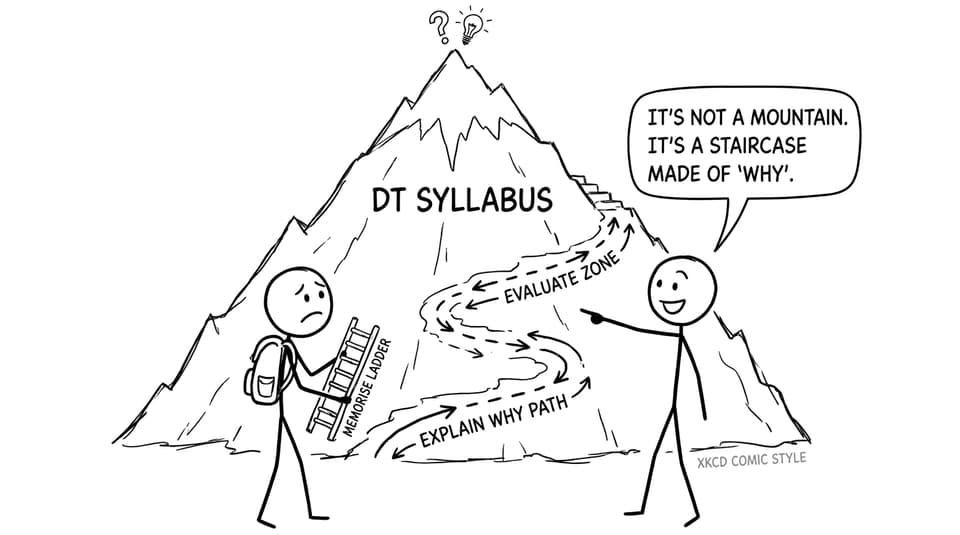
Think of it like this: the syllabus isn’t trying to trap you. It’s trying to see if you can think like a designer.
That shows up in skills such as:
-
Writing tight justifications (not long ones)
-
Linking decisions to a user and a real context
-
Evaluating limitations with evidence (tests, data, feedback)
-
Making trade-offs explicit (strength vs mass, cost vs quality, sustainability vs performance)
This is why tools that force you to practise thinking are so powerful. RevisionDojo’s Questionbank (with feedback) helps you turn vague understanding into exam-ready language. For targeted practice, you can drill a single area like Modelling and Prototyping Questionbank until your explanations become automatic.
Why some students think IB Design Technology is “easy” (then plateau)
The early weeks can feel intuitive. You can talk about products. You can sketch. You can “get” the vibe. So some students relax too early.
And then two things happen:
-
Exam questions start asking for evaluation, not recall
-
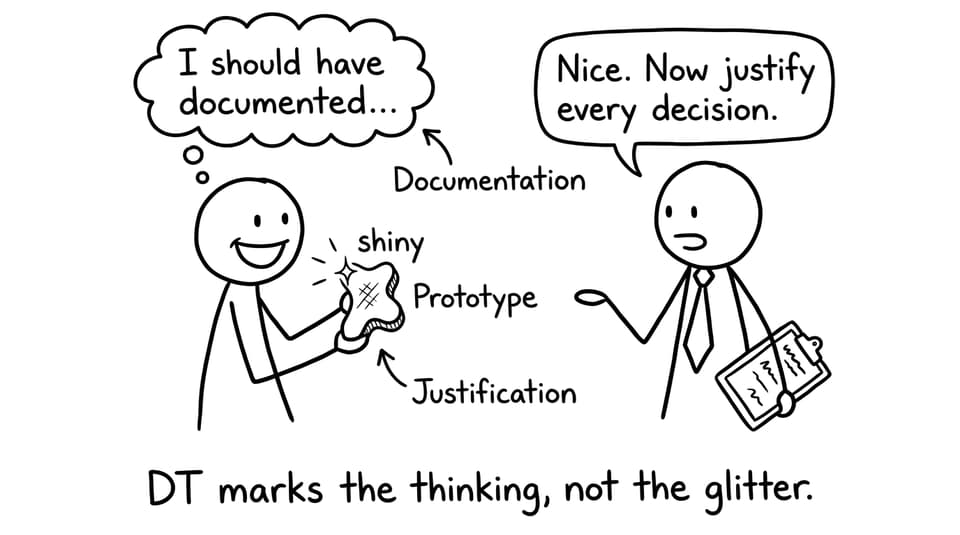
The IA starts demanding consistent documentation, not bursts of inspiration
At that point, IB Design Technology punishes complacency quietly: you still feel busy, but your marks stick around the middle because your answers don’t sound like decisions.
A practical fix is to adopt a routine that includes weekly exam-style practice, not just reading. The guide Best study strategies for IB Design Technology students lays out a simple loop: definitions, examples, timed questions, review.
Why other students find IB Design Technology genuinely hard
On the other end, DT can feel brutal if you prefer clear right-or-wrong answers. That’s because a lot of scoring lives in your reasoning.
It tends to feel hardest when you:
-
Avoid writing (or write only descriptions)
-
Struggle to work independently over long timelines
-
Procrastinate IA documentation until it’s too late to reconstruct honestly
The good news is that this difficulty is trainable. You don’t need to become “naturally creative.” You need to become consistent.
RevisionDojo helps here in a very practical way: Study Notes for clarity, Flashcards for key definitions, AI Chat when you’re stuck mid-explanation, and Grading tools to show what your writing is missing.
Are the exams hard compared to other IB subjects?
The exams in IB Design Technology are rarely hard because the content is enormous. They’re hard because questions are scenario-based, and memorised paragraphs often don’t fit.
To make the exams feel predictable:
-
Practise turning a short scenario into a structured answer
-
Use command terms as your answer’s skeleton
-
Review markscheme language and match its precision
A strong move is to train with questions that mirror real styles. For example, focused practice like Classic Design, Function and Form Questionbank forces you to explain decisions, not just define terms.
Is the IA the hardest part?
For many students, yes, but mostly because it’s time-consuming. The IA becomes manageable when it stays “alive” all year.
Instead of relying on motivation, rely on a system:
-
Do small IA tasks weekly (even 30 minutes)
-
Document as you go (photos, iterations, test notes)
-
Build evaluation into the process, not the conclusion
If you want a structured walkthrough of using RevisionDojo for this, read How to use RevisionDojo for IB Design Technology success. The platform’s Coursework Library, Tutors, and Grading tools are especially useful when you need feedback you can trust.
Conclusion: IB Design Technology is hard in a useful way
So, is IB Design Technology hard? Yes, but not because it’s inaccessible. It’s hard because it demands maturity: consistency, reflection, and the courage to explain your thinking clearly.
If you want DT to feel simpler, don’t aim for “more notes.” Aim for a better loop: learn with IB Design Technology resources, lock in definitions with Flashcards, practise with the Questionbank, use AI Chat to fix confusion fast, then simulate pressure with Mock Exams and Predicted Papers from RevisionDojo’s predicted papers page. That’s how the subject becomes predictable, and how high marks become repeatable.