



If you have IB Design Technology on your timetable, you’ve probably had the quiet thought most students won’t say out loud: Will a university take me less seriously for this?
It’s an understandable fear. IB Design Technology doesn’t “sound” like a traditional academic gatekeeper subject. It sounds like building, sketching, making. And when you’re an IB student preparing for exams, perception can feel like everything.
But admissions teams aren’t collecting subject names like trophies. They’re looking for signals: capability, fit, and momentum. When you choose and frame IB Design Technology well, it can become one of the clearest signals in your application.
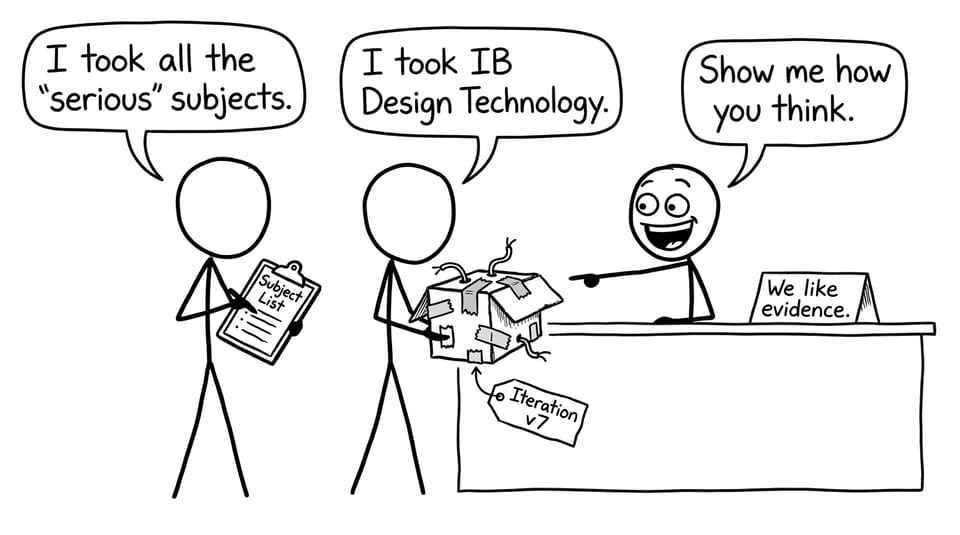
Quick checklist: is IB Design Technology a smart choice?
Use this fast filter before you stress-scroll forums:
-
Does IB Design Technology complement (not replace) your likely prerequisites like maths and sciences?
-
Can you realistically score highly in IB Design Technology through consistent IA work and exam practice?
-
Can you explain your project using academic language: user needs, constraints, testing data, evaluation?
-
Does your overall subject combination tell a coherent story?
-
Do you have a revision system that makes DT terminology and exam technique feel automatic?
If you can say “yes” to most of these, IB Design Technology is not a liability. It’s leverage.
How universities actually judge IB Design Technology
Universities rarely rank individual IB subjects as “good” or “bad” in isolation. Instead, they look at the pattern:
-
your overall subject combination
-
your predicted/achieved grades
-
relevance to your intended degree
-
the skills your coursework and exams demonstrate
So IB Design Technology is evaluated as part of a wider academic narrative. If you’re targeting engineering, architecture, product design, computer science, business, or applied sciences, IB Design Technology can read as deliberately chosen rather than “easier.”
If you want a grounding point for what the course includes, start with RevisionDojo’s IB Design Technology hub and then explore the Complete Guide to IB Design Technology.
What IB Design Technology proves about you
The strongest thing about IB Design Technology is that it leaves evidence.
A good DT student doesn’t just claim they’re “creative.” They can show:
-
independent problem-solving
-
decision-making with constraints (time, materials, sustainability, ergonomics)
-
evaluation and reflection based on testing
-
long-term project planning
-
communication through clear documentation
That’s why the IA matters so much. Your IB Design Technology IA is essentially a public record of how you think over time. Not in a dramatic, inspirational way. In a practical way that admissions tutors trust.
For structured help, RevisionDojo’s How to Use RevisionDojo for IB Design Technology Success is a strong starting point, especially if you need a system for steady progress.
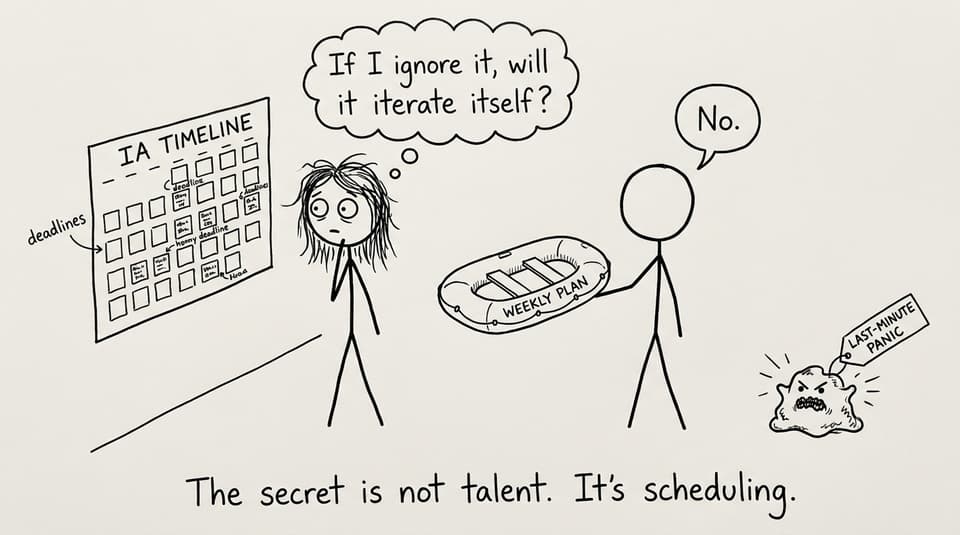
When IB Design Technology strengthens your application (and when it doesn’t)
IB Design Technology tends to strengthen applications when it’s paired wisely.
It strengthens applications when
-
you still meet prerequisites (especially maths, physics, chemistry depending on the course)
-
you perform strongly and can prove mastery in assessments
-
you articulate your DT work clearly in interviews or written statements
For many STEM-adjacent degrees, IB Design Technology adds depth. It can signal that you understand how knowledge becomes a solution, and how solutions get tested in the real world.
It does not replace requirements
This matters: IB Design Technology usually works best as a supporting subject, not a substitute.
If a course requires HL Maths or HL Physics, DT won’t “cover” that. And trying to use IB Design Technology as a replacement can make your application look misaligned.
If you’re still deciding how to balance your subjects, RevisionDojo’s How to Choose HL Subjects Wisely can help you sanity-check choices against real prerequisites.
How to present IB Design Technology so it sounds academic
A common mistake is describing IB Design Technology only as “practical” or “hands-on.” That’s true, but it’s not the persuasive part.
Universities lean in when you translate your DT work into academic proof:
-
the problem you identified (and why it matters)
-
your research method and what you learned
-
constraints you worked within (cost, manufacturing, safety, sustainability)
-
testing results and what you changed because of them
-
what you would improve next (reflection with evidence)
Want a practical revision approach that makes this language easier to write and say? Use RevisionDojo’s Best Study Strategies for IB Design Technology Students and pair it with How to Create Effective IB Design Technology Revision Notes.
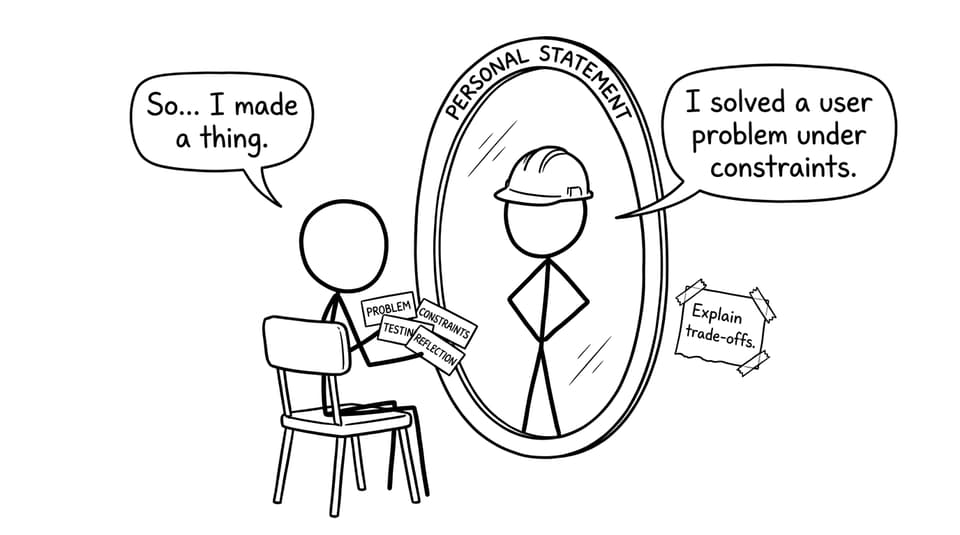
Common mistakes students make with IB Design Technology
Most “DT looks bad” stories come from avoidable errors:
-
choosing IB Design Technology and then treating it as the easy option
-
underselling the IA as “just coursework” rather than a long-form problem-solving process
-
failing to connect DT to your intended degree
-
unclear terminology in exams and weak evaluation language
If you’re unsure whether your workload expectations are realistic, read Is IB Design Technology a Hard Subject? Honest Breakdown.
Conclusion: IB Design Technology is only “good” when you use it well
IB Design Technology is good for university applications when it supports a clear academic story: you can meet requirements, you can think in systems, and you can prove it through a documented process.
To turn that into exam performance, use RevisionDojo as your control panel: practise with the Questionbank, build timed sets with Mock Exams and Predicted Papers, tighten recall using Flashcards, and polish explanations with AI Chat. When your IA draft needs a reality check, use the Grading tools and learn from the Coursework Library. If you want human guidance, RevisionDojo Tutors can help you improve both the project and how you present it.
If you’re taking IB Design Technology, don’t apologise for it. Study it like it matters, explain it like it matters, and it will.