



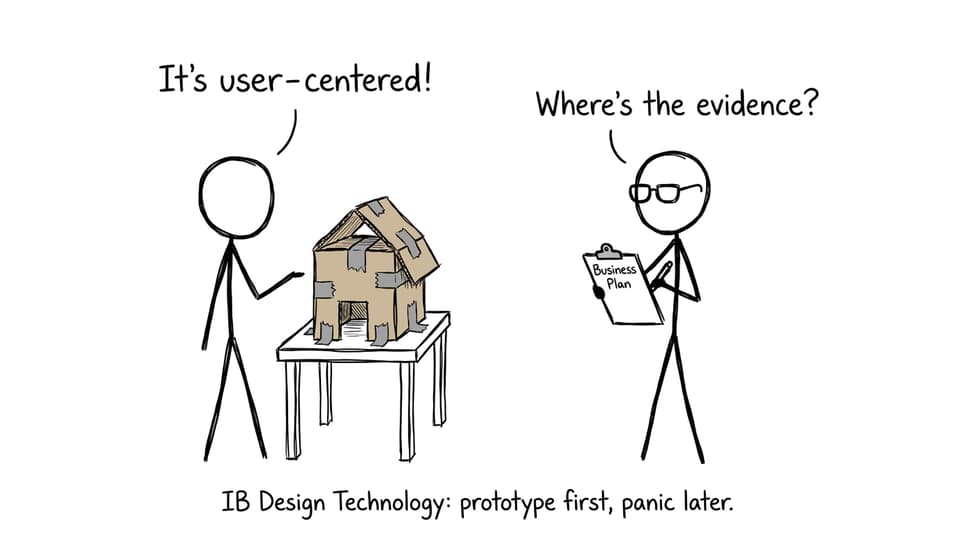
If you’ve ever watched someone pitch a “brilliant” idea and then freeze the moment a real person asks, “Okay… but why would anyone buy it?”, you’ve seen the gap between ideas and value.
That gap is exactly where IB Design Technology lives.
Students often treat business and entrepreneurship as a world of spreadsheets and buzzwords. But the people who actually build things, including products, services, teams, and systems, tend to win for a quieter reason: they can make decisions with incomplete information, test quickly, and learn without getting emotionally attached to the first draft.
That’s why IB Design Technology can be a surprisingly strong subject for business-minded IB students preparing for exams and thinking beyond them.
Quick checklist: what makes IB Design Technology “business-useful”
Use this as a fast test of whether IB Design Technology will support your business and entrepreneurship goals:
-
You like solving real problems, not just describing them
-
You can handle feedback without taking it personally
-
You want to practise decision-making with constraints (cost, time, sustainability)
-
You’re willing to document a process, not just celebrate an outcome
-
You want concrete stories for applications and interviews
If that sounds like you, start from the IB Design Technology hub and treat it like your “product lab” alongside your other subjects.
What business schools and startups actually reward
In many business pathways, the hidden curriculum isn’t “know more terms.” It’s:
-
Framing messy situations into clear problems
-
Defending choices with evidence
-
Managing risk and trade-offs
-
Running projects without constant supervision
-
Reflecting honestly when something doesn’t work
IB Design Technology trains these habits because the design cycle forces you to move from “I think” to “I tested.” That shift matters in entrepreneurship, where confidence is cheap and evidence is expensive.
If you also take Business Management, the pairing becomes even stronger: Business gives you language and frameworks; IB Design Technology gives you proof that you can apply a process under pressure. For Business revision support, keep the IB Business Management resources close.
How IB Design Technology mirrors entrepreneurial thinking
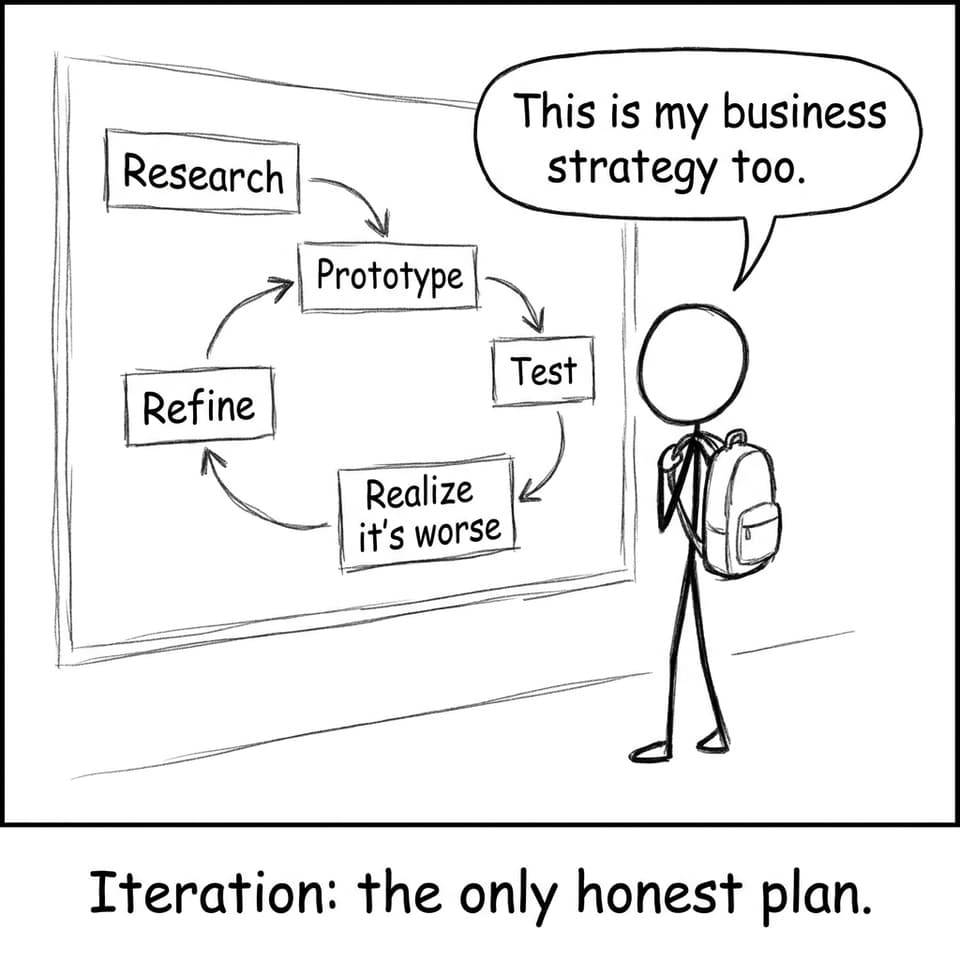
At its best, IB Design Technology is practice for the core loop of entrepreneurship:
-
Find a real need (not a vague “people might like this”)
-
Study existing solutions (and their weaknesses)
-
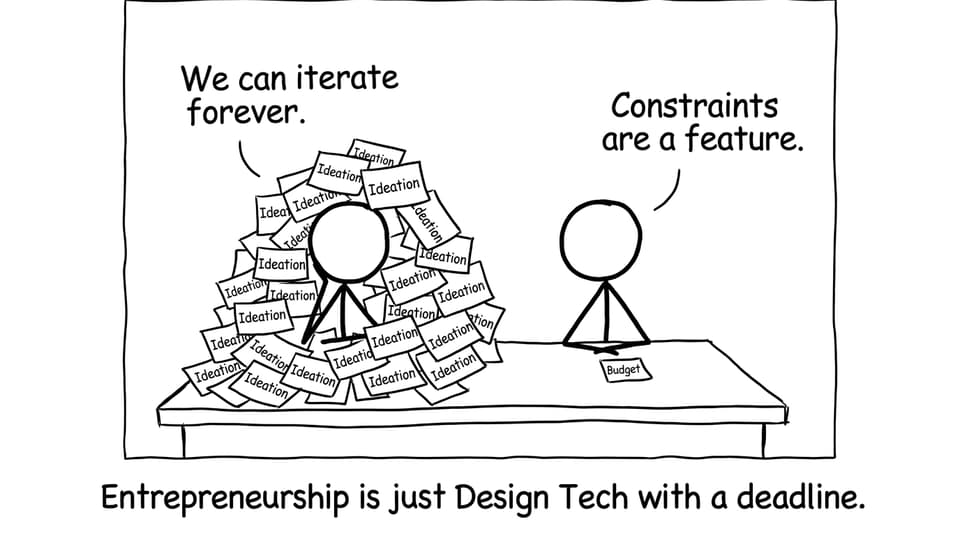
Set constraints (budget, materials, usability, ethics, sustainability)
-
Build a prototype and test it
-
Iterate based on what the data tells you
That’s not just “design.” That’s product development, market validation, and operations thinking, just in an IB-friendly format.
A useful way to revise: whenever you learn DT theory, attach it to a business-flavoured question. “If I were selling this product, what would my evidence be?” Then practise articulating that evidence under time pressure using RevisionDojo’s Questionbank and AI Chat.
The DT design project: your entrepreneurship case study (if you treat it right)
The Internal Assessment is where IB Design Technology becomes most relevant to business and entrepreneurship, because it makes you live through a miniature version of building something real.
You practise:
-
Opportunity identification (spotting a specific user pain point)
-
Research-driven decisions (not aesthetic guessing)
-
Testing and iteration (improving based on results)
-
Evaluation (what worked, what didn’t, what you’d change)
If you want your project to feel less overwhelming, use the structured guidance in Step-by-Step Guide to Writing a Winning IB Design Technology IA and then sanity-check your progress with Common IB Design Technology IA Mistakes (and Fixes).
RevisionDojo’s Coursework Library and Grading tools also help you see what “good evidence” actually looks like on the page, not just in your head.
The honest limitations: what IB Design Technology doesn’t replace
It’s important to be clear-eyed. IB Design Technology is not a substitute for Business Management or Economics.
It typically won’t teach you:
-
Financial statements and ratio analysis
-
Market structures and macroeconomic policy
-
Investment appraisal calculations in depth
So if your goal is pure finance, DT is not the whole toolkit. But as a complement, IB Design Technology gives you something many business students struggle to demonstrate: a track record of structured decision-making.
For business-specific finance revision, you can plug gaps with resources like Business Management 3.1 Introduction to Finance.
How to talk about IB Design Technology in business applications
When you write applications or prepare for interviews, don’t “sell the subject name.” Sell the process.
Try this structure:
-
The user and their measurable need
-
What research showed about existing solutions
-
The constraints you had to respect
-
The prototype test results (what changed because of them)
-
The final evaluation (including limits)
That framing turns IB Design Technology into a business story: customer discovery, competitive analysis, product iteration, and reflective learning.
If you need support articulating this clearly, RevisionDojo’s AI Chat can help you practise answers in concise, examiner-style language, and Tutors can help you shape a strong narrative from your IA.
Conclusion: the quiet advantage of IB Design Technology
Business and entrepreneurship often look glamorous from far away: pitch decks, logos, confident people talking fast. Up close, it’s mostly careful thinking, awkward testing, and learning to change your mind quickly.
That’s why IB Design Technology is good for business and entrepreneurship, not because it teaches you to “be a CEO,” but because it trains you to make evidence-based decisions when your first idea isn’t good enough yet.
If you want to turn that advantage into exam performance, use RevisionDojo as your home base: Questionbank for exam practice, Study Notes and Flashcards for fast recall, AI Chat for clarity, Grading tools for feedback, Predicted Papers and Mock Exams for realistic prep, plus a Coursework Library and Tutors when you need expert guidance.
Keep building. Keep testing. And let IB Design Technology be the subject where your ideas learn to stand up on their own.