




If you have ever looked at your subject list and wondered whether IB Design Technology will be taken seriously, you are not alone. The anxiety usually shows up late at night, right after you compare your timetable to someone else’s. Their schedule looks like a wall of “classic” sciences. Yours includes a subject that builds prototypes, tests real constraints, and asks you to justify decisions like a mini engineer.
Here is the quiet truth: universities do not admit subject names. They admit evidence. IB Design Technology is powerful when you can explain what it trained you to do and when your overall IB combination still matches your target course requirements.
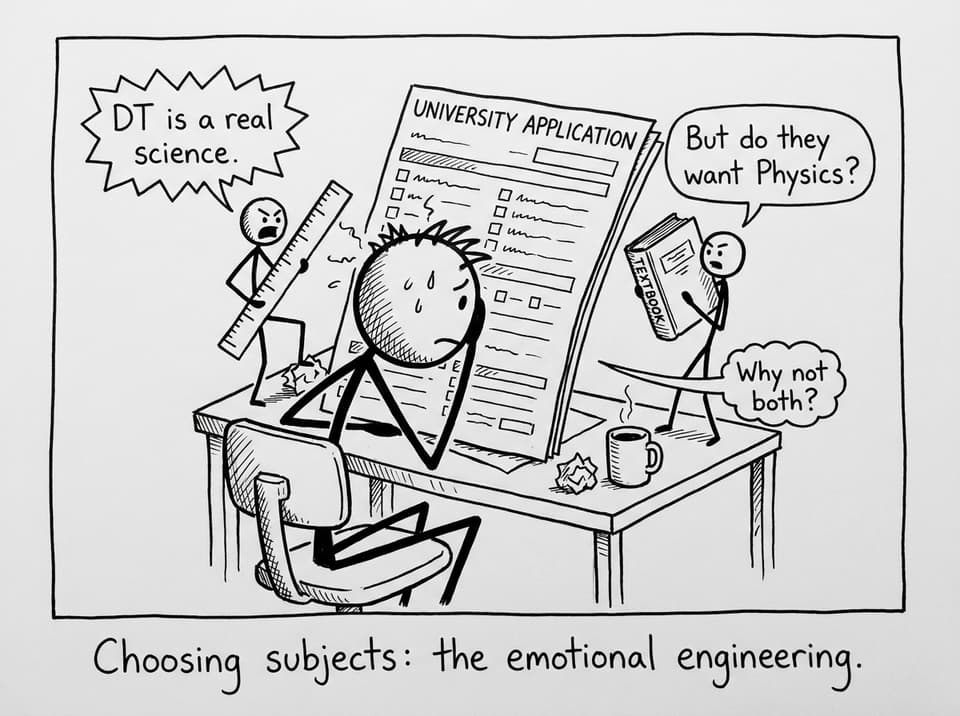
Quick checklist: is IB Design Technology a smart pick?
Use this before you overthink it.
-
Does your target degree require Maths HL or Physics HL? If yes, choose those first, then use IB Design Technology as a supporting strength.
-
Can you commit to long-term coursework without leaving it to the final month?
-
Do you like applied problem-solving more than memorising isolated facts?
-
Can you describe your Design Project using research, testing, iteration, and evaluation?
-
Are you aiming for engineering, product design, architecture, sustainability, or tech innovation pathways?
If you want a central place to revise and sanity-check the syllabus, start with the IB Design Technology hub.
How universities actually interpret IB Design Technology
Admissions teams usually know that IB Design Technology sits in Group 4 and is assessed like a serious academic course, not a hobby. What they look for is the thinking behind your work: the ability to turn messy reality into a structured process.
In other words, IB Design Technology signals:
-
problem framing (what is the real need?)
-
research literacy (sources, users, context)
-
trade-offs (materials, manufacturing, sustainability, cost)
-
evidence-based decisions (not vibes)
-
reflection (what failed, why, and what changed)
If you want language for describing the course with clarity, the Complete Guide to IB Design Technology is useful because it maps the design cycle to what examiners and universities expect.
The skills IB Design Technology proves (if you present it well)
There is a particular kind of confidence that comes from building something, watching it fail, and improving it anyway. That loop is the heart of IB Design Technology, and it translates cleanly to university-level work.
Your strongest “university skills” are usually hidden inside ordinary DT moments:
-
Writing specifications forces precision.
-
Testing plans force fairness and control.
-
Evaluation forces humility.
-
Iteration forces discipline.
-
Documentation forces you to think in public.
That is why the Design Project matters. Done properly, it reads like a first-year undergraduate assignment in miniature.
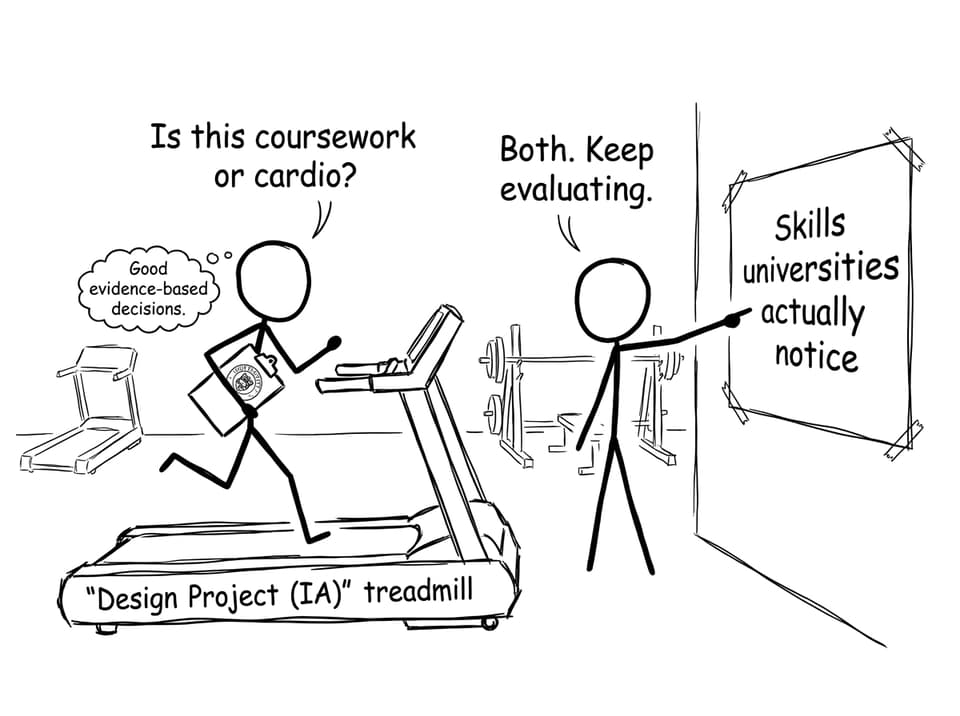
RevisionDojo supports that loop with Study Notes, Flashcards, and a DT-focused Questionbank, plus AI Chat when you need markscheme-style phrasing for evaluation paragraphs. If you are practicing exam responses, the Best Study Strategies for IB Design Technology Students is a good routine blueprint.
Which degrees benefit most from IB Design Technology?
IB Design Technology naturally aligns with degrees that reward applied thinking:
-
engineering (especially design-minded disciplines)
-
product or industrial design
-
architecture and the built environment
-
sustainability and environmental design pathways
-
technology, innovation, and entrepreneurship programs
It also complements courses like business or education because it trains structured problem-solving and stakeholder awareness.
To see the engineering-specific nuance, read Is IB Design Technology Good for Engineering?.
Is IB Design Technology enough for engineering requirements?
Usually, no. And that is not an insult. It is just how prerequisites work.
Most engineering courses prioritise:
-
Mathematics (often HL)
-
Physics (often HL)
IB Design Technology is rarely required, but it often helps. It shows you can apply theory to constraints, communicate a design process, and evaluate decisions with evidence. In competitive applications, those are the skills that make your “I like engineering” claim believable.
If you are still deciding your overall combination, the broader subject-choice guides can help you avoid accidental dead ends: How Do I Choose My HL Subjects Wisely? and Which Subjects Should I Take at IB if I Don’t Know Yet?.
IB Design Technology vs traditional sciences: different strengths, not lower standards
A lot of the “soft subject” fear comes from comparing the wrong things.
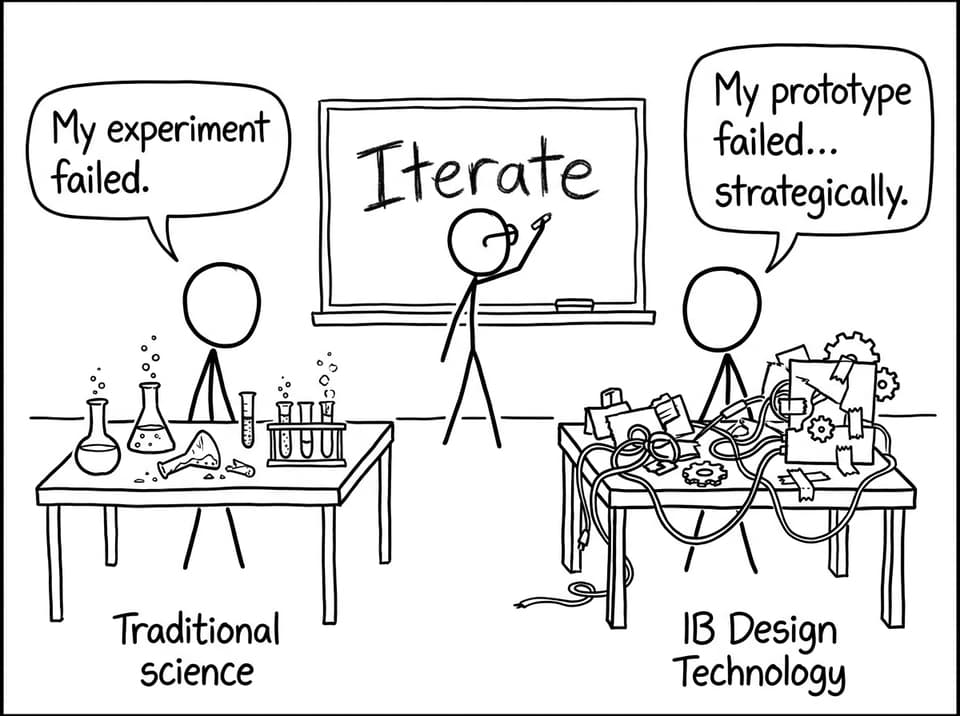
Traditional sciences often emphasise theory, calculations, and controlled experiments. IB Design Technology emphasises application, decision-making, evaluation, and real-world constraints. Universities like students who can do both, especially when DT sits alongside Maths and Physics.
How to talk about IB Design Technology in applications
The mistake is saying, “I took IB Design Technology because I like building things.” That sounds casual, even if your work was not.
Instead, anchor your story in:
-
the problem you chose and why it mattered
-
the user research you ran
-
how specifications guided decisions
-
testing data and what you changed because of it
-
one clear lesson you would carry into university study
If you are writing about subject choices more generally, What IB Subjects Should You Take? and Do Universities Care About HL vs SL? help you frame DT as part of a coherent plan.
Closing: make IB Design Technology legible to admissions
IB Design Technology is a good subject for university applications when it fits your prerequisites and when you describe it as a discipline of evidence, iteration, and decision-making. It is not a detour from seriousness. It is seriousness, expressed through real constraints.
If you want IB Design Technology to become an advantage rather than a question mark, build your revision system early: use RevisionDojo’s DT hub, drill with the Questionbank, lock in terminology with Flashcards, lean on Study Notes, and stress-test your timing with Mock Exams and Predicted Papers. And when coursework pressure hits, the Coursework Library, Grading tools, and Tutors give you structure when motivation runs out.
In the end, universities remember the students who can say: I didn’t just design something. I designed a way of thinking. And IB Design Technology trained me to prove it.