


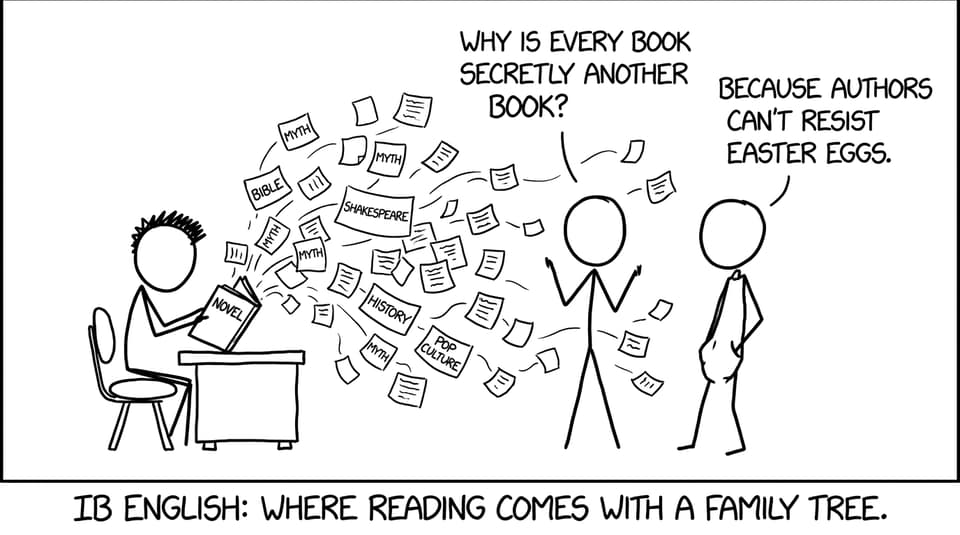
Intertextuality is the moment you realize your novel isn’t alone on your desk.
It’s sitting in a crowded room of myths, holy books, plays, poems, songs, headlines, and centuries of recycled ideas. And once you notice that, IB English stops feeling like “find a theme” and starts feeling like “trace a conversation.” That shift matters in exams, because intertextuality gives you something examiners reward: layered interpretation that stays anchored to craft.
Intertextuality in IB English: a usable definition
In IB English, intertextuality is how a text builds meaning by echoing, quoting, reshaping, or arguing with other texts and cultural stories. Those “other texts” might be canonical works, but they can also be fairy tales, political speeches, religious narratives, or even pop culture.
The exam advantage is simple: if you can explain how an allusion works (not just that it exists), you unlock analysis that feels intentional and evaluative.
If you want a broader foundation, the IB English A Lang & Lit Resources hub is a useful map for what skills matter most.
Quick checklist (use this before you write)
Use this fast routine in IB English when you suspect a reference:
-
Spot the signal: name-drop, quotation, repeated motif, familiar plot shape.
-
Name the source if you can (myth, Bible, Shakespeare, tragedy, etc.).
-
Translate the source meaning in one line (what does it usually imply?).
-
Explain the author’s twist (affirming, parodying, criticizing, modernizing?).
-
Link to the passage: technique + effect + theme.
This checklist pairs well with close-reading routines like those in Close Reading Techniques for Prose and Poetry.
Types of intertextuality you can actually analyze
Intertextuality isn’t one thing. In IB English, it helps to categorize what you’re seeing so your commentary stays precise.
Direct allusion (the obvious breadcrumb)
A clear reference to a story, figure, or line. Think Icarus, Eden, Achilles, “to be or not to be.” Your job is not to flex knowledge; it’s to show what the allusion does to tone, characterization, or argument.
Structural borrowing (the invisible blueprint)
A modern novel that follows tragedy patterns, or a poem that imitates a sonnet to create irony. Structural echoes are great for Paper 2 comparisons because they are about method, not plot.
Thematic dialogue (a debate across time)
Two works may wrestle with the same moral question: power, justice, memory, identity. The intertext here is less “reference” and more “response.” For Paper 2, build your comparative argument around that response.
To practice turning these into exam paragraphs, use guided structures like Mastering IB English Paper 1.
IB English allusions: how to write about them without sounding forced
Allusions can make students panic because they feel like trivia. But in IB English, an allusion is only valuable if it changes meaning.
Here’s a clean sentence frame you can reuse:
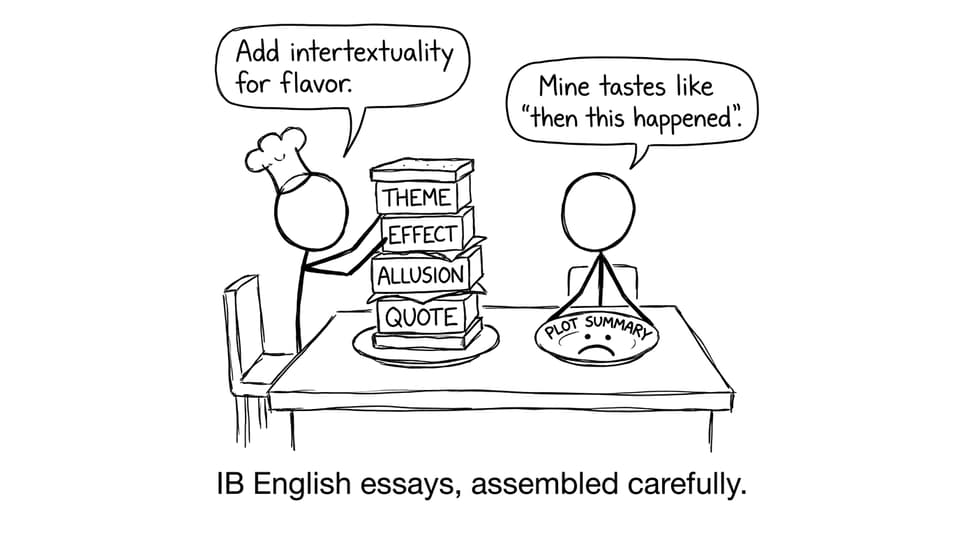
The allusion to X imports associations of Y, which the writer reshapes through technique, creating effect, and therefore supporting theme/argument.
Notice what’s missing: long explanations of the original story. One line is enough. Your marks come from the passage in front of you.
Rewriting the canon: why it’s a gift in IB English Paper 2
A lot of canonical influence shows up as a rewrite: a modern author re-centers a silenced character, questions old moral assumptions, or exposes what a “classic” left out.
In IB English, this is prime Paper 2 material because it naturally creates a thesis with tension:
-
What stays the same (shared myth, shared plot skeleton, shared theme)
-
What changes (perspective, voice, context, values)
-
What that change means (critique, recovery, irony, political statement)
If Paper 2 is your focus, IB English Paper 2: Essential Guide for Success and Step-by-Step Guide to Comparative Literary Essays (Paper 2) help you convert intertextual insights into a structured comparative argument.
When you don’t recognize the reference (still an IB English win)
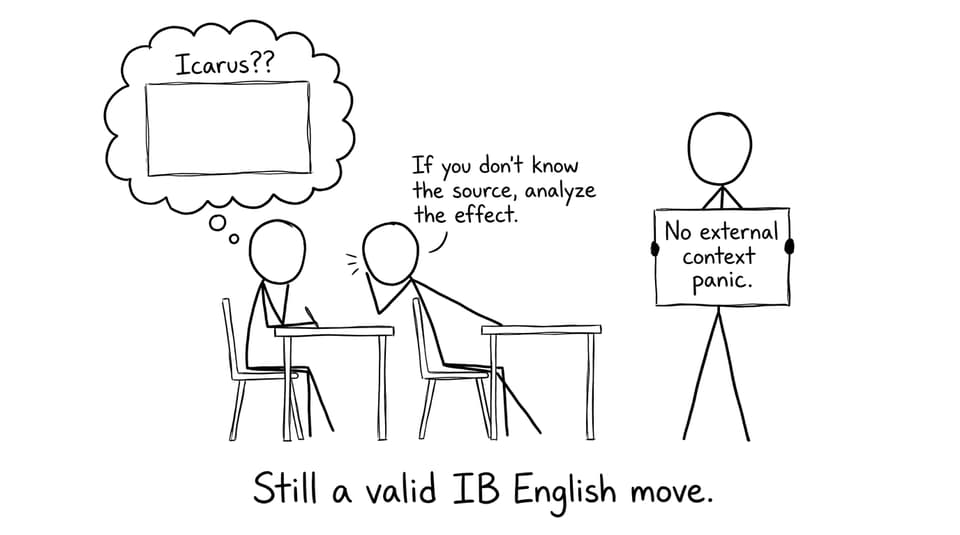
Sometimes you know something is being referenced, but your brain returns a blank screen.
That’s not the end of your analysis. In IB English, you can still write high-scoring commentary by treating the allusion as a crafted signal.
Ask:
-
What emotions does the reference create (awe, irony, nostalgia, dread)?
-
Is the reference treated reverently or mockingly?
-
Does it elevate a character or expose their self-image?
-
What pattern surrounds it (imagery cluster, tone shift, motif repetition)?
And then analyze those features like you would any other technique.
A practical way to revise intertextuality with RevisionDojo
Intertextuality improves fastest when you practice it under exam conditions, then get feedback.
A simple weekly loop for IB English:
-
Do one timed response using the IB English A Lang & Lit Paper 1 Questionbank.
-
Do one comparative plan using the IB English A Lang & Lit English Paper 2 Questionbank.
-
Turn recurring allusions, archetypes, and key definitions into spaced repetition via Flashcards.
-
Use RevisionDojo’s AI Chat and grading tools to stress-test your thesis and paragraph clarity before you submit.
If you’re building a longer argument (HL), Understanding the HL Essay for IB English A and Crafting a Strong HL Essay Thesis show how to turn intertextual observations into a focused line of inquiry.
Conclusion: make IB English feel like a conversation, not a checklist
Intertextuality turns canonical works into living objects: texts that remember other texts, and sometimes disagree with them. In IB English, that awareness helps you write essays that sound calm and deliberate: you’re not hunting for cleverness, you’re explaining why an author chose to echo something older.
When you practice spotting allusions, naming their associations, and analyzing the author’s twist, you build exactly the kind of interpretive depth Paper 1, Paper 2, and HL work demand. And when you want that practice to feel structured (and trackable), RevisionDojo brings it together: Questionbank drills, Study Notes, Flashcards, AI Chat, grading tools, Predicted Papers, Mock Exams, the Coursework Library, and Tutors, all designed to make IB English analysis more confident and more repeatable.


