
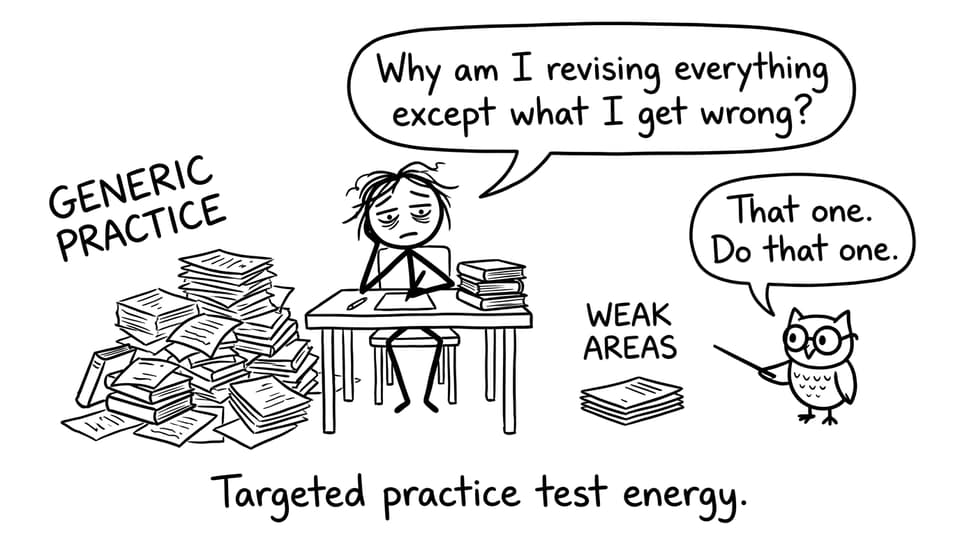
If you have ever finished a long practice session and still felt unprepared, you are not alone. Most IB students do not fail because they avoid work. They fail because their work is scattered. A generic paper can feel productive, but it often hides the one thing you actually need: pressure on your weak areas.
The goal is simple: build IB practice tests that behave like a spotlight, not a floodlight.
A quick checklist for an IB weak-area test
Before you build anything, keep your next IB practice test boring and specific:
-
Pick one subject and one paper style
-
Choose 2-4 weak topics (not 12)
-
Set a timer that matches the difficulty and format
-
Mark it the same day
-
Write one “error rule” for each repeated mistake
If you want the fastest setup, start with RevisionDojo’s Test Builder and build from your weak-topic list.
Find your weak areas (without guessing)
There is a quiet trap in IB revision: you revise what feels fluent, not what costs marks. The fix is to use evidence.
Start with your recent tests and quizzes, then pair that with targeted practice data. RevisionDojo makes this easier by combining practice with analytics, so patterns appear quickly. If you need structure for the bigger picture, use the month-by-month plan in How to Revise for IB Exams: A Month-by-Month Revision Plan.
To gather clean signals fast:
-
Do a short diagnostic set from the Questionbank
-
Note which command terms (explain, evaluate, compare) break your flow
-
Track whether mistakes come from content gaps or rushed reading
Build an IB practice test that targets only those gaps
Once you know what is weak, you can build a practice test that is ruthlessly focused.
In IB Test Builder: Create Custom Exams for Targeted Practice, the core idea is consistent: choose the exact subject, paper type, topics, and question count so the test matches your current needs.
A strong IB weak-area test usually looks like this:
-
Mini test (25-40 min): one or two topics, higher focus, faster feedback
-
Mixed weak-area test (60-90 min): two to four topics, pacing practice
-
Full simulation: when your weak areas are smaller and you need endurance
If you are preparing on the go, Mobile IB Test Creation: Build Exams on Any Device shows how to keep the same workflow from your phone.
Sit the test like it counts
You do not need to feel confident before you start. You need a clean attempt.
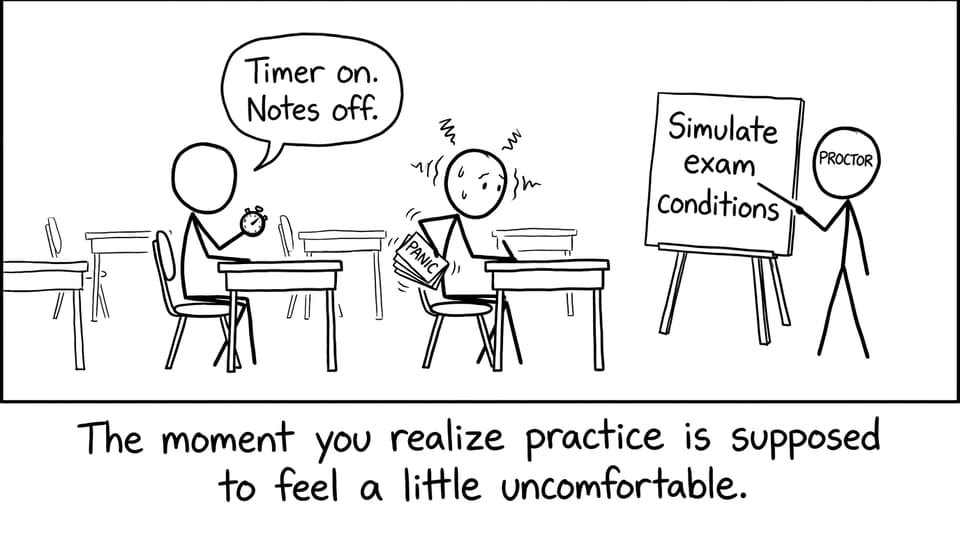
Treat your custom IB practice test like a real sitting:
-
Timer on, notifications off
-
No notes, no “just checking one formula”
-
Commit to finishing the last question, even if it is messy
This is where exam technique is built. RevisionDojo supports this kind of realistic repetition across subjects, as explained in Online IB Mock Exams: Practice Anywhere, Anytime.
Review with a feedback loop (and turn mistakes into assets)
The real gains come after the timer stops.
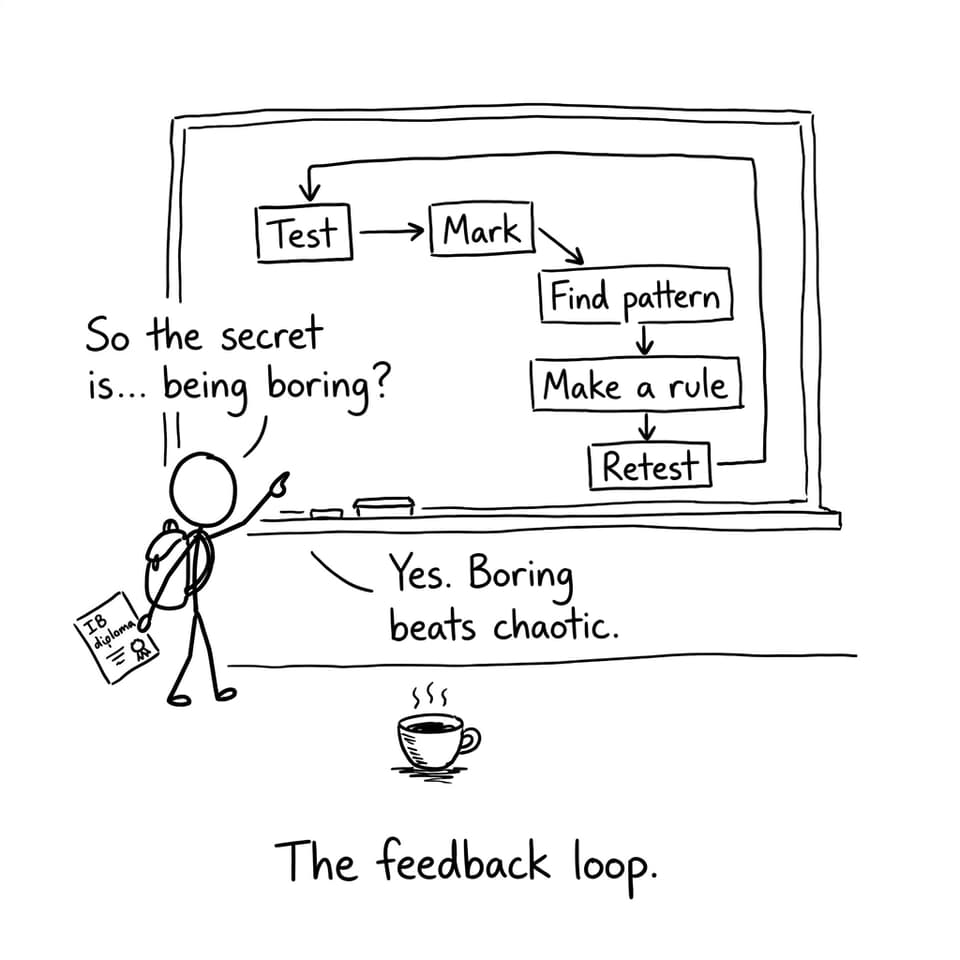
When you review your IB practice test, do not only correct answers. Extract patterns. Then convert those patterns into tools:
-
Turn repeated errors into Flashcards (one mistake, one rule)
-
Use AI Chat to ask, “What command term did I ignore here, and how should the answer be structured?”
-
If writing is the issue, use Grading tools to tighten your responses
RevisionDojo’s ecosystem (Study Notes, Flashcards, AI Chat, Questionbank, Grading tools, Predicted Papers, Mock Exams, Coursework Library, and Tutors) works best when you move through it in one direction: practice, feedback, refinement, retest. For an app-based workflow, see RevisionDojo App: The Smarter Way to Prep for IB Exams.
Build your next IB practice test today
A perfect IB practice test is not the hardest one you can find. It is the one that aims directly at what is holding you back, then repeats the feedback loop until the weakness stops being weak.
Open RevisionDojo’s Test Builder, pull questions from the Questionbank, and run one focused test this week. Keep it specific, keep it timed, and keep the review honest. That is how IB scores move.