RevisionDojo was developed independently of the IBO and as such is not endorsed by it in any way.
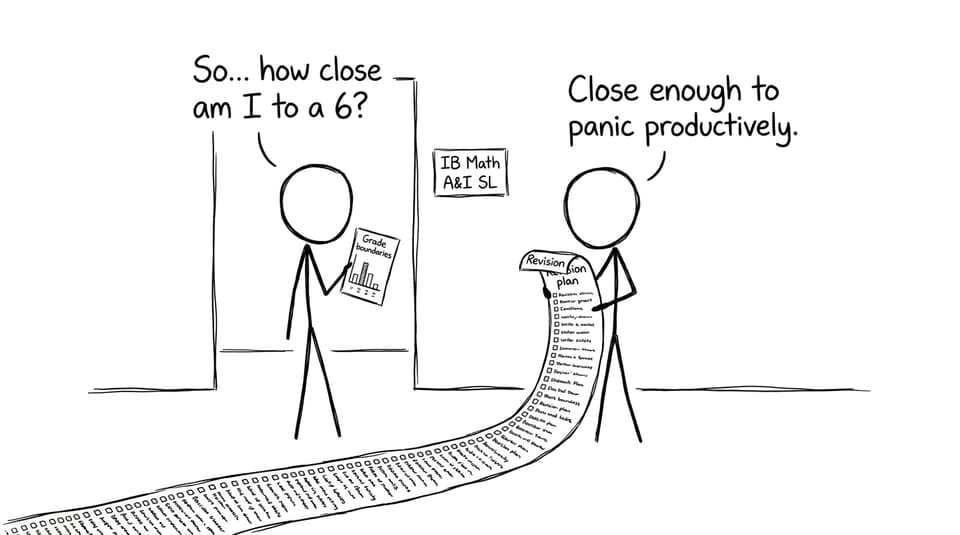
The calm moment after a mock score
You finish a timed set, add up the marks, and feel that familiar question: Is this a 4? A 5? Am I actually close? In IB Math, uncertainty is exhausting because it turns revision into guesswork. Grade boundaries don’t remove the work, but they do remove the fog.
This guide gives the IB Mathematics: Applications and Interpretation SL grade boundaries 2025 (TZ2), plus a simple way to use them without obsessing over every point.
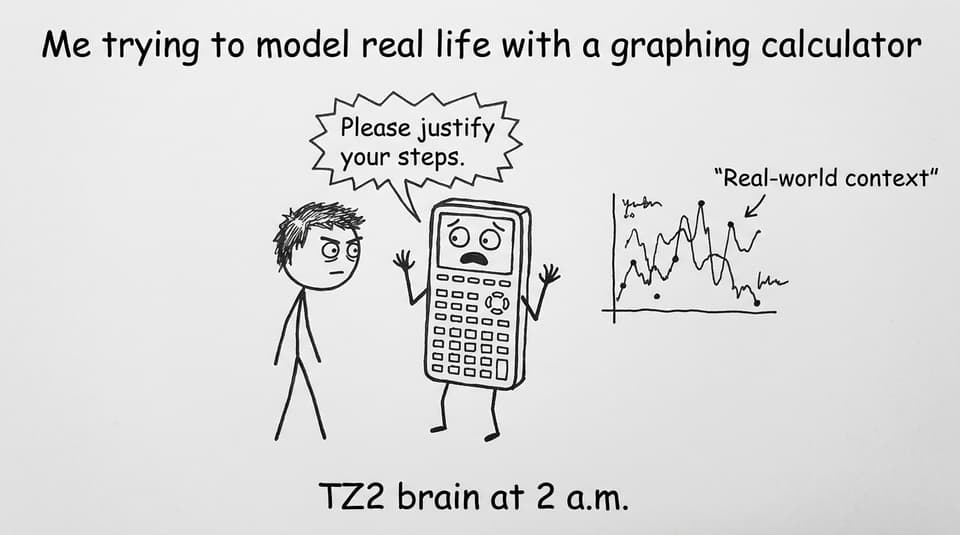
Me trying to model real life with a graphing calculator
Quick checklist: how to use these IB Math boundaries
Convert boundaries into targets (not labels): “I need +6 marks on Paper 1 style questions.”
Split your work across the three components: Exploration, Paper 1, Paper 2.
Use one hub for everything so practice stays consistent (notes, questions, feedback).
What to do with grade boundaries (without spiraling)
In IB Math, the biggest score jumps usually come from reducing “unforced errors” rather than learning brand-new content.
Raise Paper 1 marks by fixing method habits
Paper 1 rewards clean setup and accurate algebra. Use targeted practice to make mistakes predictable. A good loop is: learn a micro-skill, drill 10 questions, review markscheme logic, then retest.
Paper 2 is where students compute correctly but lose marks by not interpreting results. Train yourself to finish the thought: what does the parameter mean, what does the model suggest, what are limitations?
RevisionDojo AI Chat for quick “why does this interpretation earn marks?” clarification
Protect Exploration marks with structure
Your Exploration is often the most controllable part of the course. A clear research question, sensible math, and honest reflection can protect points even when exams feel messy. If you need models of what “good” looks like:
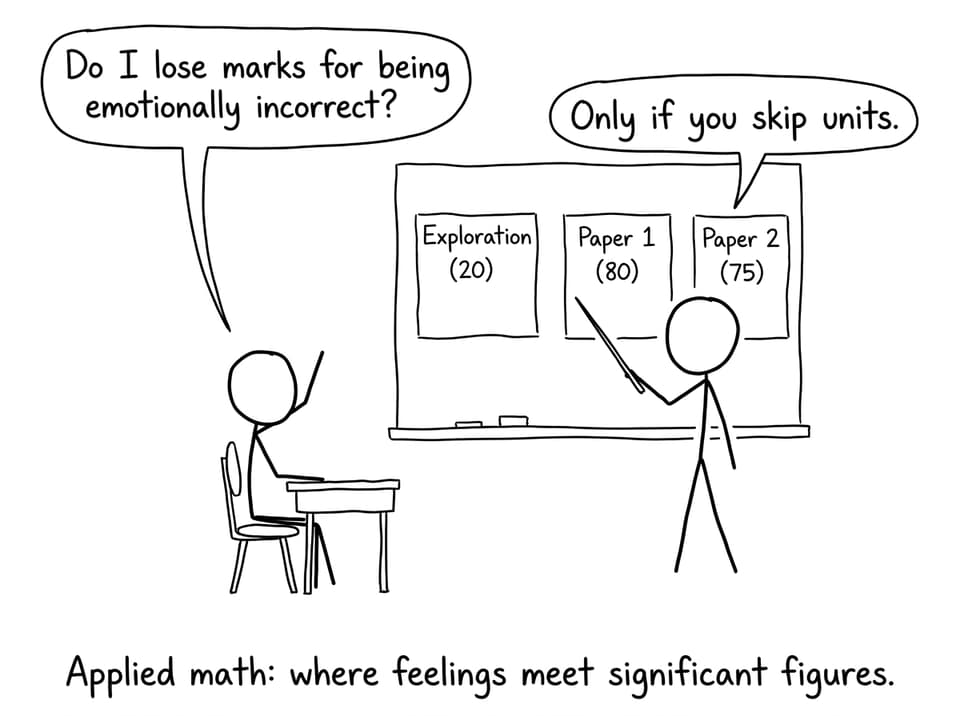
Applied math: where feelings meet significant figures
FAQ: IB Math AI SL grade boundaries 2025 (TZ2)
Do grade boundaries guarantee my final grade in IB Math?
Grade boundaries are a guide to what a grade tends to require in that session and timezone, not a promise you can reverse-engineer perfectly. In IB Math, boundaries help you translate raw marks into a realistic target, which reduces panic and makes planning easier. They are most useful when you combine them with consistent marking and honest review of what lost you marks. If your practice marking is generous, boundaries will feel misleading. If your practice marking is strict, boundaries become motivating because you can see progress sooner. Treat boundaries as a compass: they point direction, but you still have to walk.
Which component is the fastest way to improve my IB Math grade?
For many students, the fastest improvement comes from Paper 1 and Paper 2 technique, because small habits repeat across many questions. In IB Math AI SL, you can often gain several marks by writing one more interpretation line, using correct rounding, or setting up regression properly. The Exploration can also be a strong booster, but it usually requires more sustained drafting and feedback cycles. A practical approach is to stabilize the Exploration early, then run weekly timed practice for Paper 1 and Paper 2. This is where RevisionDojo’s Grading tools and Questionbank are powerful, because they make feedback immediate and specific. When you can see your top three mistake patterns, you stop revising blindly.
How should I revise if I’m aiming for a 6 or 7 in IB Math?
Aiming for the top bands means you need both accuracy and interpretation, not just more practice. In IB Math, the students who reach a 6 or 7 usually build a loop: learn with Study Notes, convert into daily Flashcards, apply with the Questionbank, and pressure-test with Mock Exams or Predicted Papers. The key is consistency: short sessions that repeat beat long sessions that burn out. You also need to review like an examiner, asking “what mark did I miss and why?” rather than “did I kind of understand it?” If you get stuck, use AI Chat to unblock a single step quickly, then return to practice. For a full strategy, keep this open: How to score a 7 in IB Math AI SL.
A final way to think about IB Math boundaries
Grade boundaries are not a verdict. In IB Math, they’re a budgeting tool: you decide where marks are most available, then you spend your time accordingly. If you want one place to run that whole system: practice, feedback, notes, flashcards, predicted papers, mock exams, and tutoring support when needed, start with RevisionDojo and build your next week around one clear target.