


The moment grade boundaries start to matter
There’s a very specific kind of silence that happens when someone says, “What do you need for a 7?” In IB English, that question can feel like a shortcut to certainty, a way to turn months of reading, listening, writing, and speaking into one clean number.
But grade boundaries aren’t magic. They’re a map. And if you’re revising smartly, a map is enough.
This guide gives you a complete, student-friendly breakdown of the 2025 grade boundaries for IB English B HL (Timezone 1), plus how to use them to plan your next two weeks of revision.
Quick checklist (save this before you scroll)
To make IB English boundaries useful, do these five things:
-
Identify the easiest marks to gain across components (usually Oral + Paper 1 structure).
-
Track scores by component, not just “overall feeling.”
-
Build routine practice using the IB English B Questionbank.
-
Use targeted support from IB English B Revision Notes (SL/HL) when you’re stuck.
-
Run timed practice with English B Papers and review your mistakes.
IB English B HL grade boundaries 2025 (TZ1)
These IB English grade boundaries are component-by-component, then the final grade thresholds out of 100.
Internal Assessment (Individual Oral), out of 30
-
Grade 7: 27-30
-
Grade 6: 22-26
-
Grade 5: 18-21
-
Grade 4: 13-17
-
Grade 3: 7-12
-
Grade 2: 4-6
-
Grade 1: 0-3
For Oral practice that feels like the real thing, drill prompts in the IB English B Internal Assessment Questionbank.
Paper 1 (Writing), out of 30
-
Grade 7: 28-30
-
Grade 6: 22-27
-
Grade 5: 16-21
-
Grade 4: 10-15
-
Grade 3: 7-9
-
Grade 2: 4-6
-
Grade 1: 0-3
If you’re rebuilding confidence in timed writing (openings, register, paragraph control), start with IB English B Resources and practice formats inside the Paper 1 Questionbank.
Paper 2 Listening, out of 25
-
Grade 7: 23-25
-
Grade 6: 19-22
-
Grade 5: 14-18
-
Grade 4: 10-13
-
Grade 3: 7-9
-
Grade 2: 4-6
-
Grade 1: 0-3
To train this efficiently, do short, repeatable sets in the Paper 2 Listening Questionbank.
Paper 2 Reading, out of 40
-
Grade 7: 37-40
-
Grade 6: 31-36
-
Grade 5: 26-30
-
Grade 4: 20-25
-
Grade 3: 12-19
-
Grade 2: 6-11
-
Grade 1: 0-5
Final IB English B HL grade boundaries, out of 100
-
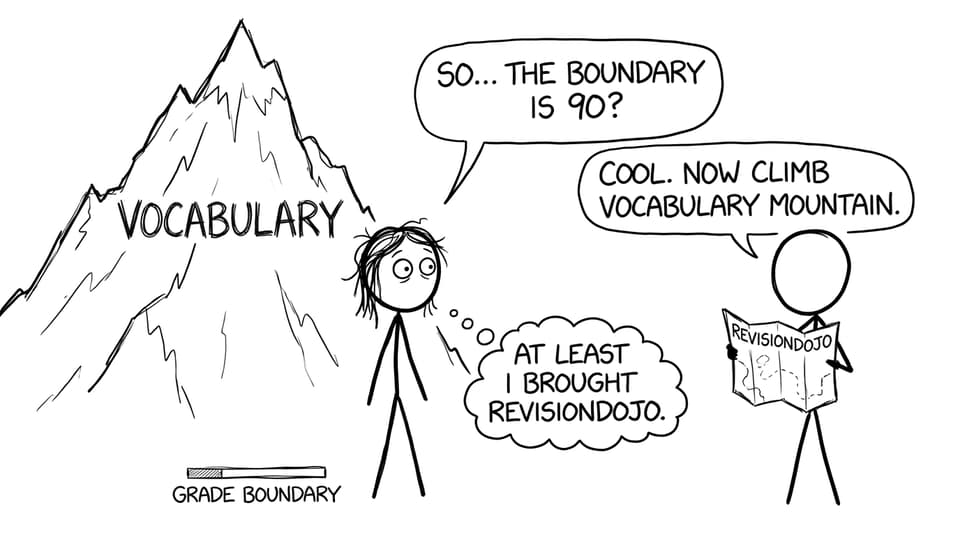
Grade 7: 90-100
-
Grade 6: 73-89
-
Grade 5: 56-72
-
Grade 4: 39-55
-
Grade 3: 24-38
-
Grade 2: 12-23
-
Grade 1: 0-11
You can cross-check boundaries and compare sessions using the IB Grade Boundaries hub and the English Language B boundaries page.
How to use IB English boundaries without obsessing
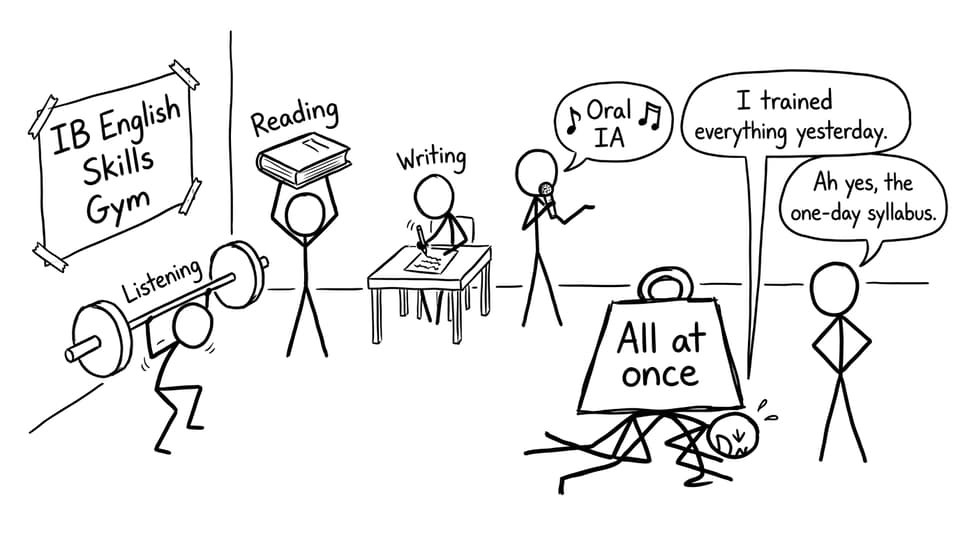
A good rule for IB English: boundaries help you choose priorities, not predict the future.
If you’re close to a boundary, ask: “Where can I gain 5 marks fastest?” Often, that’s not “learn 200 new words.” It’s fixing structure (Paper 1), improving task fulfilment, and becoming calmer in the Oral.
RevisionDojo helps you do that in a practical loop: learn fast with Study Notes, then convert knowledge into marks using the Questionbank, Flashcards, AI Chat, and Grading tools. When you want a full rehearsal, use Predicted Papers and Mock Exams to practice under pressure, then adjust your plan based on what actually happened.
FAQ
Are these IB English B HL grade boundaries official for 2025?
These are the IB English B HL grade boundaries for May 2025, Timezone 1, presented component-by-component and as a final total out of 100. Grade boundaries are tied to a specific exam session, so they should be used as a reference point rather than a promise. If you’re in a different timezone, your boundary table can differ slightly even when the papers feel similar. That’s why it helps to verify using RevisionDojo’s boundary pages rather than relying on screenshots in group chats. Once you know your table, you can set realistic targets for each component. The useful part is not the number itself, but the clarity it gives your revision plan.
What’s the quickest way to improve my IB English grade using boundaries?
Start by identifying which component is most “fixable” for you in the next 10 days. In IB English, students often gain marks faster by tightening Paper 1 structure and meeting the task requirements clearly. That might mean planning faster, using more precise linking, and choosing vocabulary you can control under time pressure. Next, pick one receptive skill (listening or reading) and practice in short bursts, because consistency beats marathon sessions. Finally, treat the Oral like a skill you can rehearse: clearer examples, smoother transitions, better interaction. Use RevisionDojo’s Questionbank to isolate weaknesses, then check your progress with timed sets and feedback.
How important is the Individual Oral compared with Papers 1 and 2 in IB English B HL?
The Individual Oral matters because it’s a major chunk of your final result and it’s one of the most trainable parts of IB English. You can improve it with repetition: better organization, better example choices, and calmer delivery. Unlike a long exam paper, the Oral is also easier to simulate at home with a timer and a recording. Many students underestimate how much fluency and interaction affect the mark, not just “fancy vocabulary.” If you build a small bank of theme-linked examples, you reduce panic and improve coherence. RevisionDojo’s resources make this easier by giving you practice prompts, support tools, and clear progression you can track.
A calm way to aim for a 7
If you want a top score in IB English, don’t chase the boundary like it’s a finish line that moves when you look at it. Use it as a compass. Set one component goal at a time, drill it with the IB English B Questionbank, and tighten your weak spots using RevisionDojo’s Study Notes, Flashcards, AI Chat, Grading tools, Tutors, and exam-style practice.
The boundary tells you what “enough” looks like. Your plan decides whether you get there.