



If you have ever stared at your subject choices thinking, “I like designing things… but how intense is this going to get?”, you are not alone. IB Design Technology has a reputation for being creative, practical, and surprisingly demanding in the writing. And the SL vs HL decision matters because it changes what you learn, how you are assessed, and how much time the subject quietly asks for every week.
This guide breaks down IB Design Technology SL vs HL in a way that helps you choose your level and revise smarter for exams.
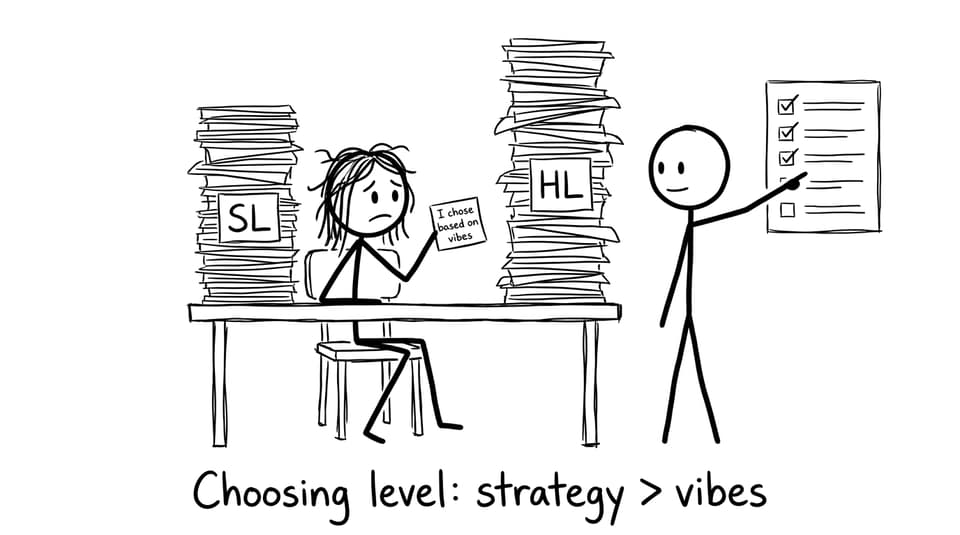
IB Design Technology SL vs HL: the quick checklist
If you want the fast answer, use this:
-
Choose SL if you want the design mindset, strong results, and a balanced timetable.
-
Choose HL if you enjoy technical systems, deeper analysis, and can handle a heavier workload.
-
In IB Design Technology, both levels still require you to justify decisions, not just build a nice product.
-
HL adds extra assessed content and an extra exam paper, so exam prep is more about stamina and synthesis.
For a clear overview of everything in one place, start with the IB Design Technology resources hub.
What SL and HL share in IB Design Technology
The most important thing to understand is that IB Design Technology SL is not a “lite” version of the course. The foundation is the same: solving real problems with a user-centred design process.
In both SL and HL, you will:
-
Learn and apply the design process
-
Study design theory, context, and responsible decision-making
-
Complete the internal assessment (design project)
-
Sit written exams that reward application, analysis, and evaluation
If you want an exam-focused mindset early, the RevisionDojo strategy in Score a 7 in IB Design Technology: A Calm Strategy is a good north star.
The biggest difference: depth and technical expectation
The headline difference is how far you are expected to go beyond the core ideas.
At SL, IB Design Technology tends to focus on building accurate, well-justified answers using core theory: user needs, design thinking, materials, modelling, sustainability, and evaluation.
At HL, IB Design Technology asks you to connect more dots and handle more technical detail. That often means deeper understanding of systems and production decisions, plus more complex judgement in longer responses.
A simple way to picture it:
-
SL: “Can you apply the design concept correctly to this situation?”
-
HL: “Can you apply it, compare options, and defend your choice with precise reasoning?”
If your class is using the newer course structure, it helps to anchor your revision around the assessment logic in IB Design Technology Assessment: New 2027 Syllabus.
Workload: the difference you feel in week 6
Official teaching time is often summarised as:
-
SL: 150 teaching hours
-
HL: 240 teaching hours
But what you actually feel as a student is this: HL creates more moments where you need to keep two skills running at once.
-
You revise theory while also practising longer, more demanding exam questions.
-
Your design project evidence needs to be tighter because you have less room for vague justification.
RevisionDojo makes this manageable by keeping everything structured: Study Notes for clarity, Flashcards for recall, and AI Chat for quick unblock moments when your brain refuses to explain a concept in exam wording. If you want a practical system, see Best Study Strategies for IB Design Technology.
Assessment: what changes in exams and the IA
In IB Design Technology, both levels have external exams and an internal assessment, but HL is assessed more broadly.
A common pattern is:
-
SL: Paper 1 + Paper 2 + Internal Assessment
-
HL: Paper 1 + Paper 2 + Paper 3 (HL only) + Internal Assessment
So HL students have an extra paper to prepare for, and that changes revision strategy: you need repetition, timing practice, and the ability to switch between topics smoothly.
To practise exam-style questions by topic, use the RevisionDojo Questionbank through the Design Technology Questionbank view. You can also drill specific areas like Modelling and Prototyping Questionbank or Design for Sustainability Questionbank.
For the IA side, strong students write like designers who measure. If your first page is still fuzzy, read IB Design Technology Problem Statement: Write It Strong and (when drafting) keep the marking reality in mind with How Do Teachers Mark IB Design Technology Internal Assessments.
So… should you choose SL or HL?
HL is not “better”. In IB Design Technology, the smartest choice is the one that you can sustain.
Choose HL if you:
-
Genuinely enjoy technical depth and systems thinking
-
Want more challenge in evaluation and extended response writing
-
Are considering engineering, design, or tech-heavy pathways
Choose SL if you:
-
Want to keep your overall IB workload balanced
-
Prefer strong application without the extra HL-only exam demands
-
Need space to prioritise other HL subjects
If you are still weighing difficulty, Is IB Design Technology Easier Than Other IB Subjects? gives a realistic perspective.
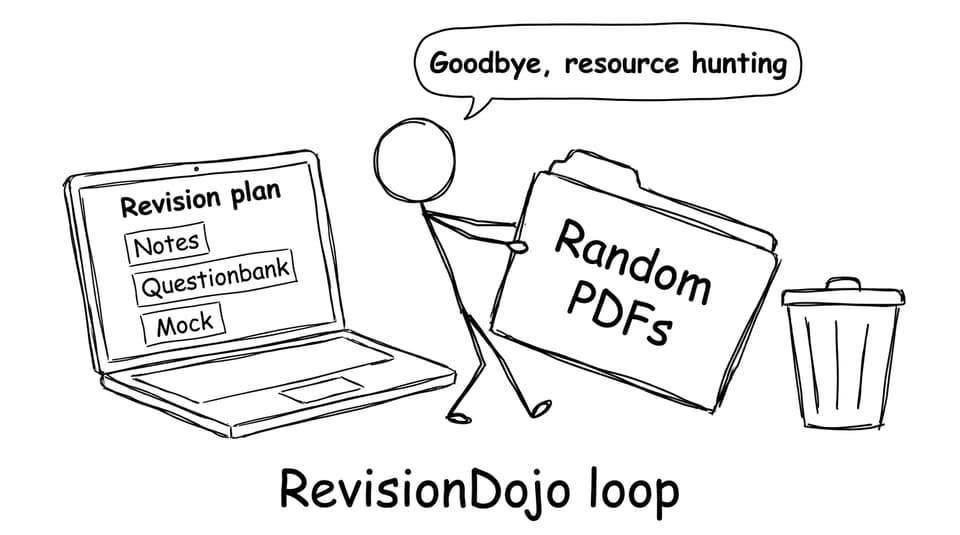
A simple RevisionDojo study plan for SL and HL
Here is a routine that works for IB Design Technology students preparing for exams:
-
2x per week: learn one syllabus chunk using IB Design Technology Resources and convert it into your own brief notes
-
3x per week: practise with the Questionbank, then use AI Chat to fix the exact reasoning you got wrong
-
1x per week: do a timed exam-style block and review errors for patterns
When you want more exam realism, add RevisionDojo IB Predicted Papers and the guidance in IB Predicted vs Specimen Papers: What They Mean.
FAQ about IB Design Technology SL vs HL
Does HL IB Design Technology look better to universities?
Sometimes, but rarely in the simplistic way students hope. Universities usually value results and relevant subject fit more than the label alone. If you are applying for engineering, product design, or technology-heavy degrees, HL can signal comfort with deeper technical material. But a high-performing SL student with a strong portfolio and strong grades is often more convincing than an overwhelmed HL student. In IB Design Technology, the most persuasive evidence is consistent performance and clear thinking under assessment conditions. If HL pushes your overall score down, it may not be the “better” choice.
Is the internal assessment harder at HL?
The task structure is similar, but the expectations around depth are higher. In IB Design Technology, HL students are usually expected to show clearer iteration, stronger justification, and more mature evaluation trade-offs. That does not mean your product has to be complex or expensive. It means your thinking has to be visible: research leading to requirements, requirements leading to tests, tests leading to changes, and changes leading to evaluation. The work feels harder when students document late and try to reverse-engineer a story. A steady IA routine, plus RevisionDojo’s Grading tools and Coursework Library, makes the process calmer.
Can you switch between SL and HL during the course?
Many schools allow switching early, and it can be a smart move if you decide quickly. The later you switch, the more likely you are to face gaps in HL-only content and exam practice. In IB Design Technology, switching up to HL also affects your exam preparation because you now need to train for the extra paper and longer reasoning. If you are considering a switch, ask your teacher what you have missed, then use RevisionDojo Study Notes and the Questionbank to patch it fast. The key is to switch with a plan, not with panic. If you give yourself a few weeks of structured practice, the transition is usually manageable.
Final thought: choose the level you can master
The SL vs HL decision in IB Design Technology is not about which one sounds impressive. It is about which one lets you build a repeatable loop: learn, practise, get feedback, and improve.
If you want that loop in one place, RevisionDojo is built for IB Design Technology students preparing for exams: Study Notes, Flashcards, Questionbank, AI Chat, Grading tools, Predicted Papers, Mock Exams, a Coursework Library, and Tutors when you want a human to diagnose what is holding you back. Start with the IB Design Technology resources hub and build from there.