


IB Design Technology Paper 1 Explained (without the panic)
The night before a multiple-choice exam, your brain does a strange thing: it convinces you that because there are options, there’s safety. Then you sit down for IB Design Technology Paper 1 and realize the options aren’t a lifeline; they’re a mirror, reflecting exactly how precise your understanding is.
Paper 1 is deceptively simple on paper and surprisingly demanding in practice. If you’re aiming for confident, repeatable performance, this guide breaks down what IB Design Technology Paper 1 is, what it rewards, and how to train for it like a skill.
Paper 1 at a glance: a quick checklist
Use this as your 60-second reset before you revise:
-
SL and HL both sit Paper 1 in IB Design Technology.
-
The format is multiple-choice only.
-
It’s heavy on definitions, key concepts, and quick applications.
-
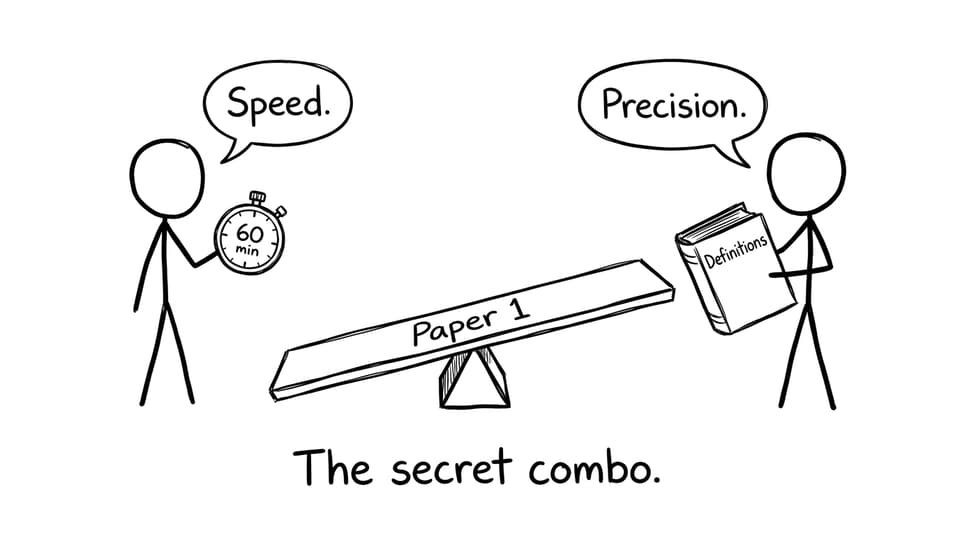
Your biggest constraints are time and accuracy.
-
Your best prep tools are targeted drills, not re-reading.
If you want a single home base, start from the IB Design Technology (First Exam 2027) hub or the IB Design Technology resources page.
What IB Design Technology Paper 1 actually tests
Paper 1 is mostly a test of “Do you know what this means, and can you spot it in context?” In IB Design Technology, that often shows up as:
-
Clean definitions (terms that sound similar but behave differently)
-
Recognition of a concept inside a short scenario
-
Basic application (choosing the best principle, method, or next step)
-
Precision under pressure (no marks for “basically right”)
This is why RevisionDojo’s Study Notes and Key Definitions matter: Paper 1 rewards language. Pair the hub with IB Design Technology Revision Notes (SL/HL) to tighten the basics before you speed up.
The common traps (and how to beat them)
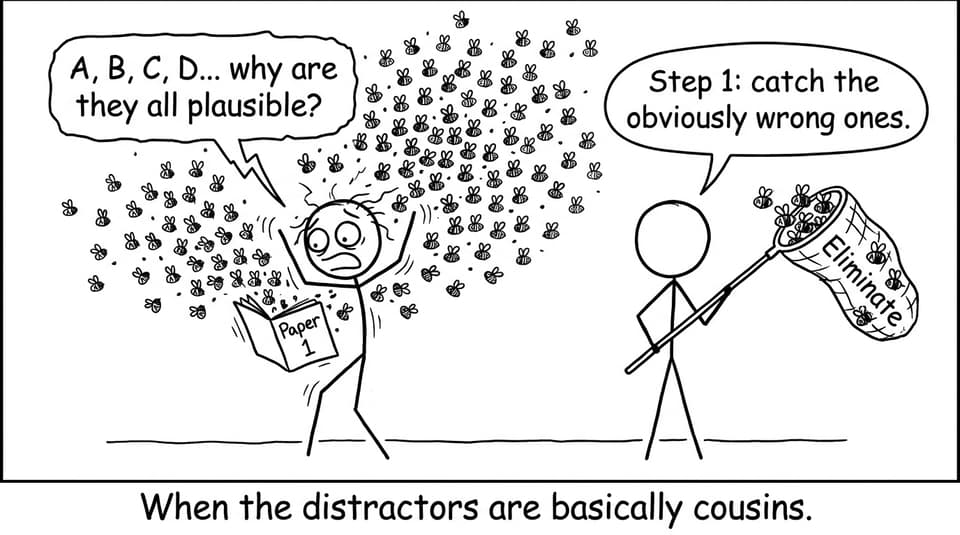
Distractors that are “almost true”
In IB Design Technology, a wrong option is often a true statement applied to the wrong situation. Train yourself to ask: What makes this option specifically correct here?
A great way to build that instinct is short, topic-based drills in the IB Design Technology Questionbank. The goal isn’t volume. It’s pattern recognition.
Definition drift
Students don’t usually “forget” DT terms, they blur them. Fix this with Flashcards and daily recall. If you need a structure, use the strategy in IB Design Technology Revision Notes That Actually Work.
Time pressure
Speed comes from familiarity. Build it deliberately: do small timed sets, review errors, and repeat.
A simple 7-day Paper 1 practice routine
Here’s a routine that works well for IB Design Technology Paper 1 preparation:
-
Day 1-2: Build a mini glossary (20-30 terms). Then test it with Flashcards.
-
Day 3-4: Do two short timed sets from the Questionbank, then review explanations.
-
Day 5: Study one topic deeply using notes (e.g., Classic Design (SL/HL)).
-
Day 6: Mixed-topic set to simulate uncertainty.
-
Day 7: Full timed run, then error log: “term confusion,” “rushed reading,” or “gap in content.”
If you want the bigger picture of how this fits into your course, read Best Study Strategies for IB Design Technology and IB Design Technology: Top Revision Techniques That Work.
How RevisionDojo supports Paper 1 (especially for 2027)
RevisionDojo is built for the way IB Design Technology exams actually feel: fast, specific, and slightly unforgiving. Use:
-
Questionbank for Paper 1-style multiple-choice practice with explanations
-
Study Notes for syllabus-aligned clarity (and quick revision)
-
Flashcards for definitions and confusion pairs
-
AI Chat to unpack why an option is wrong (and what the examiner expects)
-
Mock Exams and Predicted Papers to rehearse timing and stamina
-
Grading tools and the Coursework Library to keep IA learning connected to exam topics
-
Tutors when you need feedback that’s faster than trial-and-error
To stay grounded in the course (not just Paper 1), the Complete Guide to IB Design Technology is a helpful map.
FAQ
Do SL and HL students both take IB Design Technology Paper 1?
Yes. In IB Design Technology, Paper 1 is taken by both SL and HL students. That means the baseline expectations around definitions and core concepts matter for everyone. It’s also why students sometimes underestimate it: “We all do it, so it must be easy.” In reality, shared papers often become separators because they reward precision. The good news is that the preparation is straightforward if you practice regularly. Use small, timed sets and treat mistakes as data.
What’s the best way to study for multiple-choice in IB Design Technology?
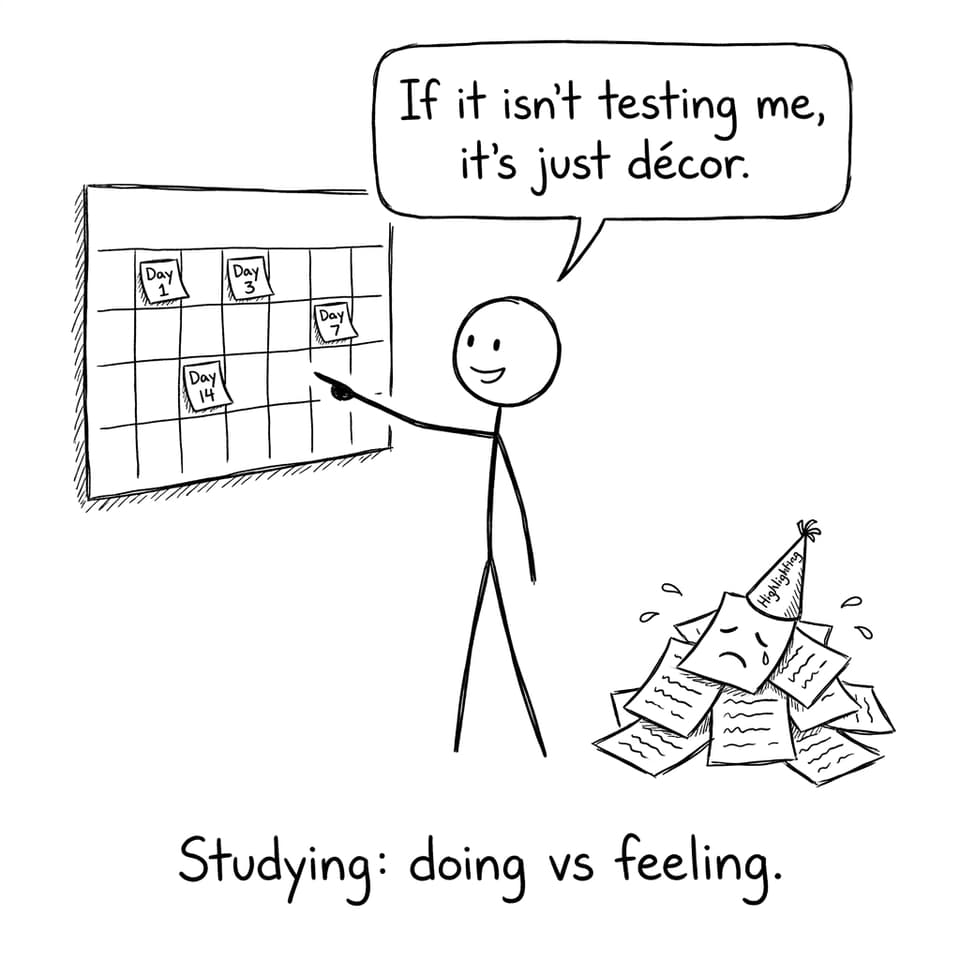
The best approach is active recall plus targeted repetition. In IB Design Technology, multiple-choice questions often test whether you can distinguish between nearby concepts, not whether you can recognize a paragraph you’ve read before. So re-reading notes can feel productive while doing very little. Instead, use flashcards for definitions, then apply them immediately with question sets. After each set, write a one-line reason why the correct answer is correct and why one distractor is tempting. That habit builds accuracy fast.
What should I do if I keep falling for distractors?
First, slow down for ten questions and focus on your process. In IB Design Technology, distractors work because they contain a familiar word that triggers a fast guess. Train yourself to underline (mentally) what the question is really asking: definition, example, or application. Then use elimination: remove options that are too broad, too absolute, or misaligned with the scenario. Keep an error log of “confusion pairs” (terms you mix up) and drill them with flashcards daily. Over a week, those traps usually stop feeling invisible.
Final takeaway
IB Design Technology Paper 1 is not about writing beautifully; it’s about thinking clearly, quickly, and accurately. If you build a living glossary, drill multiple-choice with feedback, and train timing in short bursts, Paper 1 becomes predictable.
Start your preparation in the IB Design Technology Paper 1-ready hub, then lock it in with the IB Design Technology Questionbank. Your future self will thank you for making speed feel normal.