


A choice that feels small (until it isn’t)
In the first weeks of IB, picking HL or SL can feel like choosing a seat on a train. You’re still in the station, everything looks calm, and the difference between “HL” and “SL” is just three letters on a timetable.
Then the course begins. Deadlines appear. Your design project starts to sprawl across your laptop folders. And suddenly IB Design Technology isn’t just a subject you “take”; it’s a process you live inside.
With first exams for the updated course landing in 2027, it’s worth getting clear early: IB Design Technology HL and SL share the same core foundation, but they reward different kinds of stamina.
If you want a single home base for both levels, start here: IB Design Technology Resources.
Quick checklist: HL vs SL at a glance
Use this as your fast filter before you decide (or before you recommit).
-
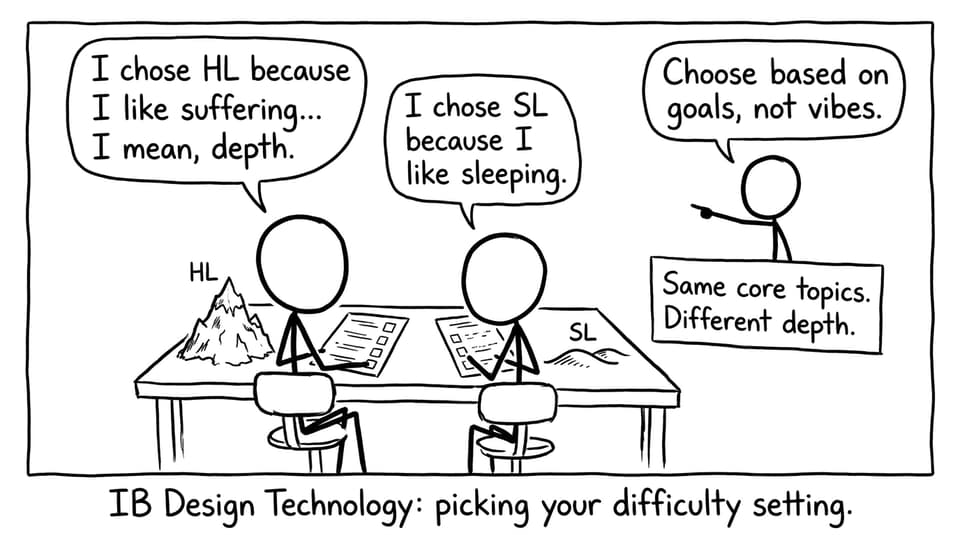
Same core topics in IB Design Technology for HL and SL
-
HL adds extra content and depth
-
HL includes Paper 3 (case study style)
-
Both levels complete the Internal Assessment (design project)
-
IA weighting differs: SL weighs the IA more than HL
For the full assessment structure on the new syllabus, keep this open while you plan: IB Design Technology Assessment: New 2027 Syllabus.
The core of IB Design Technology: what HL and SL share
One reassuring truth: you’re not choosing between two different subjects. You’re choosing between two depths of the same subject.
Both HL and SL students in IB Design Technology build their understanding across the core areas, including:
-
Human factors and ergonomics
-
Resource management and sustainability
-
Modelling
-
Raw materials to final production
-
Innovation and design
-
Classic design
In practice, this means you and your SL/HL friends can revise together for a lot of the year. You’ll share the same vocabulary (anthropometrics, life cycle analysis, rapid prototyping, design cycles), and you’ll often use the same examples.
When you need quick retrieval practice on shared core topics, RevisionDojo’s Questionbank makes it easy to drill by area. For example: Classic Design Questionbank.
What HL adds: depth, unfamiliar contexts, and Paper 3
If SL is learning to design with clarity, HL is learning to design with range.
HL students in IB Design Technology typically face:
More depth in how you explain
HL answers are less forgiving of “definition-only” writing. You’re expected to connect concepts, weigh trade-offs, and show why a design decision makes sense under constraints.
A surprisingly high-impact skill here is command terms: knowing when you must analyse versus evaluate changes your structure immediately. RevisionDojo breaks this down with practical exam framing in: Command Terms in IB Design Technology Exams.
Paper 3 (HL only)
Paper 3 is HL’s signature difference. It pushes you to apply your knowledge to a case study style context you haven’t rehearsed word-for-word.
This doesn’t mean memorising more pages. It means practising flexible thinking: reading a scenario, spotting the design issue, and deploying the right concept fast.
More “system thinking” across topics
HL often asks you to blend areas that SL can treat separately: materials choices that affect sustainability, modelling choices that affect user testing, manufacturing constraints that affect ergonomics.
To build that kind of fluency, RevisionDojo’s Study Notes + Flashcards work well together: notes to understand, flashcards to keep terms and processes active.
Assessments: where HL and SL really diverge
Most students feel the difference in two places: extra exam load and IA weighting.
SL assessment (high-level)
-
Paper 1: multiple-choice
-
Paper 2: short and extended responses
-
Internal Assessment (design project): 40%
HL assessment (high-level)
-
Paper 1: multiple-choice
-
Paper 2: short and extended responses (more demanding)
-
Paper 3: case study exam (HL only)
-
Internal Assessment (design project): 20%
That weighting shift matters. In SL, the IA can be a huge lever. In HL, the IA still matters, but exams pull more of the final grade.
If you want a calm, criteria-focused breakdown of what earns top marks, this is worth bookmarking: How Is the IB Design Technology IA Graded?.
Workload: the hidden cost is context switching
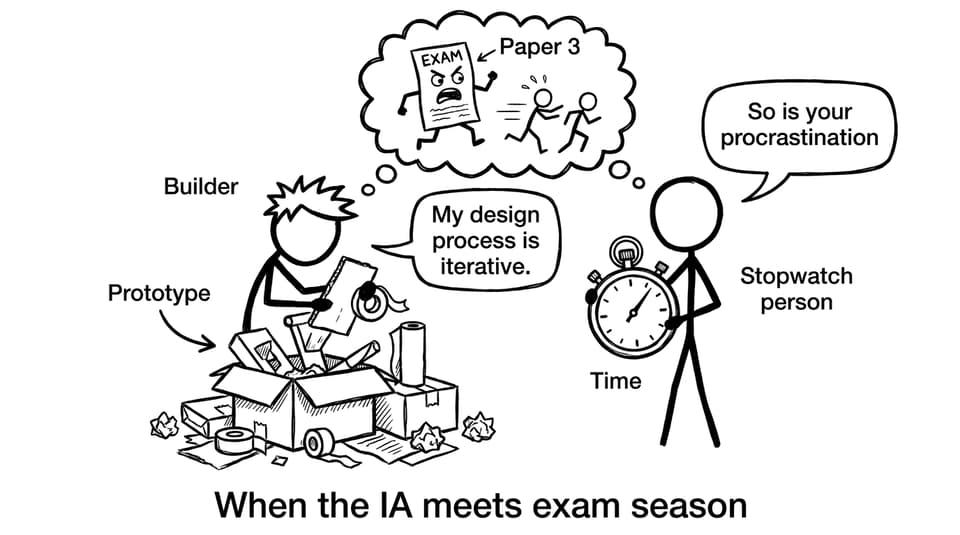
People describe HL as “more content,” but the more real description is: HL requires more context switching.
One week you’re deep in your design project, iterating based on user feedback. The next week you’re practising exam timing and writing evaluation-heavy responses. Then you’re back to documenting testing data cleanly.
As a rule of thumb, HL includes additional teaching time compared to SL (often described as around 60 extra hours). What that translates to for you is simple: more weeks where DT competes with your other subjects.
If you’re wondering whether your current stress level is “normal,” you’re not alone. This honest perspective helps many students recalibrate: Is IB Design Technology a Hard Subject?.
Choosing HL vs SL: a practical decision framework
Here’s a grounded way to choose, without romanticising either level.
Choose SL if...
-
You want IB Design Technology as a creative-science balance, not the centre of your schedule.
-
You’re carrying multiple demanding HLs and need one subject where the workload is more contained.
-
You’re motivated by building a strong IA and mastering the core without the extra exam paper.
Choose HL if...
-
You enjoy explaining why design decisions work, not just what they are.
-
You’re considering engineering, architecture, product design, or related fields.
-
You can commit to practising unfamiliar scenarios (Paper 3 style) and extended evaluation.
If you’re torn, one useful test is this: would you rather be assessed more heavily on your long-term project (SL) or more heavily on exam performance under pressure (HL)?
How to revise IB Design Technology (HL or SL) without wasting time
Good revision in IB Design Technology is less about reading and more about rehearsing.
-
Use Study Notes to build clean explanations: Best Study Strategies for IB Design Technology
-
Train exam responses with targeted practice using the DT Questionbank, such as Modelling and Prototyping Questionbank
-
Build consistency on the IA with a step-by-step structure: Writing a Winning IB Design Technology IA
-
Fix the most common IA weakness early: the scope of the problem. This guide helps you tighten it fast: Write a Strong IB Design Technology Problem Statement
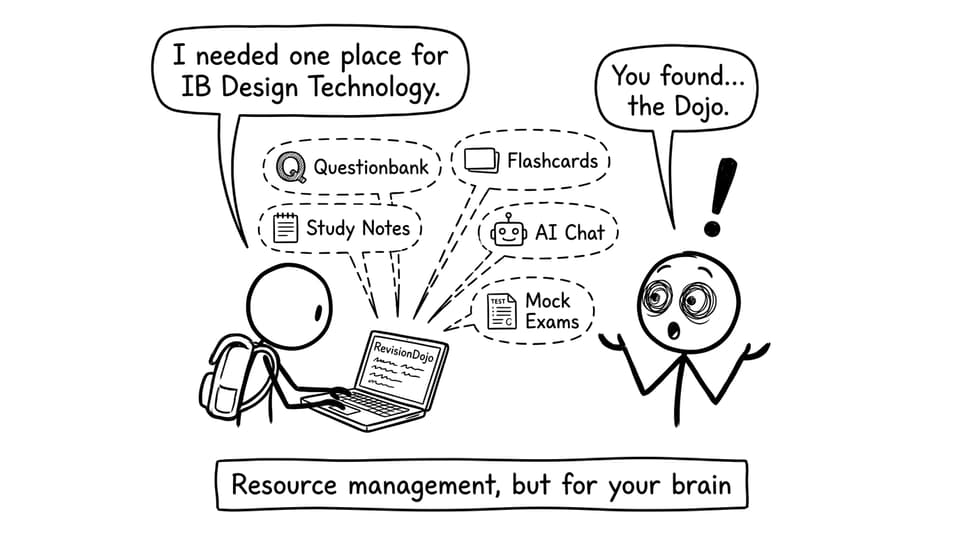
RevisionDojo brings this together in one workflow: Questionbank for exam reps, Study Notes for understanding, Flashcards for recall, AI Chat for quick clarification, Grading tools to pressure-test your IA writing, Predicted Papers and Mock Exams for timed practice, plus a Coursework Library and Tutors when you need human feedback.
FAQ
Is IB Design Technology HL much harder than SL?
HL is harder mainly because it demands more depth and flexibility, not because the core ideas are completely different. In IB Design Technology, both levels start from the same foundation, so you don’t feel “lost” switching between core topics. The challenge is that HL expects stronger justification, clearer evaluation, and faster application to unfamiliar contexts. Paper 3 adds an extra layer of exam preparation that SL students don’t carry. If you already like explaining trade-offs (cost vs sustainability, performance vs user comfort), HL can feel demanding but satisfying. If you prefer mastering the fundamentals and producing a strong design project with less exam load, SL is often the better fit.
Does taking IB Design Technology HL help with university applications?
It can help when your intended course aligns with design, engineering, architecture, or technology pathways. HL signals that you chose the higher depth option and managed a heavier external assessment load. That said, universities also care about your overall profile: predicted grades, subject mix, and how well you can communicate your thinking. A high score at SL can be more persuasive than a weaker score at HL, especially if your other subjects are already demanding. The best approach is to choose the level where you can perform consistently across exams and the IA. If you want to build that consistency, RevisionDojo’s Mock Exams and Predicted Papers help you practise like the real assessment.
Is the IA (design project) different for HL and SL in IB Design Technology?
The structure of the IA is the same in IB Design Technology: you identify a user-focused problem, research, develop ideas, prototype/model, test, iterate, and evaluate. What changes is the weighting and the expectation of sophistication in your decision-making. SL students can score very highly with a focused project and clean evidence, because the IA counts for more of the final grade. HL students still need a strong project, but they also need to balance it against a heavier exam component. In both levels, the biggest mark losses usually come from vague requirements, weak testing data, or “iteration” that is claimed but not evidenced. If you want a reliable process, use RevisionDojo’s IA guides and the IA grading support to check your work against what examiners can actually award.
Closing: choose the level, then build the system
Choosing HL or SL isn’t a personality test. It’s a planning decision.
Whichever track you take, IB Design Technology rewards the same thing: visible thinking. Clear requirements. Evidence-based iteration. And exam answers that apply theory to real design contexts.
If you want to make the next months simpler, not just busier, set up your revision system now with RevisionDojo: start from the IB Design Technology Resources hub and use the Questionbank, Study Notes, Flashcards, AI Chat, Grading tools, Predicted Papers, and Mock Exams to practise with purpose.