




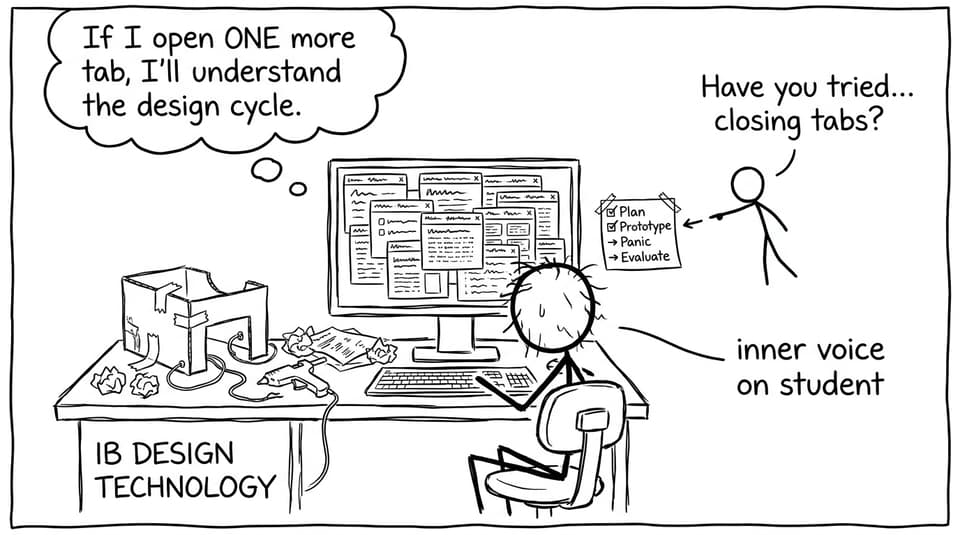
Studying IB Design Technology can feel like building a prototype with no instructions: you know it should work, but every extra component adds friction. And because the first exams are in 2027, many students feel a quiet panic: “Where are all the familiar exam patterns everyone else gets?”
The good news is that IB Design Technology rewards something you can control: a clear process. When your revision has a design cycle, your confidence stops depending on luck.
If you want a central starting point, begin with RevisionDojo’s IB Design Technology hub and build outward from there.
A quick checklist for IB Design Technology revision
Use this as your weekly baseline for IB Design Technology:
-
Learn the design cycle like a language you can speak under time pressure.
-
Turn each topic into one real product example (not just a definition).
-
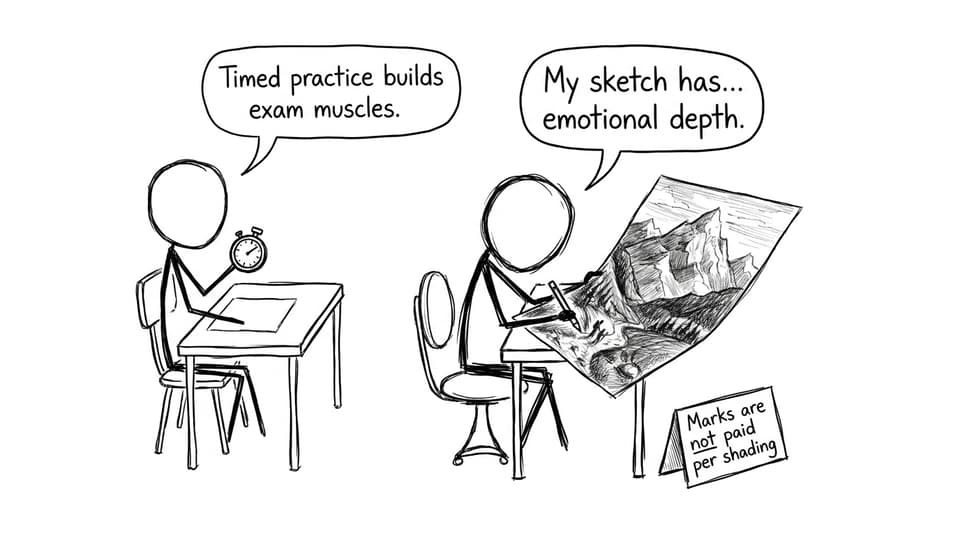
Run short, timed practice sessions to train exam decision-making.
-
Keep your IA moving with tiny weekly milestones.
-
Use syllabus-aligned resources made for the 2027 course.
For consistent practice, pair your notes with the RevisionDojo Questionbank and build daily recall with IB Flashcards.
Why IB Design Technology feels hard (and how to make it simpler)
IB Design Technology isn’t difficult because it has “more content.” It’s difficult because it asks you to do two things at once: know concepts and apply them. Many students revise like it’s a definitions-only subject, then get surprised when questions demand design reasoning.
A better approach is to treat every topic like a tool in a workshop:
-
What problem does this tool solve?
-
When is it the wrong tool?
-
What would it look like in a real product?
When you revise this way, IB Design Technology becomes more predictable. You stop memorizing and start recognizing.
If you want a broader orientation to the course structure, The Complete Guide to IB Design Technology is a helpful reference.
Use the design cycle as your study system
The design cycle isn’t only for projects. In IB Design Technology, it’s also the cleanest way to organize revision.
Identify: turn confusion into a clear question
Start each week by writing 3 “stuck points” as questions (not topics). Example: “How do I evaluate sustainability beyond just saying ‘recyclable’?” Questions create direction.
Research: collect the mark-winning language
Use focused study notes and definitions, then immediately test yourself. RevisionDojo’s DT hub is built for this, and topic pages like Classic Design (Topic 6) make it easy to keep your revision mapped to the syllabus.
If you’re in a manufacturing-heavy area, a page like Computer-integrated manufacturing (CIM) is perfect for turning a broad idea into something you can explain quickly.
Develop: connect topics to a real object
Pick one object per week: a water bottle, phone case, chair, or backpack. Then force connections: ergonomics, materials, sustainability, manufacturing processes, and user needs. This is IB Design Technology exam thinking in miniature.
Create: practise answers, not just notes
Use the Questionbank to write short responses and get feedback. The goal isn’t volume alone; it’s learning how marks are awarded.
Evaluate: keep an error log
After practice, write down patterns: “I describe features but don’t evaluate trade-offs” or “I forget constraints.” Your mistakes are your syllabus.
Exam preparation: train like you’re rehearsing, not hoping
Because IB Design Technology is new for first exams in 2027, you need practice that mirrors the assessment style without relying on old exam cycles.
-
Use IB Predicted Papers to build stamina and timing.
-
Read strategy guidance like IB Predicted vs Specimen Papers: What They Mean so you know what each resource is best for.
-
If you want controlled, topic-based timing practice, use mock-building strategies from IB Test Templates: Pre-Made Exams for Quick Practice.
IA success: the quiet advantage in IB Design Technology
Your IA is where students lose time, not marks. It expands to fill every empty weekend unless you contain it.
Make it boring on purpose:
-
One weekly IA session (even 45 minutes).
-
One deliverable each time: a paragraph of justification, a testing plan, a revised specification, a clearer evaluation.
-
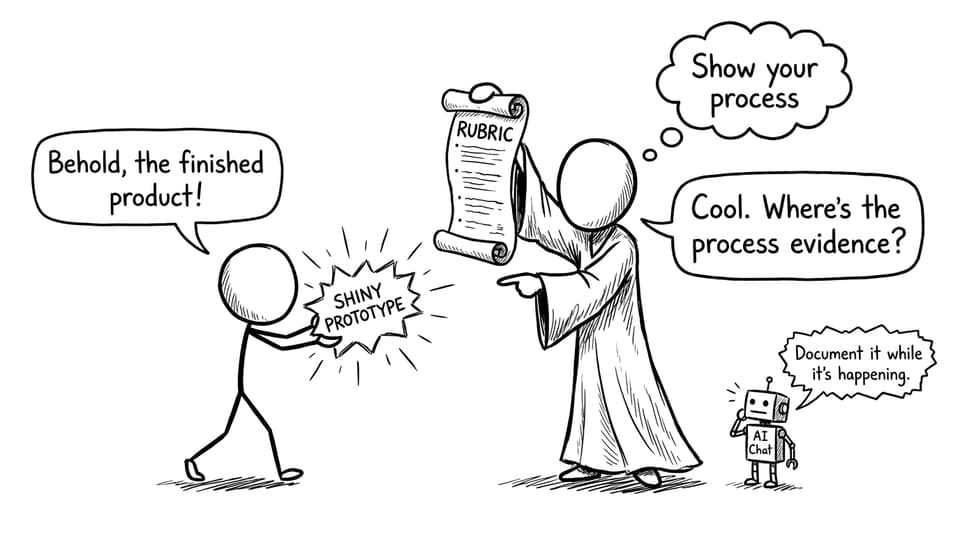
Document as you go so your process evidence is real, not reconstructed.
RevisionDojo helps reduce IA uncertainty with its Coursework Library and targeted supports like IB Design Technology (First Exam 2027) Exemplars. When you can see what strong documentation looks like, you stop guessing.
Conclusion: make IB Design Technology feel predictable
The students who do well in IB Design Technology aren’t magically more creative. They’re more repeatable. They turn the design cycle into a revision cycle, and they build a habit of practice, feedback, and small improvements.
Start today: open the IB Design Technology hub, choose one topic, drill it with the Questionbank, lock in key terms with Flashcards, and keep your IA moving with tiny weekly deliverables. RevisionDojo ties it all together, from Study Notes and AI Chat to Grading tools, Predicted Papers, Mock Exams, a Coursework Library, and Tutors when you need a human reset.
In IB Design Technology, consistency isn’t just a study skill. It’s the whole design philosophy.