
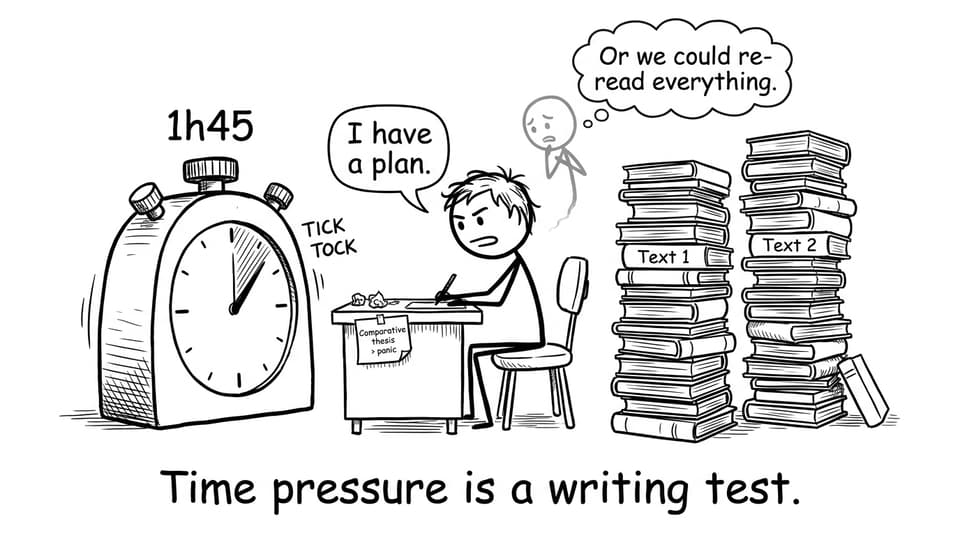
Time pressure doesn’t just speed you up. It changes what your brain thinks is “important.” Suddenly, the clean comparative insight you discussed in class feels far away, replaced by a loud, urgent voice saying: write something, anything.
That’s why IB English Paper 2 is quietly different from most exams. It’s not a memory contest. It’s a control contest. In 1 hour 45 minutes, you’re rewarded for having a repeatable process that survives nerves.
Below is a practical, RevisionDojo-style system for IB English Paper 2 when the clock is the main opponent.
The Paper 2 reality check (read this before revising)
In IB English, Paper 2 asks for one comparative essay on two works you studied, answering one prompt from a set (often six). There’s no extract to lean on, which means your preparation has to build two things:
-
Fast recall of usable moments (not every detail)
-
A planning routine that produces comparison, not two separate mini-essays
If you need a quick orientation, start with IB English Paper 2: Essential Guide for Success and then bookmark Understanding the IB English A Paper 2 exam structure.
A 5-minute checklist for IB English Paper 2 under time pressure
Use this as your pre-writing ritual (practice it until it’s automatic):
-
Pick the prompt you can answer with clear contrasts between both works
-
Write a one-sentence comparative thesis (not two thesis statements)
-
Choose 3 comparative ideas (themes, methods, perspectives)
-
Attach two moments per paragraph (one from each text)
-
Decide your order: Text A then Text B within each paragraph, or integrated sentence-by-sentence
To drill prompt selection with exam-style practice, use the IB English A: Lang & Lit Paper 2 Questionbank and the English Paper 2 topic hub.
Learn your texts for flexibility, not completeness
Under time pressure, “knowing the plot” is the weakest form of knowing. Strong IB English Paper 2 writers know movable pieces:
-
3--4 big themes/tensions that appear across the whole work
-
The author’s recurring methods (narration, imagery, structure, tone shifts)
-
A small set of “multi-use” scenes/chapters that can fit many prompts
RevisionDojo helps here because you can build compact revision routes: skim your Notes for English Paper 2, convert them into your own Flashcards, and then test recall with the Questionbank.
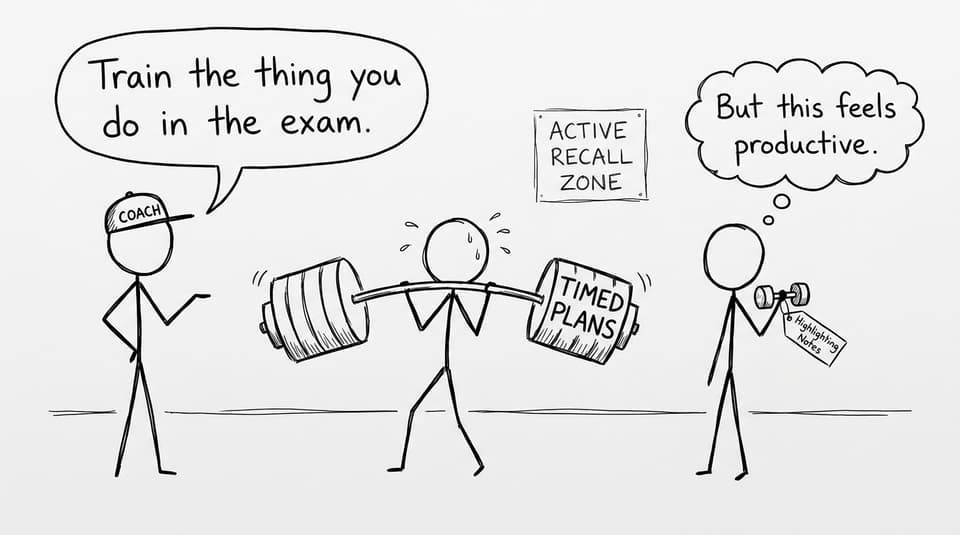
Train decision-making with timed prompts (not “good intentions”)
Most students revise IB English Paper 2 like it’s a reading exam, then feel shocked that it behaves like a writing exam.
Timed practice teaches you three things you can’t learn passively:
-
Which prompts create instant comparison (and which trap you into summary)
-
How long your planning really takes
-
Where your argument collapses when you rush transitions
RevisionDojo’s Questionbank feature is useful because you can treat prompts like sprint drills: 8 minutes to plan, stop, then compare your plan quality across attempts. Add AI Chat to pressure-test your thesis (“Is this comparative enough?”), then use grading tools to spot patterns in your weaknesses.
Use a time-proof paragraph structure that forces comparison
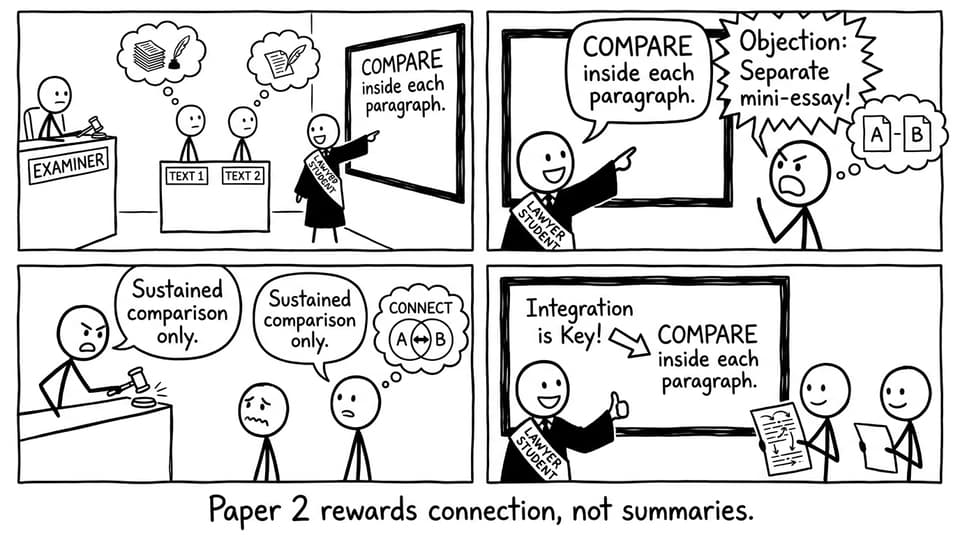
The simplest way to protect marks in IB English Paper 2 is to force both texts into the same paragraph. A reliable pattern:
-
Point (comparative claim answering the prompt)
-
Text 1 evidence (moment + method)
-
Text 2 evidence (moment + method)
-
So what? (evaluation: why the difference matters)
This prevents the common panic move: writing one mini-essay, then trying to “add” the second text later.
If your language gets repetitive under stress, build a personal bank of analytical verbs using Essential English Lang & Lit vocabulary notes. It’s a small change that helps Criterion D when you’re rushing.
Depth beats breadth (especially when you’re late on time)
A strange truth about IB English Paper 2: writing less can score more.
Three well-developed comparisons beat six shallow points because examiners reward sustained analysis: how authorial choices shape meaning, and why those choices differ.
If you’re behind schedule mid-essay, don’t add new ideas. Tighten your evaluation. Make the comparison sharper. Your conclusion can be short, but it must return to the prompt with judgment.
Conclusion: make IB English Paper 2 feel familiar
The best way to beat time pressure in IB English is to remove surprise. You don’t need a heroic memory or a perfect opening line. You need a repeatable process: prompt selection, fast planning, comparative paragraphs, and calm evaluation.
If you want that process in one place, build your Paper 2 routine with RevisionDojo: the Questionbank for timed prompts, Study Notes and Flashcards for fast recall, AI Chat and Grading tools for feedback, plus Mock Exams and Predicted Papers for full simulations. Time pressure won’t disappear--but with the right system, you’ll be the one controlling it.
