The moment IB English HL Essay stress usually starts
You sit down with a text you genuinely like. You even have a few strong quotes. Then the clock in your head gets louder: What if my line of inquiry is too broad? What if my analysis is just summary? What if I run out of things to say at 900 words?
That anxiety is common in IB English because the HL Essay asks for something that feels contradictory: deep, independent thinking that still fits a strict rubric. Confidence comes when you stop treating the essay like a giant performance and start treating it like a sequence of repeatable moves.
This guide breaks IB English HL Essay preparation into 10 steps you can follow every time.
Quick checklist: the 10-step IB English HL Essay workflow
-
Choose a text you can stay curious about
-
Find a narrow line of inquiry (LOI)
-
Turn LOI into a thesis you can defend
-
Collect evidence in “clusters,” not piles
-
Map 3-4 body sections that actually argue
-
Draft fast, then revise slowly
-
Make analysis do more work than quotation
-
Align every paragraph with the criteria
-
Control word count on purpose
-
Get feedback and polish like it’s a final submission
Step 1: Pick a text that keeps giving you ideas
The best IB English HL Essay text isn’t the “easiest.” It’s the one that keeps creating questions after your second and third reread. If you feel your curiosity fade immediately, your essay will become mechanical.
If you’re unsure where to start, use RevisionDojo’s course hubs to see how skills connect across tasks, like this English A Lang & Lit Resources.
Step 2: Build a line of inquiry (LOI) that is narrow enough to finish
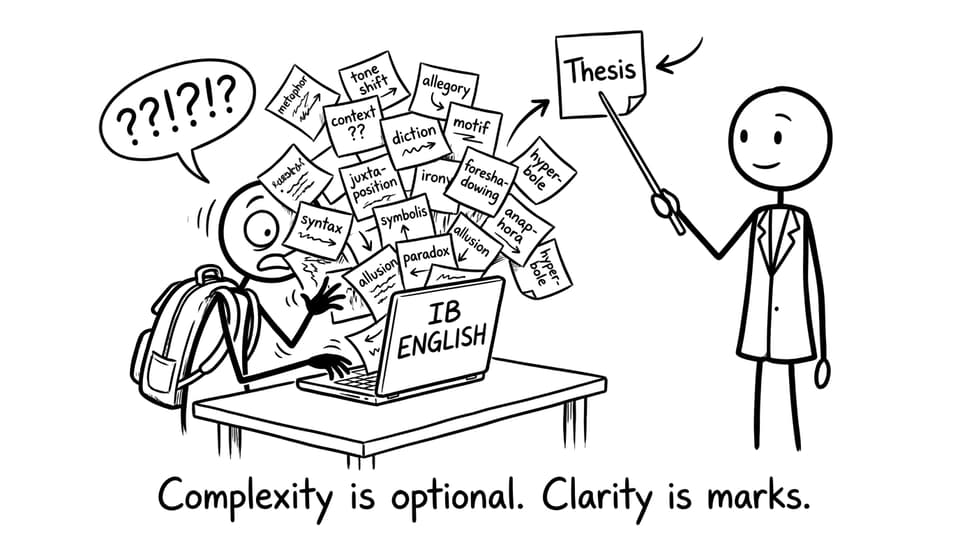
A confident HL Essay begins with a tight LOI: one technique, one pattern, one tension you can track across the work. In IB English, the fastest way to lose marks is to pick something so broad that you’re forced into plot summary.
For a clear process, follow Crafting a Strong HL Essay Thesis and work backward: technique first, then meaning.
Step 3: Turn LOI into a thesis that sounds like a claim, not a topic
Your thesis should answer: How does the writer construct meaning through X, and why does it matter? A thesis that just names themes (“power and identity”) won’t guide analysis in IB English.
Keep it debatable. If nobody could disagree with it, it’s probably too vague.
Step 4: Gather evidence in clusters (3-5 per section)
Many students collect quotes like they’re packing for a year abroad. Then they try to use all of them. A better IB English move is to cluster evidence around your argument sections. Each cluster should include:
-
1-2 “anchor” quotations (rich enough to unpack)
-
1-2 supporting references (shorter, quicker)
-
1 structural moment (shift, break, contrast, framing)
Step 5: Outline 3-4 sections that argue, not describe
Before drafting, write the first sentence of each body section as a mini-claim. If your section sentence sounds like plot, rewrite it.
If you want a strong sense of how exam-style analysis is structured, study the logic in a good Paper 1 guide like Mastering IB English Paper 1. The HL Essay is longer, but the same principle applies: technique + effect + meaning, repeated with purpose.
Step 6: Draft quickly, then revise with intention
A first draft in IB English is allowed to be imperfect. Its job is to exist. Write through the outline without polishing sentences.
Then revise in passes:
-
Pass 1: argument clarity (does every paragraph push the thesis?)
-
Pass 2: evidence and analysis balance
-
Pass 3: style, transitions, precision
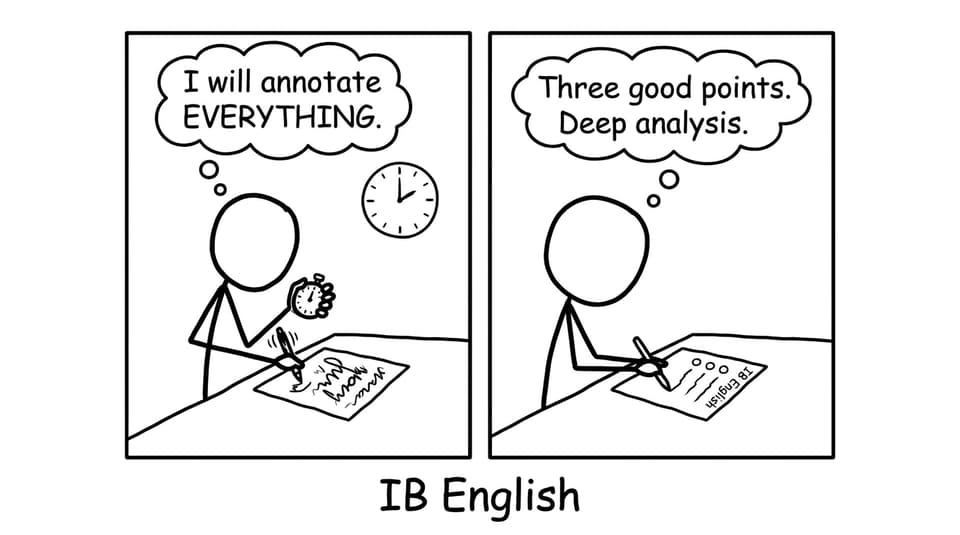
Step 7: Make analysis do more work than quotation
A quote is not analysis. Your commentary around it is where marks live.
A reliable IB English pattern:
-
Name the choice (diction, syntax, imagery, structure)
-
Explain the effect on the reader
-
Link to your thesis claim
-
Extend: what tension, ambiguity, or shift does it create?
Step 8: Use the criteria as a revision tool, not a post-mortem
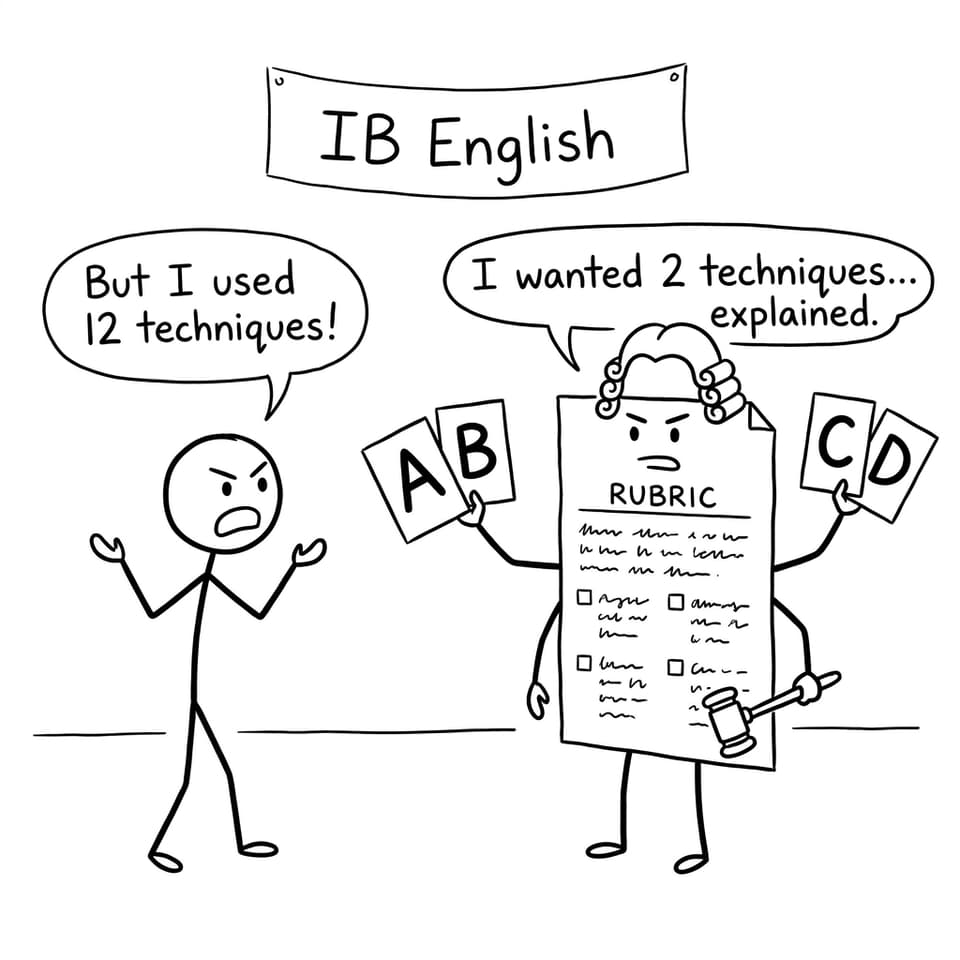
Students often look at the rubric after finishing. Flip that habit. In IB English, you can “rubric-proof” your draft by checking:
-
Knowledge and understanding: have you shown accurate, specific engagement with the work?
-
Analysis and evaluation: are you explaining how choices create meaning?
-
Focus and organization: is the argument easy to follow?
-
Language: is your register academic and controlled?
To self-check efficiently, use RevisionDojo’s IB Language A: HL Essay Grader.
Step 9: Control word count strategically (and early)
The HL Essay is 1,200-1,500 words. Word count control is part of writing control in IB English.
A simple planning split:
-
Introduction: ~150-200
-
Body (3-4 sections): ~900-1,100
-
Conclusion: ~150-200
If you tend to overwrite, learn the trimming rules from IB English HL Essay Word Limit.
Step 10: Get feedback, then polish like an editor
Confidence comes from evidence: someone (or something) tells you what’s working and what isn’t.
On RevisionDojo, students often combine:
-
AI Chat to test the logic of their thesis and paragraph claims
-
Grading tools to see how their writing aligns with criteria language
-
Study Notes for terminology and precision (Study Notes)
-
Flashcards to lock in recurring weaknesses (transitions, device vocabulary, sentence control)
-
Coursework Library for exemplars and expectations
-
Tutors when they want targeted, human feedback on structure and argument
For additional skills practice that strengthens HL Essay writing indirectly, use timed analysis prompts in the Paper 1 Lang & Lit hub and the Paper 1 Questionbank.
Closing: write the HL Essay the way you want to feel on exam day
The goal of IB English HL Essay prep isn’t to sound impressive. It’s to feel steady: you know your LOI, your thesis, your evidence clusters, and the way each section earns its marks.
When you want that steadiness on demand, RevisionDojo gives you the full system in one place: Questionbank, Study Notes, Flashcards, AI Chat, Grading tools, Predicted Papers, Mock Exams, Coursework Library, and Tutors. Start with one step today, tighten your thesis, test one body section, and let momentum do the rest.



