

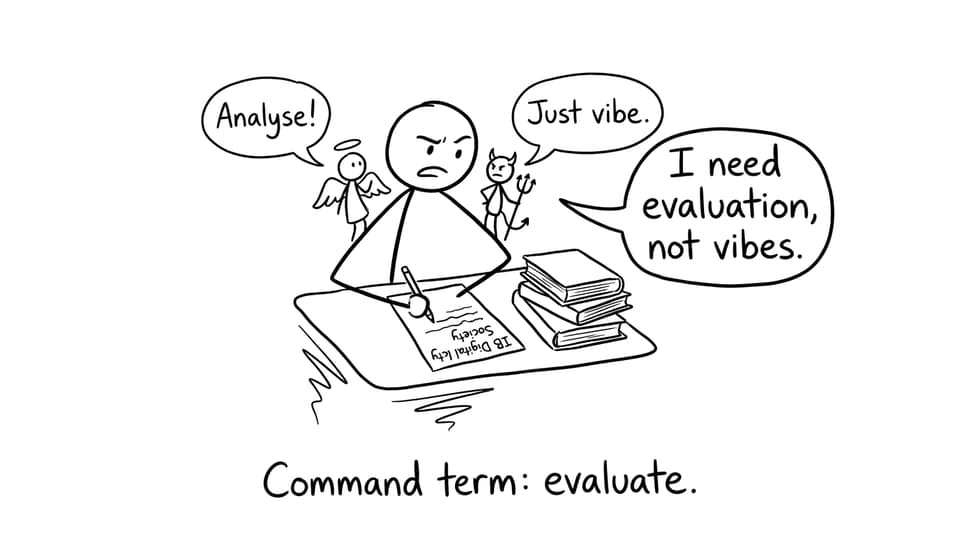
Evaluation is where a good IB Digital Society answer quietly becomes a top-band one.
You can feel the moment it happens. You have pages of analysis: how the system works, what it changes, who it touches. Then the question asks you to evaluate, and your brain offers two options: (1) write “this is bad” with confidence, or (2) keep analysing forever and never actually judge.
In IB Digital Society, evaluation is not decoration. It is the skill that shows you can handle trade-offs, uncertainty, and ethics without sliding into opinion. This guide shows you exactly how to improve evaluation in IB Digital Society for exam responses and coursework, using a structure you can repeat under time pressure.
A quick checklist for better evaluation in IB Digital Society
Use this when you practice essays or plan an IA paragraph:
-
State a judgment early (even if it’s qualified)
-
Define criteria (ethics, effectiveness, equity, accountability, sustainability)
-
Weigh benefits vs harms explicitly
-
Show unequal impacts across groups
-
Identify responsibility (designers, platforms, states, institutions, users)
-
Use evidence or specific case details
-
End with a clear “to what extent” conclusion
If you want help aligning this with exam wording, keep IB Digital Society Exam Command Terms Explained open while you practise.
What evaluation actually means in IB Digital Society
In IB Digital Society, evaluation is a reasoned judgment about a digital system, policy, or issue. The key word is reasoned. Your job is to show why your conclusion follows from your analysis, not to announce a personal preference.
A strong evaluation answer typically does three things:
-
It uses criteria (what counts as “good” or “acceptable”)
-
It compares competing outcomes (who gains, who loses, and how much)
-
It reaches a qualified conclusion (largely, partially, to a limited extent)
When students get stuck, it’s usually because they confuse evaluation with opinion, or because they think evaluation must be absolute.
Evaluation is not opinion (and not a moral speech)
Markers are not looking for a vibe. They are looking for a chain of reasoning.
Try this simple swap:
-
Opinion: “This is unethical.”
-
Evaluation: “This is ethically problematic because it increases surveillance capacity without meaningful consent, and the harms fall disproportionately on vulnerable groups.”
Notice what changed: criteria (consent), mechanism (surveillance capacity), and inequality (disproportionate harm). That’s IB Digital Society thinking.
If your answers keep drifting into general statements, practise with the platform tools that force specificity: RevisionDojo’s Questionbank gives exam-style prompts that make you commit to a judgment, and its feedback loop helps you see when you’re only analysing.
Build evaluation on strong analysis (so it doesn’t feel bolted on)
Evaluation cannot float above the paragraph like a slogan. It needs analysis underneath it.
A practical method in IB Digital Society is to build each body paragraph in two layers:
-
Analysis layer: how the system works + what impact occurs
-
Evaluation layer: is that impact justified, acceptable, or defensible under your criteria?
If you need a clean content base to analyse from, the RevisionDojo Digital Society hub is the fastest place to start: IB Digital Society Resources. You can move from notes to practice questions without breaking focus.
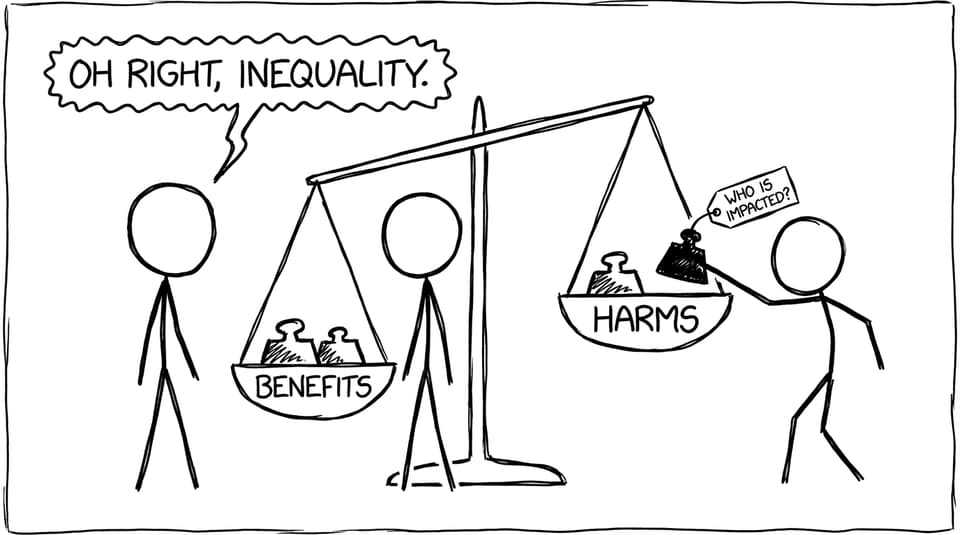
Weigh benefits and harms like you’re using a scale
High marks come when you compare, not when you list.
The easiest way to show comparison is to write evaluation sentences that weigh.
Example stem you can reuse in IB Digital Society:
“While X improves Y for group A, it also creates Z risk for group B; overall, the system is justified to a moderate extent because…”
That single sentence signals balance, inequality, and a conclusion. It reads like evaluation because it is evaluation.
Make unequal impacts explicit (this is where top answers separate)
Digital systems rarely distribute costs and benefits evenly. So your evaluation in IB Digital Society gets stronger when you name who is affected.
Ask:
-
Who benefits most, and why them?
-
Who is exposed to the risk?
-
Who can opt out, and who can’t?
-
What happens to groups with less power, less literacy, or less access?
This is also where your case study details matter. A “social media harms mental health” claim is broad. An evaluation that links design choices, incentives, and affected groups is much harder to ignore.
To build sharper case study notes, use Effective Note-Taking Tips for IB Digital Society and organise examples by theme (privacy, power, identity, participation).
Responsibility and accountability: stop blaming “users” by default
One of the most common evaluation traps in IB Digital Society is placing all responsibility on individual behaviour.
Better evaluation maps responsibility across layers:
-
Designers (choices, defaults, data collection)
-
Companies/platforms (incentives, moderation, transparency)
-
Governments/regulators (rules, enforcement, rights)
-
Institutions (schools, employers, police, hospitals)
-
Users (choices, literacy, resistance)
This doesn’t mean “everyone is equally guilty.” It means you can argue who has the most power to change outcomes, which is a serious evaluative move.
If you’re revising multiple skills at once, Revision Strategies That Work for IB Digital Society has a strong workflow for turning case studies into reusable arguments.
A repeatable paragraph structure that forces evaluation
Use this for exam essays and for sustained IA writing:
-
Claim (judgment): “This policy is justified to a limited extent…”
-
Criteria: “judged by equity, consent, and effectiveness…”
-
Evidence/case detail: one specific mechanism or outcome
-
Weighing: benefit vs harm, with “however” and “therefore” doing real work
-
Responsibility: who could realistically reduce harm?
-
Mini-conclusion: restate “to what extent” clearly
When you practise this structure repeatedly, evaluation stops feeling like a risky leap. It becomes the natural final step.
For general command-term alignment across subjects, How to Use Command Terms Effectively in IB Exams is worth drilling once, then revisiting before mocks.
Practise evaluation with feedback loops (not more rereading)
Evaluation improves fastest when you write, submit, and tighten.
Inside RevisionDojo, a simple routine looks like this:
-
Read one concept set from IB Digital Society Topic 3 - Content
-
Drill a small set in the Questionbank, focusing on evaluate/discuss prompts
-
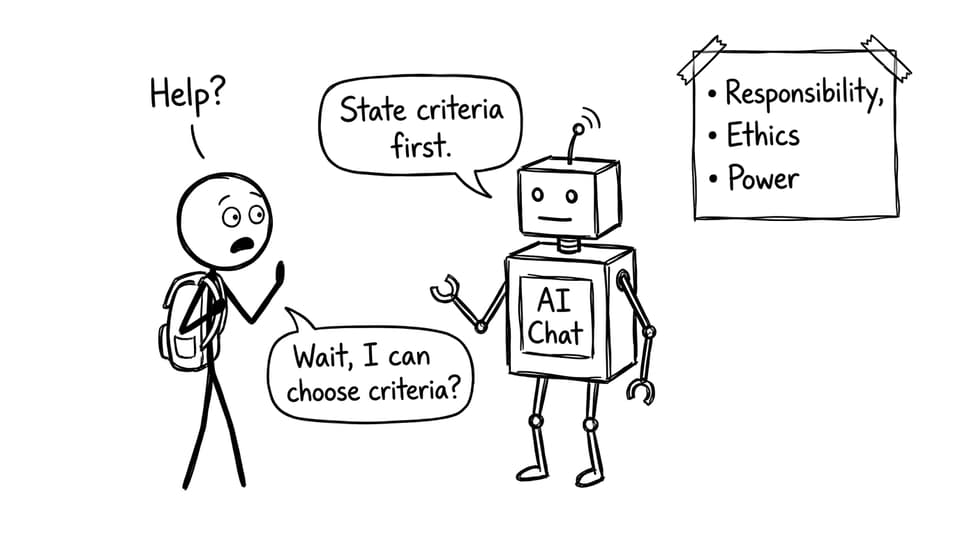
Use AI Chat to test your criteria: “Is this conclusion justified given my evidence?”
-
Use Grading tools to see whether your judgment is actually supported
-
Build stamina with Mock Exams and Predicted Papers (then review where evaluation was missing)
If you struggle with the overall pressure of the subject, Common Challenges IB Digital Society Students Face helps you diagnose what’s really holding your writing back.
Closing: make evaluation your default ending
Most students don’t lose marks in IB Digital Society because they lack ideas. They lose marks because they stop just before judgment.
If you want a practical goal for your next practice session, make it this: every major paragraph should contain at least one sentence of IB Digital Society evaluation that weighs benefits and harms, names unequal impacts, and assigns responsibility. Do that consistently and your writing starts to sound like the markband you’re aiming for.
When you’re ready to practise at scale, RevisionDojo brings the full loop together: Study Notes, Flashcards, Questionbank, AI Chat, Grading tools, Predicted Papers, Mock Exams, Coursework Library, and Tutors--so your IB Digital Society evaluation improves through repetition, feedback, and calm confidence, not guesswork.