
In IB English, a global issue can feel like a giant poster you’re expected to hold up with one hand while writing with the other. The text is specific: a voice, a scene, a single line that stings. The issue is enormous: power, identity, justice, technology, environment. Your job isn’t to force a match. It’s to show the reader the invisible thread that was already there.
What counts as a global issue in IB English?
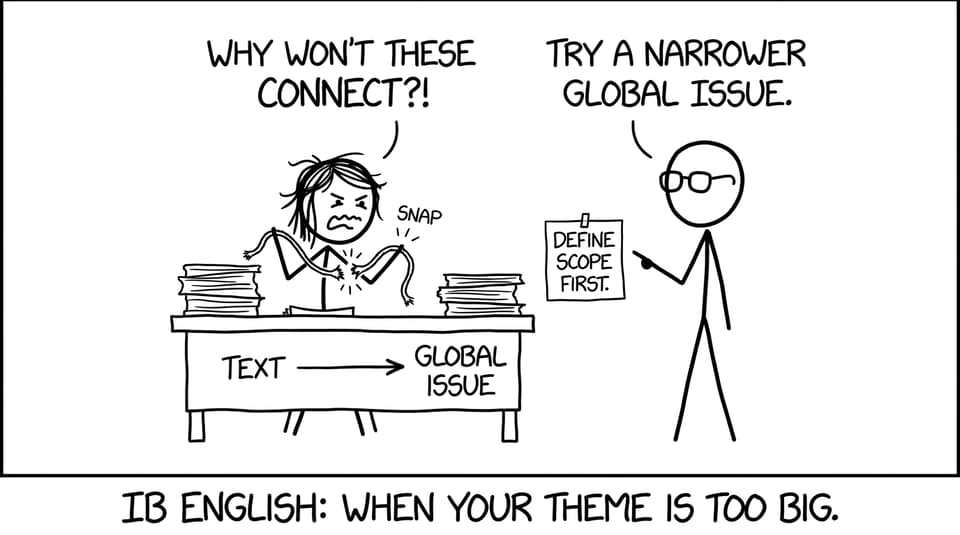
In IB English, a global issue is a real-world concern that matters across places, cultures, or time periods (not just in one character’s life). It should be specific enough to analyze, but broad enough to matter beyond the plot.
If you want a clean definition and examples built for comparison tasks, use IB English Global Issues: Compare Two Texts Like a 7 and the notes on Choosing Your Global Issue.
A quick checklist before you commit
Use this 60-second filter (especially helpful under exam pressure in IB English):
-
Is the issue present repeatedly (not once) in the text?
-
Can you analyze authorial choices (tone, structure, imagery, voice) tied to it?
-
Can you phrase it with a focus (e.g., “migration” becomes “how borders reshape identity through language”)?
-
Can you return to it in every paragraph, not just the introduction?
For making the link explicit, see Making Your Global Issue Obvious (Lang & Lit).
How to connect a text to a global issue (a simple structure)
A strong IB English paragraph often follows the same rhythm:
Define the issue, then narrow the lens
Start with one sentence that names the global issue and frames what you mean by it. Avoid vague labels like “inequality” by specifying the mechanism (laws, media, schools, family roles, institutions).
Anchor it in context without turning it into history class
Context is useful only when it explains why an author might represent the issue this way. If you need to rebuild your technique-focused reading, use Close Reading Techniques for Prose and Poetry.
Prove it through choices, not just quotes
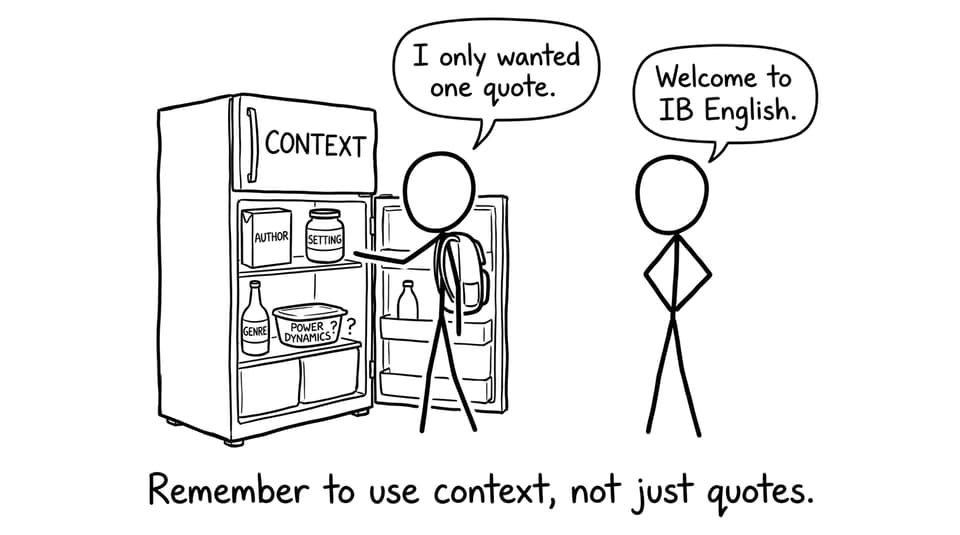
Quotes are evidence. Your marks come from explaining how methods create meaning: symbolism, shifts in perspective, staging, juxtaposition, structure, diction.
If you’re preparing for exam writing overall, pair this with Effective Study Techniques for IB English A: Language and Literature and What’s the Best Way to Study for Paper 1 vs Paper 2?.
End with the “so what?” (global significance)
The last sentence of a paragraph should widen the frame again: what does the text suggest about how societies work, who benefits, who is silenced, and what the consequences are.
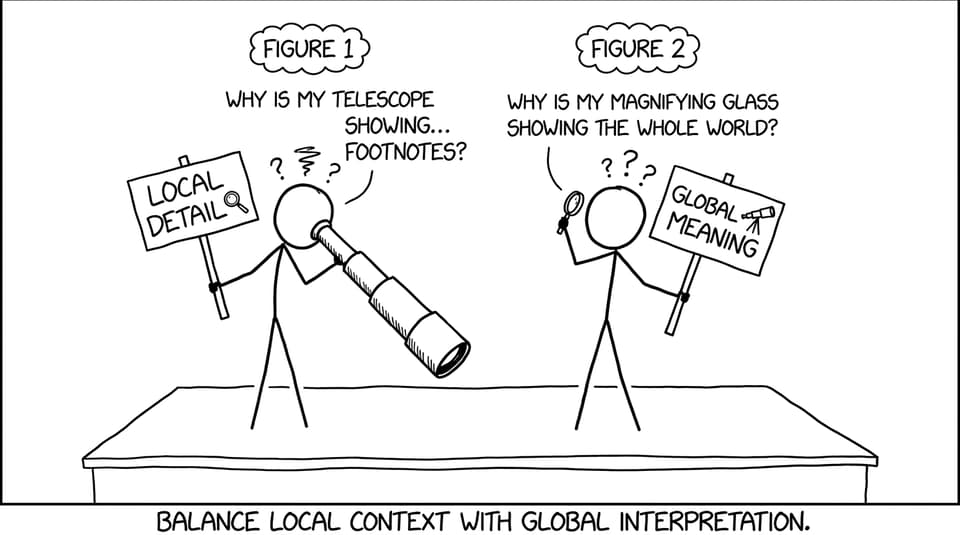
Balance local detail with global meaning
The best IB English essays don’t treat global issues like slogans. They treat them like patterns.
A character’s private shame can become a lens on public control. A family argument can reveal cultural expectations. A setting detail can expose economic systems. You keep the analysis honest by staying close to the text, then carefully stepping outward.
For model planning strategies, revisit Preparing for IB English A: Literature Exams and browse more targeted support via IB English A: Language & Literature Resources.
Conclusion: Make the thread visible
Connecting texts to global issues in IB English is less about sounding impressive and more about thinking clearly: define the issue, trace it through authorial choices, then widen to what the text reveals about the world.
When you want that process to feel repeatable, RevisionDojo is built for it: Study Notes to map issues, Flashcards to lock in techniques, AI Chat to test thesis options, Grading tools to tighten paragraphs, and Mock Exams and Predicted Papers to rehearse under pressure. Keep the global issue in view, keep your analysis close to the text, and let your essay do what great writing always does, make something big feel unmistakably real.