


If you have ever tried to compare two texts from different cultural contexts and felt your argument dissolve into plot summary, you are not alone. In IB English, the hardest part is rarely finding “similarities and differences.” It is explaining why those similarities and differences exist and how they change meaning.
A Victorian living room and a dystopian theocracy can both trap women. A postcolonial novel and an imperial novella can both describe the same continent. But in IB English, your marks come from showing how culture shapes authorial choices, and how those choices shape the reader.
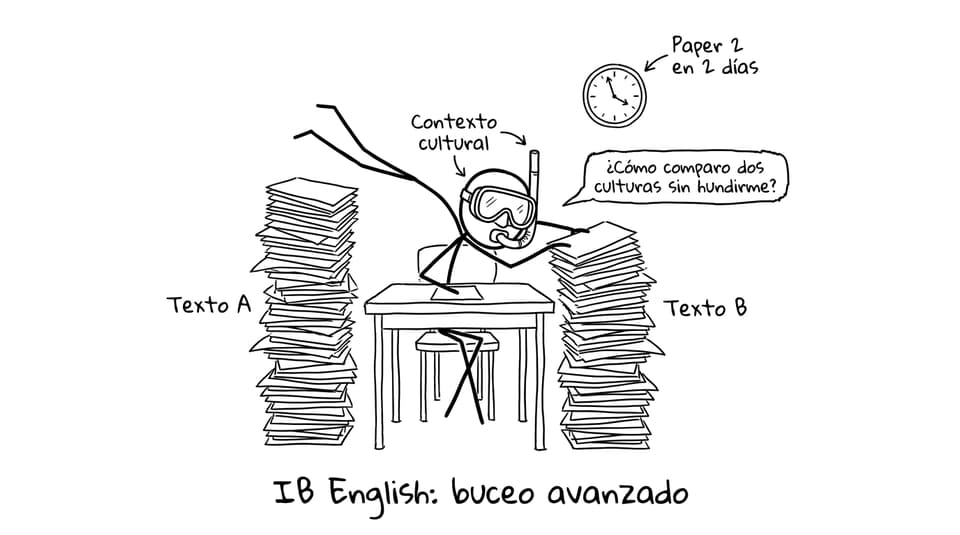
The IB English cultural context checklist (use this before you write)
When comparing texts from different cultural contexts in IB English, start with a fast, repeatable scan:
-
Time and place: What historical moment and social environment sit behind the text?
-
Power structures: Who has authority, and who is pressured to stay quiet?
-
Values and taboos: What is “normal” in this world, and what is unsayable?
-
Audience expectations: Who is the implied reader, and what do they already believe?
-
Authorial choices: Which techniques carry the cultural weight (voice, imagery, genre, structure)?
If you need a base to revise Paper 1 and Paper 2 skills alongside context, keep Best Ways to Prepare for IB English Paper 1 nearby, as the same “choices + effect” logic transfers directly.
What “cultural context” means in IB English (without the fluff)
A cultural context is the web of beliefs, traditions, and power dynamics that shapes how a text is written and how it is read. In IB English, context is not a history lecture. It is a lens that helps you justify interpretation.
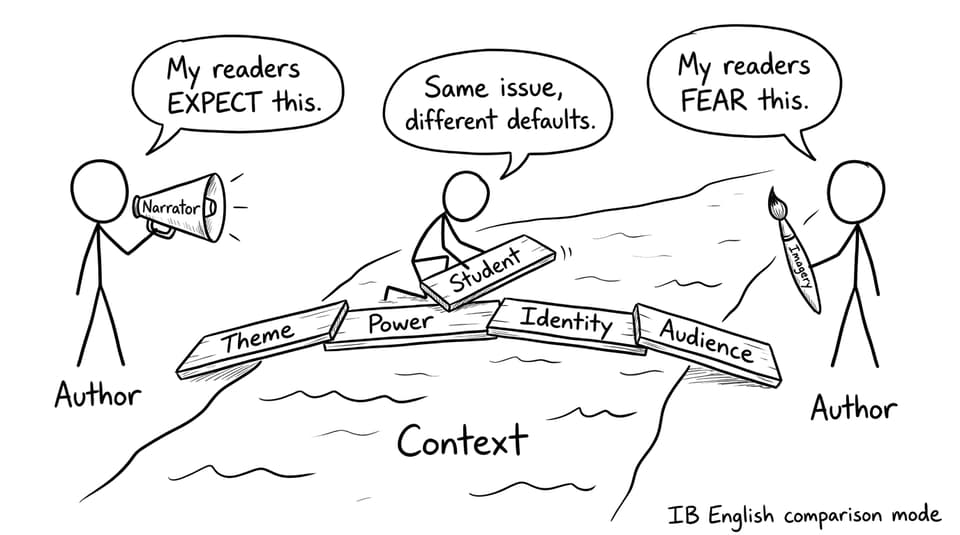
Think of it like this: context is the set of defaults the author assumes. The text is what happens when those defaults are questioned, defended, or exploited.
For example, The Handmaid’s Tale and A Doll’s House both critique gender oppression. Yet Atwood’s late-20th-century feminist anxieties lean into speculative warning, while Ibsen’s 19th-century realism exposes “ordinary” domestic control. Same issue, different cultural wiring, and therefore different methods.
How to compare texts from different cultural contexts in IB English
Start with one shared global issue, not two separate themes
In IB English, strong comparisons feel like one conversation. Pick a single global issue that can flex across both contexts: identity, freedom, gender, memory, colonial power, class.
A useful sentence stem:
Both texts explore X, but in Text A it is shaped by context A, while in Text B it is shaped by context B, which changes the author’s methods and the reader’s response.
This works cleanly for the Individual Oral (IO) topic hub as well as Paper 2.
Build “context notes” that are usable in analysis
You do not need a biography. You need a few context points you can attach to technique:
-
A social constraint (gender roles, censorship, class boundaries)
-
A political pressure (colonial ideology, state violence, propaganda)
-
A cultural value (religion, honor, individualism, community)
Then immediately ask: So what did that pressure make the author do on the page?
To practice this under exam conditions, use the IB English A Lang & Lit resources hub and turn each text’s context into mini prompts you can answer quickly with RevisionDojo AI Chat.
Compare authorial choices through the cultural lens
This is where IB English essays become top-band. Instead of comparing what happens, compare how representation is built.
Try these “choice categories”:
-
Voice and perspective: Who gets the microphone? Who is filtered, mocked, or erased?
-
Diction and imagery: Are cultural identities affirmed through idiom and proverb, or distorted through exoticism?
-
Form and genre: Does the text conform to tradition, or break it to signal protest?
-
Structure: Linear realism vs fragmentation, framing devices, shifts in tone.
A classic context comparison is Achebe vs Conrad: Achebe’s use of proverbs and Igbo idioms asserts an indigenous worldview; Conrad’s narration can create distance that reveals imperial assumptions. In IB English, your job is to connect those choices to power.
For more Paper 2 drilling, build sets in the English Paper 2 Questionbank and review with RevisionDojo Grading tools to see if your paragraphs are synthesizing rather than separating.
Write comparative paragraphs that synthesize (the examiner wants “so what?”)
A reliable IB English paragraph pattern:
-
Claim: shared issue + key difference in cultural context
-
Text A evidence: technique + effect + contextual pressure
-
Text B evidence: technique + effect + contextual pressure
-
Synthesis: what the comparison reveals about culture shaping meaning
If you keep slipping into “Text A paragraph, Text B paragraph,” practise with model prompts from Notes for English Paper 2 and convert your plan into a paired bullet list.
Common mistakes when comparing cultural contexts (and how to fix them)
-
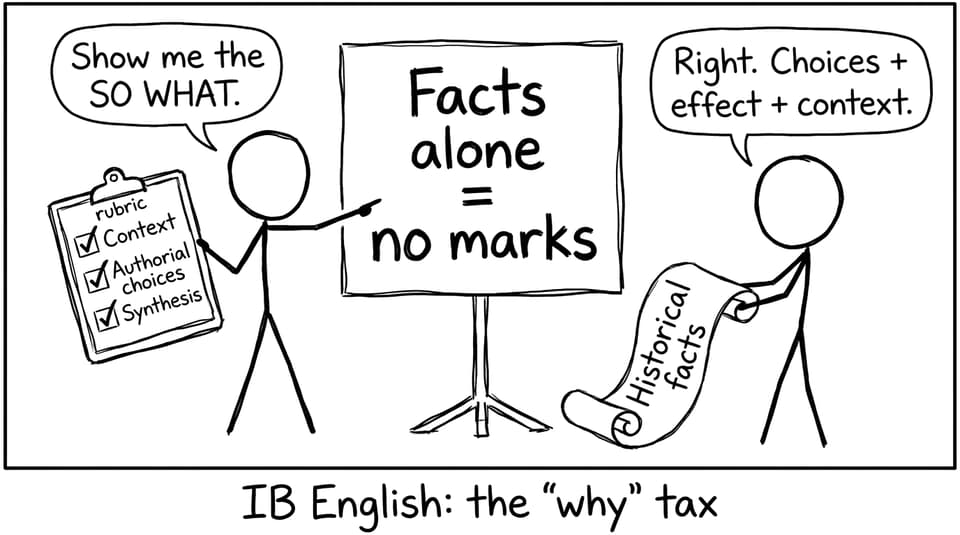
Mistake: dumping history. Fix: attach every context point to a choice (voice, imagery, structure) and an effect.
-
Mistake: treating one culture as “exotic.” Fix: use neutral analytical verbs: constructs, frames, normalizes, challenges.
-
Mistake: comparing messages, not methods. Fix: track technique categories and compare representation.
-
Mistake: ignoring audience. Fix: add one line on how an original audience vs a modern reader might interpret.
To reinforce terminology for method-based comparison, keep the English Literature Glossary open while you revise.
Conclusion: the simplest way to sound like IB English
A strong IB English comparison does not prove that two texts are “similar” or “different.” It proves that cultural context shapes what writers can say, what they choose to say, and what readers are trained to hear.
If you want to turn that insight into exam-ready paragraphs, build your routine around RevisionDojo: drill with the Questionbank, refine with AI Chat and Grading tools, lock in phrasing with Flashcards, and test your readiness with Predicted Papers and Mock Exams. Context stops being a burden when it becomes your evidence.