
Multiple offers should feel like winning. But when you’re an IB student staring at revision timetables, internal deadlines, and a UCAS inbox that keeps changing shape, excitement turns into a quiet kind of pressure. Your brain starts doing unhelpful maths: What if I pick wrong? What if I miss a condition? What if I should be more grateful?
Here’s the truth: balancing multiple UCAS offers is less about finding the “perfect” choice, and more about building a calm decision system that protects your exam season.
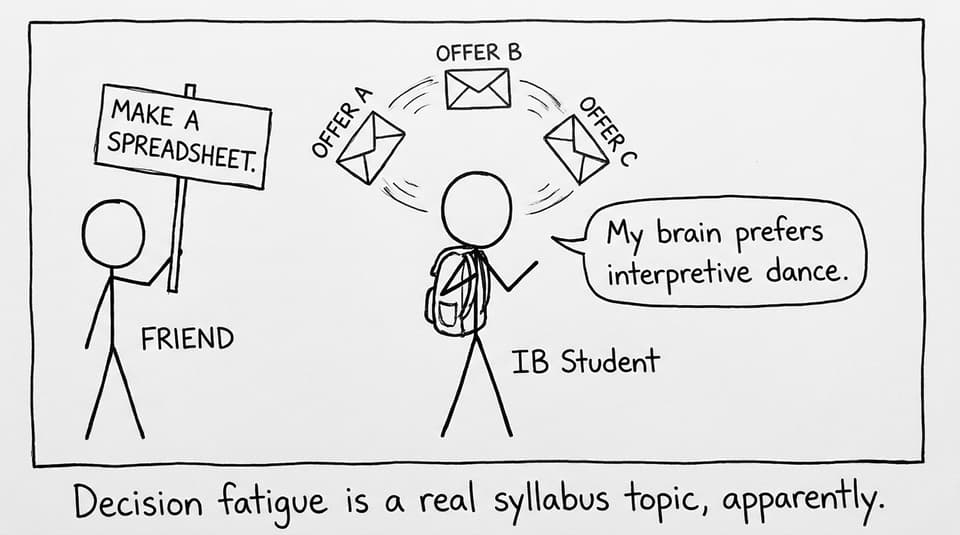
The stress-free UCAS checklist (10 minutes)
-
Write every UCAS offer in one place (conditional/unconditional + exact conditions).
-
Decide your top 3 decision factors (e.g., course structure, city, cost).
-
Compare courses using the same template for each.
-
Set a “tabs limit” and a decision deadline.
-
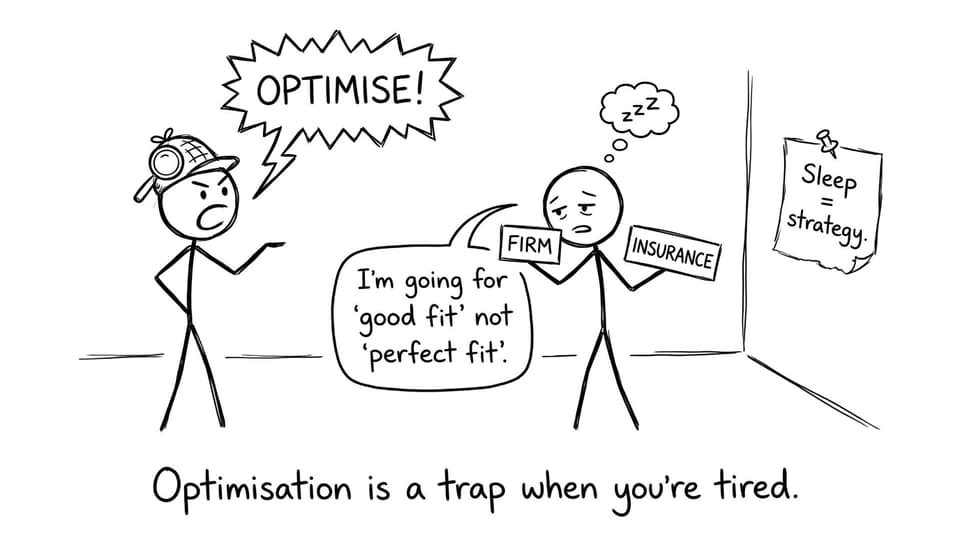
Choose firm and insurance like you choose study topics: by risk, not vibes.
If you’re still fuzzy on how the system works, skim What UCAS Is and How It Works: Step-by-Step Guide before you go deeper.
Organise your UCAS offers like an IB revision plan
When revision gets messy, you don’t “think harder.” You create structure. Do the same with UCAS.
Create a simple comparison sheet (notes app is fine) with:
-
University + course name
-
Offer type + conditions (total points and HL requirements)
-
Assessment mix (exam-heavy vs coursework-heavy)
-
What you like about it (one line only)
-
One concern (one line only)
This is the same logic you use when your head is full: externalise information so your brain can evaluate, not store.
For course-choice strategy, see How to Choose the Right UCAS Courses for You.
Compare academics without getting trapped in prestige
Two courses with the same title can feel like twins until you look closely. With UCAS offers, compare:
-
Modules and specialisms (what do you actually study in year 2?)
-
Teaching style (lectures, seminars, lab time)
-
Assessment patterns (steady coursework vs big final exams)
-
Placement or year-abroad options
Then ask a very IB question: Which environment makes it easiest to consistently perform? Not “Which is the most impressive?”
When your decision starts eating revision time, borrow calm tactics from exam prep: Exam Stress Management Tips for IB Candidates.
Protect your exam season: boundaries beat more research
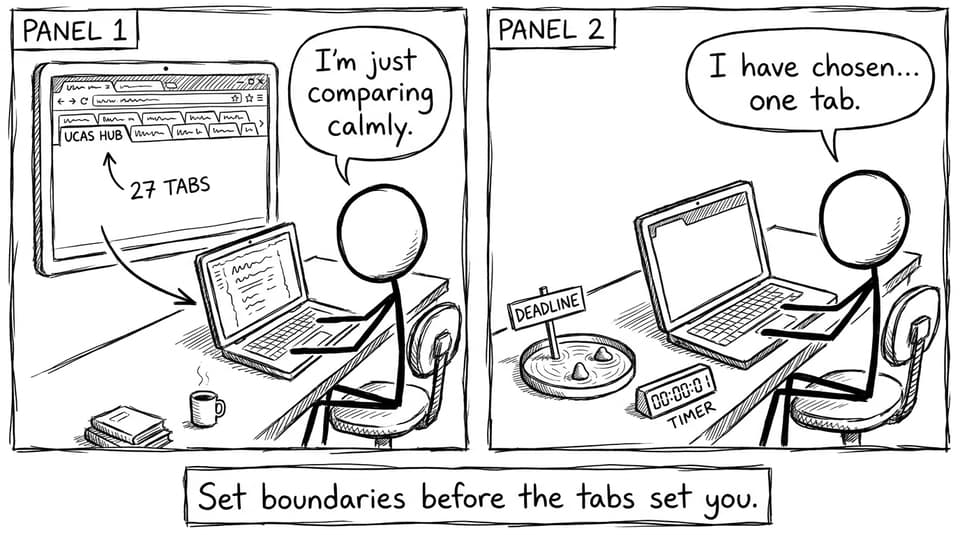
The sneaky danger of multiple UCAS offers is the endless “just one more check.” So add rules:
-
Two research sessions max per week (30 minutes each).
-
One comparison template for all offers.
-
A hard stop time (no decisions after 10pm).
If you need help building calm under pressure (the same skill you need for choosing), use How to Stay Calm During IB Exams and How to Stay Calm During a Timed Exam.
Use RevisionDojo to keep UCAS decisions from hijacking revision
When offers arrive, the best move is to reduce uncertainty everywhere else. That’s where RevisionDojo quietly helps:
-
Study Notes to clear confusion fast.
-
Flashcards for low-effort recall when you’re mentally tired.
-
Questionbank for targeted practice that proves what you know.
-
AI Chat to explain a concept in simpler steps when your brain is overloaded.
-
Mock Exams and Predicted Papers to make exam conditions familiar.
-
Grading tools and the Coursework Library to stop coursework stress leaking into revision.
-
Tutors when you need a human to convert panic into a plan.
A helpful read for avoiding burnout while you’re juggling UCAS choices is How to Study for IB Exams Without Burning Out.
Conclusion: a calm UCAS decision is a competitive advantage
Balancing multiple UCAS offers doesn’t require more overthinking. It requires less noise and more structure: one template, clear boundaries, and a decision made when you’re rested. Your job right now isn’t to “solve your whole future.” It’s to pick a path you can thrive on, and to keep your IB exam prep strong enough that every option stays open.
If you want that calm, repeatable structure in your revision life too, RevisionDojo is built for it: Study Notes, Flashcards, Questionbank, AI Chat, Grading tools, Predicted Papers, Mock Exams, Coursework Library, and Tutors that help you stay steady while UCAS decisions happen in the background.