


Paper 2 has a strange kind of silence.
You walk into the room with two books in your head and a clock on the wall. No extract. No highlighted lines. Just a prompt that looks innocent until you realise it is asking for judgment: not what happens, but how meaning is built.
That is the real task in IB English Paper 2. You are not proving you remember a story. You are proving you can compare two crafted objects under pressure and explain why their craft matters.
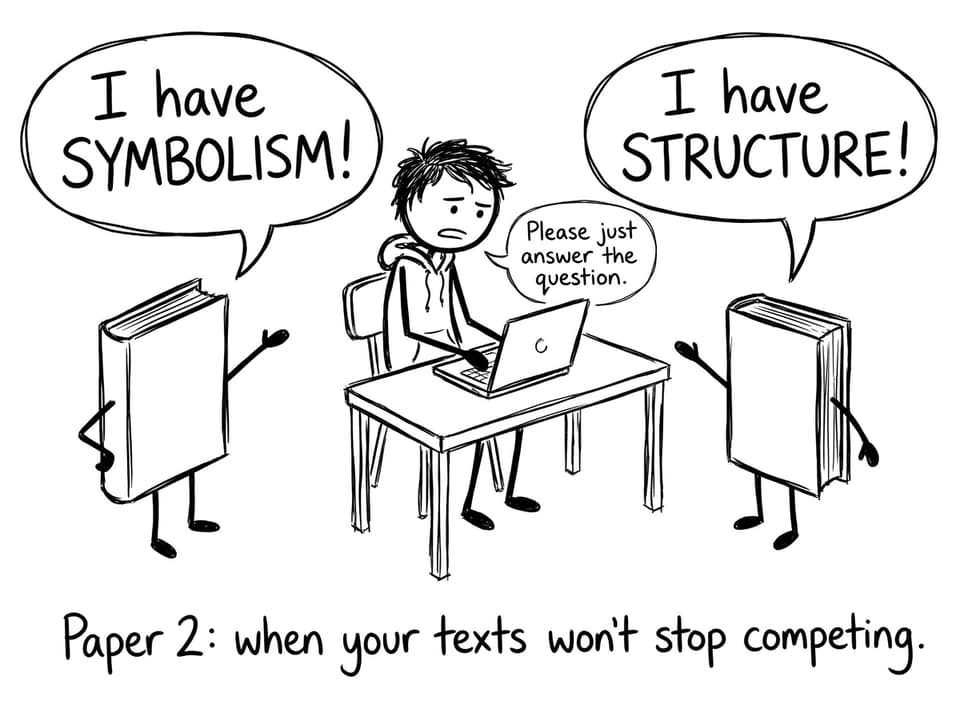
Paper 2 in IB English: what the examiner actually wants
In IB English, Paper 2 is a comparative essay on two works you have studied. The exam is built to reward students who can do three things consistently:
-
Answer the question directly (not the statement, not the theme in general)
-
Compare by method (language, structure, form, narrative choices)
-
Sustain an argument with balanced, relevant evidence
If you want the official shape of the assessment, keep RevisionDojo’s explainer open during revision: Understanding the IB English A Literature Paper 2 Exam Structure.
A quick checklist before you write
Use this five-minute scan to stabilise your thinking before the first sentence.
-
Rephrase the prompt into a one-sentence task you can answer.
-
Pick the two works that fit the task most naturally.
-
Draft 2-3 comparative angles (theme + technique).
-
Decide your paragraph structure (integrated point-by-point is safest).
-
List micro-evidence you can recall: key scenes, recurring images, structural patterns, distinctive phrases.
RevisionDojo’s How to Approach Comparative Essays in IB English Paper 2 aligns nicely with that checklist when you practise at home.
Choosing texts: the best pair is the one that lets you talk about craft
A common Paper 2 mistake in IB English is choosing texts because they share a theme, then discovering you cannot compare how they build that theme.
A better rule: choose the pair that gives you contrast in authorial method.
For example, two texts may both explore control, but one might do it through clipped dialogue and stage directions (power as performance), while the other uses free indirect discourse and shifting focalisation (power as internalised).
If you want a structured way to decide what you are comparing, use this guide: Comparative Essay Planning: Theme vs. Form vs. Content.
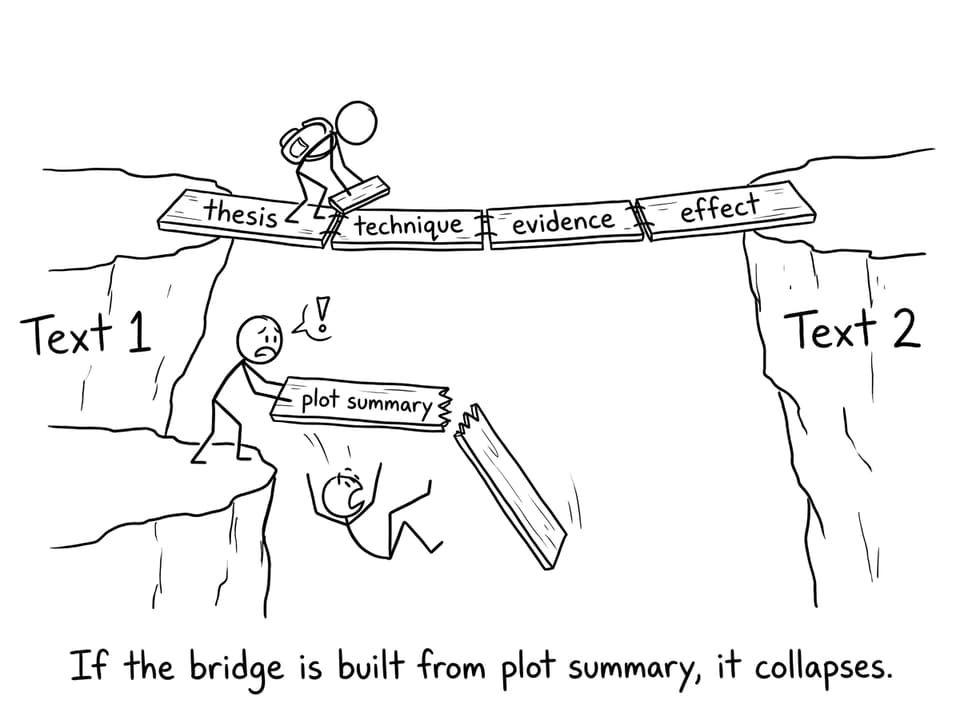
Planning fast: build a “bridge” between the texts, not two islands
Spend 5-7 minutes planning. Not because it is nice, but because it prevents the most expensive failure: writing a beautiful paragraph that does not answer the question.
Your plan should look like a bridge:
-
Thesis (comparative claim that answers the prompt)
-
Angle 1 (technique-driven)
-
Angle 2 (technique-driven)
-
Angle 3 (optional, if you have time and evidence)
For ready-to-practise outlines and a clear structure, use RevisionDojo’s Step-by-Step Guide to Comparative Literary Essays (Paper 2).
A thesis template you can actually use
In IB English, strong theses do two jobs: they answer the question and name the comparative method.
Try:
Both authors explore X, but while Text 1 achieves this through technique A to create effect 1, Text 2 relies on technique B to produce effect 2, revealing insight about the theme.
It sounds simple, but it forces you away from summary and toward analysis.
Writing comparatively: the paragraph should contain both texts every time
Avoid writing “Text A mini-essay” then “Text B mini-essay.” Examiners in IB English want sustained comparison.
A reliable paragraph rhythm:
-
Point linked to the prompt
-
Evidence + analysis from Text 1
-
Evidence + analysis from Text 2
-
Comparative sentence (similarity/contrast + why it matters)
-
Link back to thesis
If you want a deeper breakdown of structures, bookmark: How to Structure a Comparative Essay in IB Literature.
Comparison language that signals control
Use these deliberately (not constantly):
-
“Similarly, the author…”
-
“In contrast, the writer…”
-
“Where Text 1 frames X as…, Text 2 reframes it as…”
-
“This difference in structure suggests…”
These phrases are small, but in IB English they show you are steering the essay rather than drifting.
Evidence: short, precise, and attached to authorial choice
You are writing from memory. So evidence in IB English Paper 2 should be:
-
Short (a phrase, a motif, a structural moment)
-
Distinctive (something that could not belong to any book)
-
Explained (how it works, why it is used, what it produces)
If you struggle with turning device-spotting into analysis, use: Mastering Literary Devices in IB English Exams.
And if you want a single home base for Paper 2 practice materials, go here: IB English Literature Paper 2 Topic Hub.
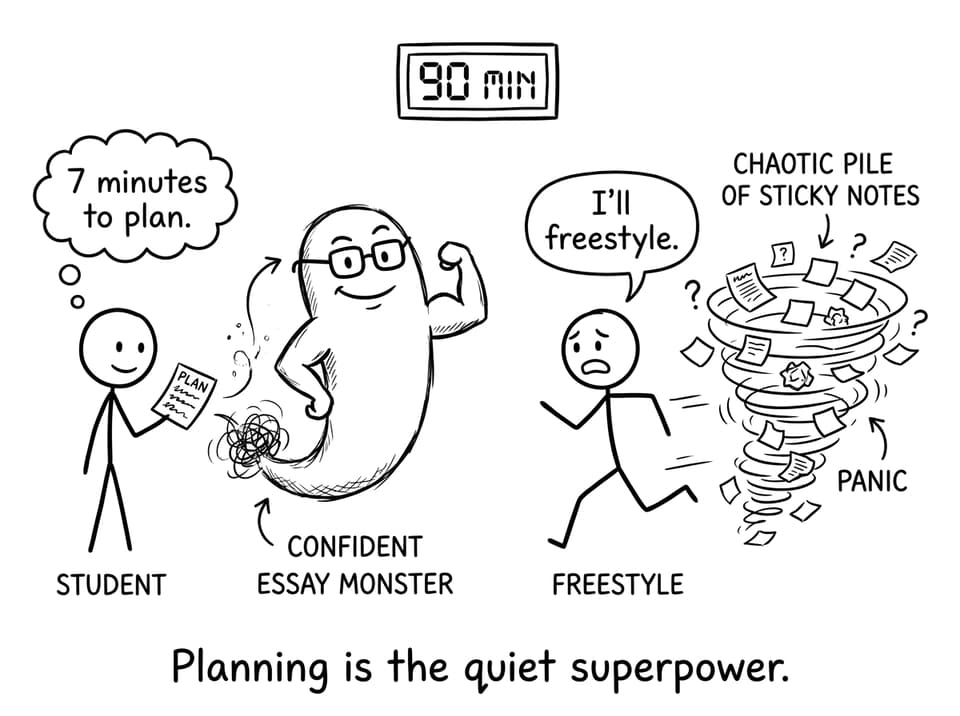
Time management for IB English Paper 2 (simple and realistic)
A practical split for 1 hour 45 minutes:
-
5-7 minutes: choose question + texts + plan
-
75-80 minutes: write (intro + 3-4 comparative paragraphs + conclusion)
-
8-10 minutes: revise for clarity, balance, and missing comparisons
For time-pressure practice, RevisionDojo’s How to Prepare for the IB English Paper 2 Exam Under Time Pressure is built around decision-making, not just writing faster.
How RevisionDojo helps you practise Paper 2 without guessing
Most students revise IB English Paper 2 by rereading and hoping the right prompt appears. RevisionDojo turns that hope into a system:
-
Use the Questionbank to practise comparative prompts repeatedly.
-
Build quick recall with Flashcards for themes, techniques, and key moments.
-
Tighten structure using Study Notes and exemplar planning frameworks.
-
Draft under exam conditions with Mock Exams and Predicted Papers.
-
Get targeted improvement using AI Chat and Grading tools that highlight where comparison disappears.
-
If you need personal feedback, RevisionDojo Tutors can mark a full Paper 2 and show you exactly which sentences lift you into higher bands.
Closing: write like a comparer, not a summariser
Paper 2 rewards a specific kind of calm: the ability to place two works side by side and say, with evidence, “Here is what each author is doing, and here is why the difference matters.” That is the heart of IB English.
If you want that calm to feel earned, practise with structure, not hope. Use RevisionDojo’s Paper 2 resources, run timed prompts through the Questionbank, and refine your paragraphs with AI Chat and Grading tools until comparison becomes your default setting. IB English Paper 2 stops feeling like a gamble when your method is repeatable.


