

The moment most IB English written tasks go sideways
The first time you sit down to draft an IB English written task for internal assessment preparation, it feels strangely easy. You know the text. You have quotes. You have opinions. Then you reread what you wrote and realize it’s mostly… plot.
That’s the quiet trap of IB English: you can be “right” about what happens and still score poorly because the assessment rewards something rarer: showing how meaning is constructed, why it matters, and what that says about the world beyond the page.
This guide is a practical, Language & Literature-focused approach to written tasks that schools often use as IA practice (and that naturally strengthens your Individual Oral). You’ll leave with a repeatable method, a checklist, and a way to self-correct before your teacher ever sees the draft.
What “written tasks” mean in IB English IA preparation
In many classrooms, “written tasks” are used as coursework practice for the IB English Internal Assessment pathway, especially because the official IA is the Individual Oral (IO). A written task might look like a mini commentary, an analytical essay, or a reflection tied to a global issue.
Whatever your school calls it, your goal is stable:
-
Analyze authorial choices (language, structure, style, visuals)
-
Connect those choices to a global issue
-
Show awareness of context (culture, time period, audience)
-
Write with clarity, control, and a line of argument
If you want the IO version of this same skill set, keep the IB English IO hub open as you plan: Individual Oral topic page.
A fast checklist (save this before you draft)
Use this as your pre-writing filter for IB English written tasks:
-
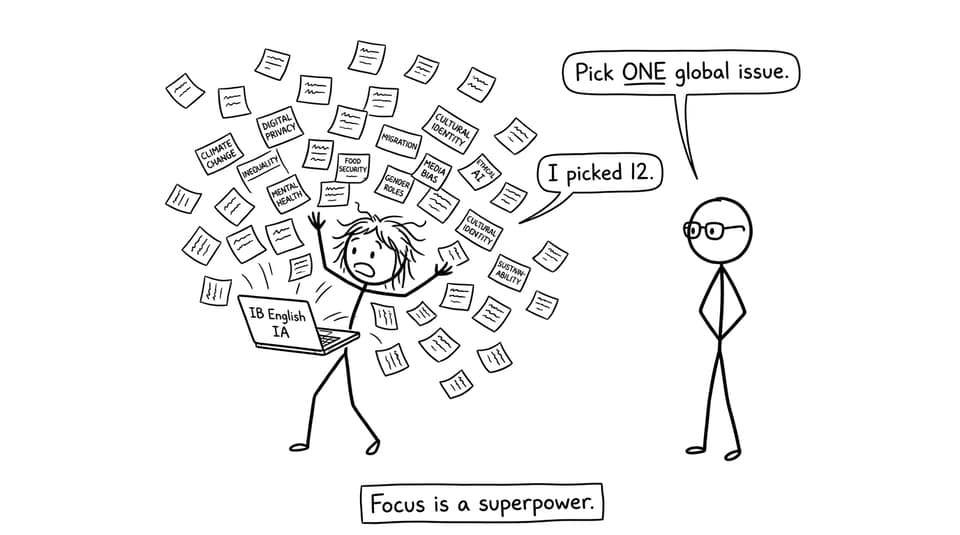
Global issue is one sentence (not a theme word like “power”)
-
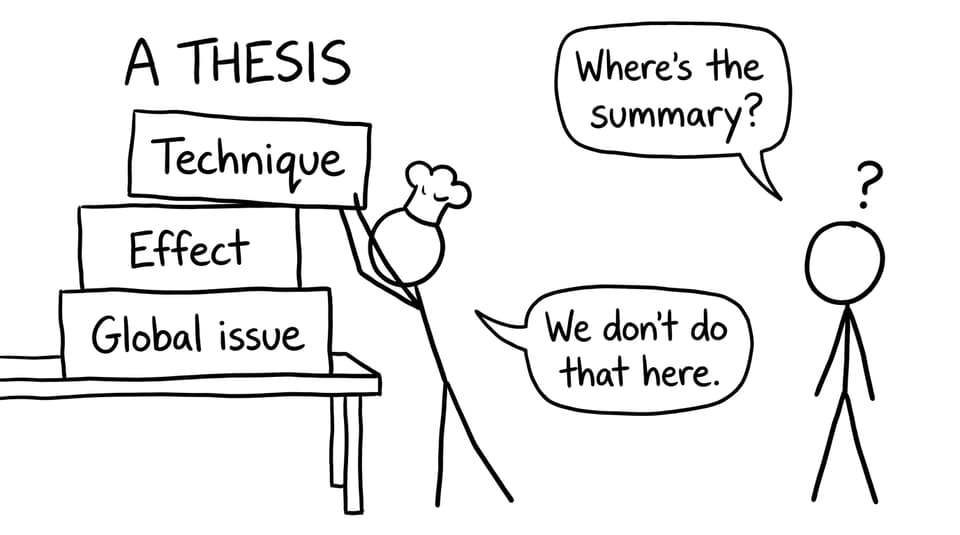
Thesis includes technique + effect + global issue
-
Each paragraph has one main technique focus
-
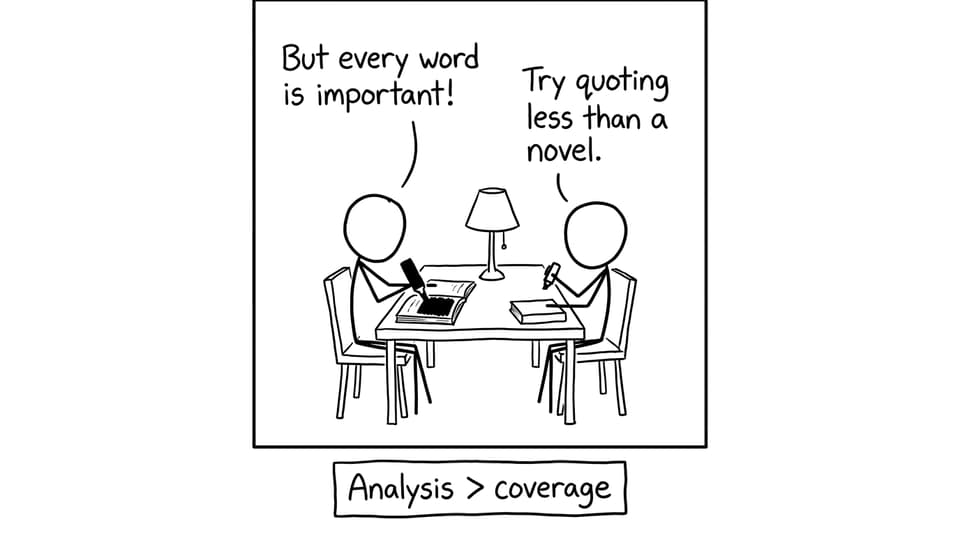
Evidence is short and embedded (no quote dumps)
-
Commentary answers “So what?” twice (local effect, global significance)
-
Conclusion returns to the global issue with a fresh insight (not repetition)
If you need a model for what analysis should sound like under time pressure, the Paper 1 prep guide is useful even for coursework: Best ways to prepare for IB English Paper 1.
Choosing a global issue that actually holds up
The best IB English global issues feel slightly uncomfortable, not because they’re shocking, but because they’re specific enough to argue.
A weak global issue is a label:
-
“gender”
-
“power”
-
“technology”
A strong global issue is a claim about the world:
-
“How institutional language normalizes gendered control in public life”
-
“How media framing turns fear into political consent”
-
“How consumer culture teaches identity as performance”
You’re aiming for something:
-
transnational (relevant across cultures)
-
debatable (not a fact statement)
-
visible in authorial choices (not just in plot events)
To see how the IO formalizes this, RevisionDojo’s walkthroughs are worth skimming before you lock your angle: How to approach the IB English Individual Oral (IO) and Comprehensive guide to the IB Individual Oral.
The thesis formula that stops summaries
A high-scoring IB English thesis is not a theme announcement. It’s an argument that maps technique to meaning.
Try this structure:
Through , the writer creates [effect], which exposes [global issue implication].
Example template (fill in, then sharpen):
- “Through satire and religious imagery, the text creates a tone of coerced certainty, exposing how institutions use moral language to justify gendered control.”
Notice what’s missing: plot summary. Your reader should instantly know what you will analyze, not what happens.
If you need terminology to make this sound precise (without becoming robotic), use RevisionDojo’s glossary as a quick reference while drafting: IB English Literature glossary.
Building paragraphs that sound like IB English top bands
Most IB English paragraphs fail for one reason: they list techniques like a shopping receipt.
Instead, build each paragraph as a short chain of logic:
Start with a claim that is already analytical
Bad: “The author uses imagery.”
Better: “The author’s imagery turns everyday objects into symbols of surveillance, making compliance feel ordinary.”
Use small evidence, then zoom in
Choose a short phrase, not a paragraph. Embed it naturally. Then analyze micro-level choices:
-
connotations
-
repetition
-
syntax and sentence length
-
register (formal/informal)
-
juxtaposition
-
motif patterns
Link the local effect to the global issue
Ask: What does this teach the audience to accept, fear, admire, or ignore?
One reliable move in IB English is the double “so what?”
-
So what does it do in the text?
-
So what does it suggest about the world?
For structured practice, RevisionDojo’s Questionbank helps because it forces you to answer like an examiner expects, then refine with feedback: Questionbank feature page.
How to make RevisionDojo your IA writing workflow (not just “extra resources”)
A calm IB English workflow is less about motivation and more about friction removal. RevisionDojo is designed to reduce the friction between “I know what I mean” and “I can express it in criteria language.”
Here’s a simple loop:
-
Use Study Notes to clarify what each device does in context (so your analysis is accurate).
-
Turn recurring teacher comments into Flashcards (so mistakes don’t become personality traits).
-
Draft a paragraph, then run it through AI Chat to test your line of argument and ask, “Where am I summarizing?”
-
Use Grading tools to get criteria-aligned feedback before submission.
-
When you’re exam-adjacent, switch into Mock Exams and Predicted Papers for timed, pressure-proof writing.
For the course hub that connects these pieces for Language & Literature, start here: IB English A Lang & Lit Resources. If you’re also taking Literature, the parallel hub is here: IB English A Lit Resources.
Common mistakes that cap your IB English score
-
Summary masquerading as analysis: If you can remove a sentence and nothing changes, it was plot.
-
Global issue mentioned only in the intro and conclusion: It should be present in every paragraph’s final link.
-
Technique name-dropping: “Imagery” is not analysis. Effects and implications are.
-
Over-quoting: Your job is to interpret, not to archive.
If you want a broader set of study habits that support stronger writing across the course, see: Effective study techniques for IB English A.
The quiet win: make IB English feel repeatable
The students who improve fastest in IB English usually aren’t the ones with the most “talent.” They’re the ones who make the process repeatable: one global issue, one thesis that maps technique to effect, one paragraph at a time, always returning to significance.
When you’re ready to turn that process into consistent marks, build your routine inside RevisionDojo: use the Questionbank, tighten ideas with AI Chat, refine drafts with Grading tools, and pressure-test with Mock Exams and Predicted Papers. Start at the home base for Language & Literature and keep your IB English work in one place: IB English A Lang & Lit Resources.