
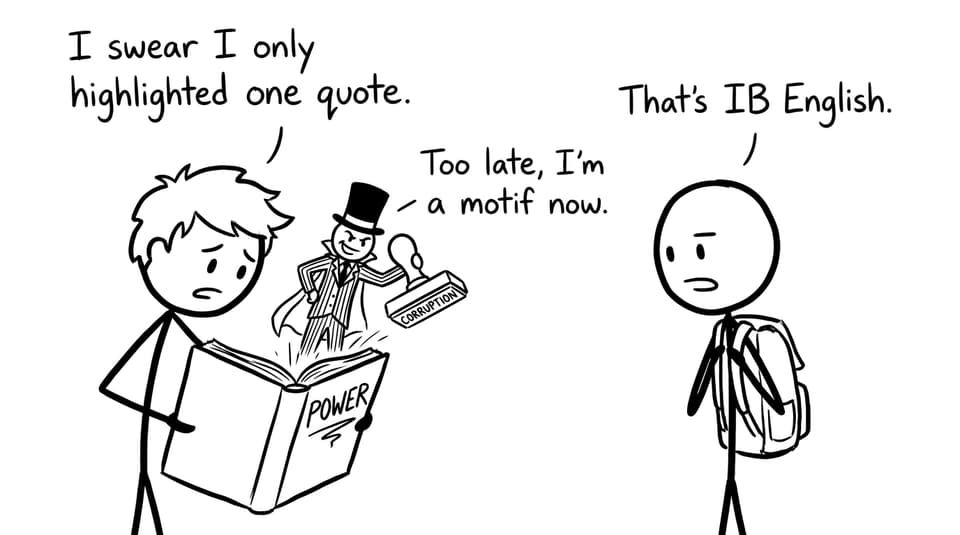
Power is rarely announced. It slips in through who gets to speak first, who gets believed, who gets forgiven. Corruption is even quieter: a small compromise that becomes a habit, then a worldview.
That quietness is exactly why IB English rewards students who can prove how power and corruption are built on the page. Examiners are not looking for big moral statements. They are looking for a precise argument about authorial choices -- how characterization, structure, imagery, and voice make power feel normal, then dangerous.
A quick IB English checklist for power and corruption
Use this 60-second scan before you write anything in IB English:
-
Power map: Who has authority, status, money, knowledge, or language advantage?
-
Access control: Who is silenced, interrupted, censored, or ignored?
-
Cost of obedience: What does compliance buy, and what does it erase?
-
Corruption pathway: What is the first compromise, and how does it escalate?
-
Technique proof: What specific choices (diction, imagery, structure, perspective) show the theme?
If you want a broader theme framework, pair this with How to Identify and Discuss Themes in IB English Texts.
Start by mapping power, not naming it
In IB English, the fastest way to avoid vague claims is to treat power like a system with rules.
Look for visible power
Visible power is the easy kind: titles, institutions, laws, money, social rank. Your job is to show how the text makes that power feel stable or fragile. Does the narrator describe authority with certainty, irony, or fear? Does the setting (palace, courtroom, classroom, home) make domination feel routine?
A simple move: track who controls decisions in key scenes. Not who is “important” in general, but who changes outcomes.
Look for invisible power
Invisible power is where top responses live: the ability to define reality. Think propaganda, etiquette, gender roles, inherited class assumptions, even “common sense.” In IB English, this often shows up as:
-
rules characters follow without questioning
-
euphemisms and polite language that hide harm
-
narrators who normalize cruelty
For global-issue framing (especially useful for IO thinking), see Understanding the 5 Fields of Inquiry in IB English.
Track corruption as a process, not a label
Saying “the character becomes corrupt” is a starting point, not analysis. In IB English, corruption is usually written as a sequence.
Find the first trade
Most characters do not wake up evil. They trade one principle for one reward: safety, status, love, revenge, belonging. Identify that first trade and explain how the writer frames it.
-
Is the language defensive (“had to,” “no choice,” “for the greater good”)?
-
Does the narration speed up, as if skipping moral reflection?
-
Do other characters reward the compromise?
That moment becomes your hinge: the point where theme turns into argument.
Watch how the text changes its own moral weather
Corruption often changes tone before it changes plot. Dialogue grows sharper. Imagery darkens. Humor becomes cruel. Certainty becomes paranoia.
This is close-reading territory. If you need a practical method, use Close Reading Techniques for Prose and Poetry and harvest 2--3 patterns you can return to.
Prove the theme using techniques examiners reward
Themes of power and corruption become high-scoring when you attach them to craft.
Characterization: power shows in what people dare to do
Ask what the text rewards and punishes. Who can break rules and stay safe? Who gets punished for speaking? What kind of ambition is admired?
For a concrete example set, RevisionDojo’s King Lear Notes are useful for seeing how authority reshapes family bonds and moral duty -- exactly the kind of lens IB English likes.
Symbolism and imagery: authority often gets an object
Writers give power a physical form: crowns, uniforms, keys, documents, weapons, architecture, light/shadow patterns. Corruption often gets decay imagery: rot, stains, sickness, dust, broken mirrors.
Your job is to connect the symbol to a claim:
-
What does the object authorize?
-
When does it appear, and with whom?
-
Does its meaning shift as corruption grows?
If you want to widen your theme vocabulary beyond this one topic, skim Key Themes in IB English Literature.
Structure: who gets the last word?
Structure is power. A text that withholds backstory controls reader judgment. A text that alternates perspectives makes authority unstable. A linear descent from order to chaos can mirror moral decay.
In IB English, you can often score quickly by linking structure to control:
-
Beginnings: Does the text start with order, propaganda, certainty, tradition?
-
Shifts: Where do we see a tipping point in pace, perspective, or tone?
-
Endings: Does the text restore authority, expose it, or leave it unresolved?
Exam translation: how this becomes Paper 1 or Paper 2
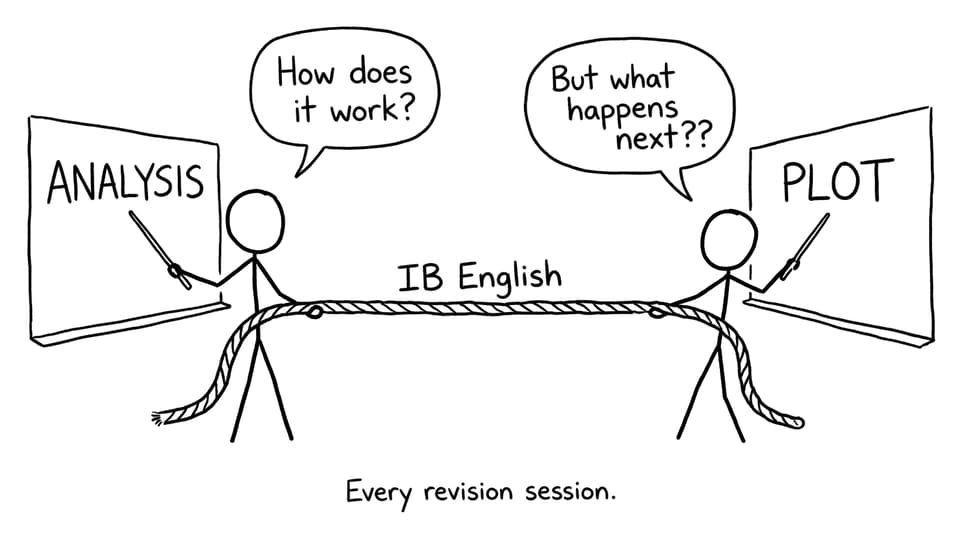
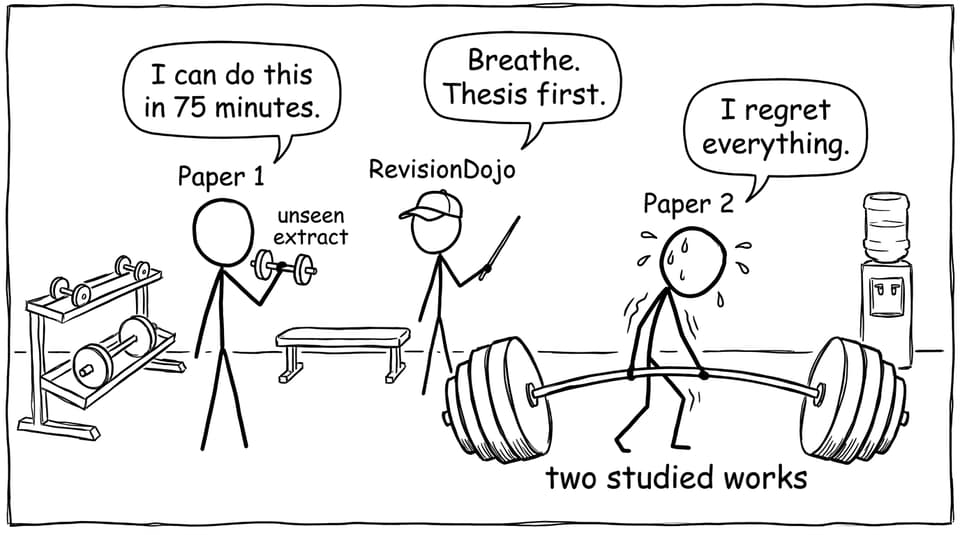
In IB English, the same theme has different demands depending on the task.
For Paper 1: build a small, tight argument
Paper 1 is about speed and selectiveness. Choose one core claim about how power works in the extract, then prove it with 2--3 technique clusters (tone + diction + imagery, or perspective + structure + symbolism).
Use these guides to lock in structure:
For Paper 2: compare methods, not just messages
Paper 2 rewards comparative thinking: how each author constructs power, and why their corruption looks different.
Strong comparative angles include:
-
one text uses public institutions, the other uses private relationships
-
one shows sudden collapse, the other shows slow normalization
-
one uses irony to critique authority, the other uses tragedy to warn
For planning and structure support, use:
Closing: turn theme into a scoring habit
Power and corruption are not just topics you mention. In IB English, they are patterns you demonstrate: who controls language, how compromise becomes routine, and how the text trains readers to accept or resist authority.
If you want this to become automatic, build practice around RevisionDojo’s ecosystem: drill theme-based prompts in the Questionbank, condense repeatable insights into Flashcards, refine examples with Study Notes, and use AI Chat plus Grading tools to pressure-test your thesis and paragraph logic. When exam day arrives, you are not hunting for ideas -- you are executing a method.
For more topic pathways, browse All IB English Posts and keep returning to IB English as a craft skill: notice, name, prove, conclude.
