

Character analysis gets easier the moment you stop asking, “What is this character like?” and start asking, “How is the writer forcing me to see them this way?” That shift matters in IB English, because examiners reward method, not memory. And the trick is simple: characterization changes shape across genres, but it doesn’t change purpose.
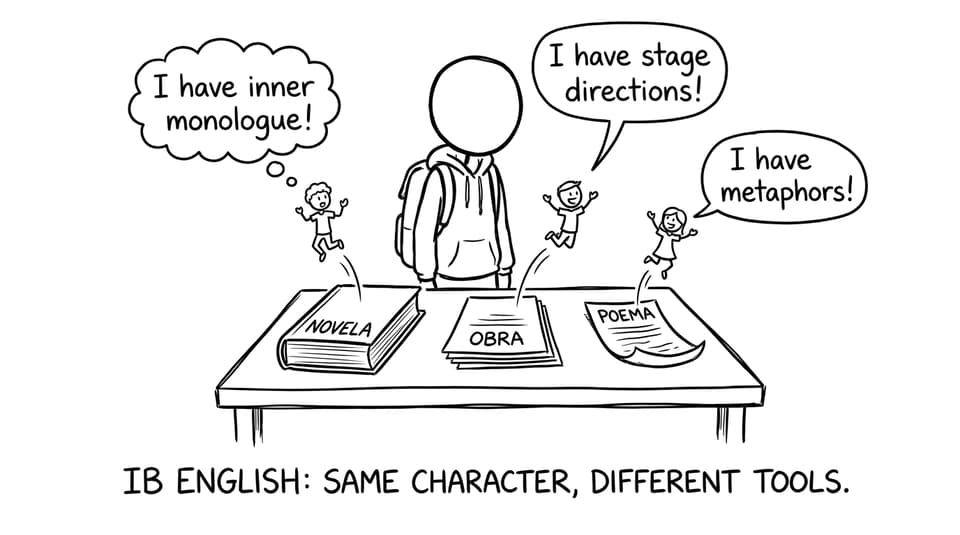
In a novel, a character can think for pages. In a play, they can only do and say things (and let silence do the rest). In poetry, the “character” might only exist as a voice in a pressure-sealed jar of language. If you learn how characterization works across prose, drama, and poetry, IB English stops feeling like a guessing game and starts feeling like pattern recognition.
A quick IB English checklist for genre-based characterization
Use this when you annotate, plan Paper 1, or build comparative points for Paper 2:
-
Identify the genre toolset (narration? performance? voice and imagery?).
-
Decide whether characterization is mostly direct, indirect, or mixed.
-
Track a pattern: repeated diction, recurring gestures, symbolic objects, or tonal shifts.
-
Link characterization to conflict: what pressure exposes who the character is?
-
Finish with meaning: what theme becomes clearer because the character is built this way?
If you want a broader grounding in what IB wants, pair this with How Do You Analyze a Character? | IB English Characterization and Essay Guide.
Characterization in prose: the power of access
Prose offers the most “camera angles.” A novelist can zoom into thought, pull back into description, or tilt the lens through an unreliable narrator. In IB English, your highest-scoring prose analysis usually focuses on access, who gets it, who doesn’t, and what that implies.
Key techniques to prioritize:
Narrative perspective and distance
A first-person narrator can confess, rationalize, and distort. Third-person narration can feel objective, or it can slip into free indirect style and quietly merge with a character’s mind. Ask: How close are we allowed to get? That closeness is characterization.
Interior conflict as characterization
In prose, contradiction is a gift. A character’s private thoughts can undercut their public performance, and that gap creates complexity. Track the pattern of what they say versus what they think, and what changes over time.
Description that behaves like judgment
Physical description in prose is rarely neutral. Word choice carries values. If the narrator describes a character with loaded connotations, that is characterization and worldview.
For technique language you can borrow in your writing, RevisionDojo’s Notes for Characterization & Dialogue - IB is a clean reference point.
Characterization in poetry: a person made of voice
Poetry often gives you a speaker, not a “rounded character” in the novelistic sense. But in IB English, you can absolutely analyze characterization, you just do it through compression.
Tone is personality
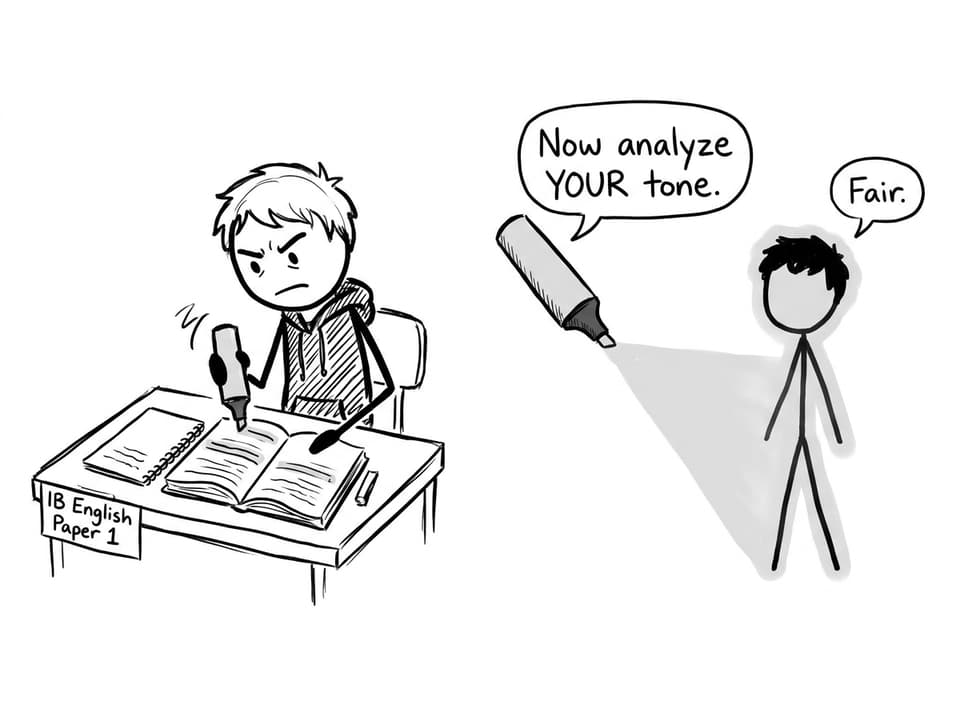
Tone is the fastest route to character in poetry. Is the voice bitter, reverent, pleading, detached, ironic? Don’t label the tone and move on. Prove it through diction, punctuation, rhythm, and what the speaker refuses to say.
Imagery as inner life
Poetry turns metaphor into psychology. Repeated images (storms, mirrors, cages, rot, light) aren’t decoration; they’re how the poem externalizes a mind. When you track a motif, you’re tracking characterization.
Omission and silence
In poems, what’s missing is often the loudest evidence. Gaps, ellipses, abrupt line breaks, or sudden shifts in address can suggest repression, trauma, control, or instability.
To sharpen this skill, practice with the method in Close Reading Techniques for Prose and Poetry | IB English.
Characterization in drama: identity under spotlight
Drama builds character without narration. People reveal themselves through pressure: dialogue, pacing, interruption, proxemics, stage directions, and the way other characters react.
Dialogue patterns (not just dialogue content)
In plays, how someone speaks is often more important than what they say. Interruptions, unfinished sentences, repeated phrases, politeness strategies, and sudden brutality all characterize.
Stage directions as secret evidence
Stage directions are the playwright’s quiet control panel. A single “pause” or “avoids eye contact” can reverse the meaning of a speech. Treat stage directions as authorial commentary.
Power dynamics on stage
Ask who controls space, who initiates conflict, and who is forced to respond. In drama, hierarchy is characterization.
If you need a compact glossary of dramatic conventions, use Notes for Drama - IB.
Comparing characterization across genres in IB English
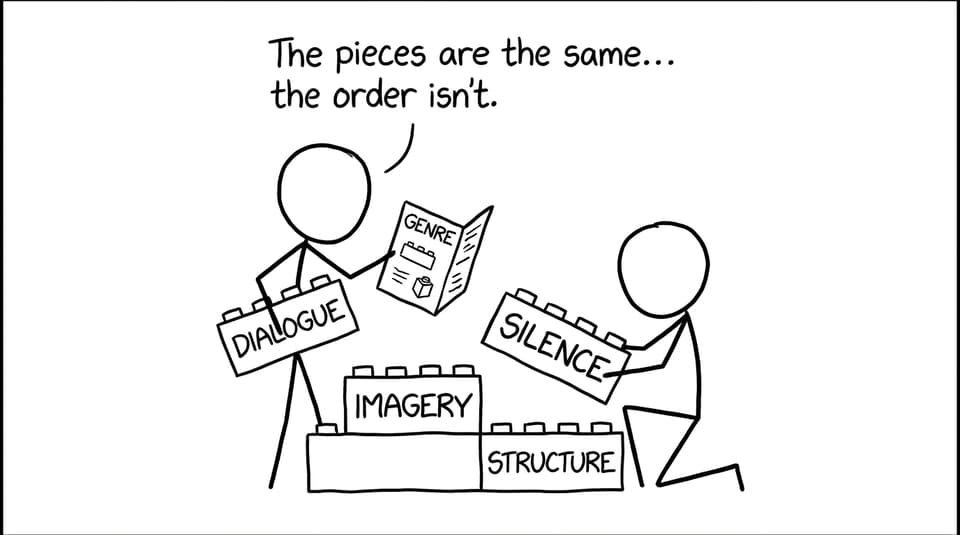
When you compare texts (Paper 2, HL Essay, or even a sophisticated Paper 1 reference), make your comparison about methods, not just traits.
Here are three exam-ready comparative moves:
Same trait, different delivery
A prose character’s insecurity might appear as interior monologue and self-justifying narration. A dramatic character’s insecurity might appear as interruptions and aggressive humor. A poetic speaker’s insecurity might appear as fractured syntax and self-erasure.
Same conflict, different visibility
Prose can hide conflict inside thought. Drama forces conflict into action and speech. Poetry can compress conflict into a single extended metaphor. You’re not comparing “characters” as people; you’re comparing authorial constraints.
Same theme, different character function
A “static” character in drama can act as a foil. A static poetic speaker can become symbolic. A static prose character can expose the narrator’s bias. In IB English, function often matters more than change.
For help turning this into a full comparative structure, see Step-by-Step Guide to Comparative Literary Essays (Paper 2).
How RevisionDojo helps you practice characterization faster
Knowing the theory is nice. Scoring higher in IB English comes from repetition under feedback.
-
Use the Questionbank to drill characterization prompts by text type.
-
Build quick recall with Flashcards (especially technique-to-effect phrasing): IB Flashcards with Spaced Repetition (SRS) and Flashcards for English Paper 2 - IB.
-
Use AI Chat to test alternative interpretations and refine comparative angles.
-
Run paragraphs through RevisionDojo’s Grading tools to see whether you’re analyzing or summarizing.
-
When you’re ready, use Mock Exams and Predicted Papers to rehearse timing and decision-making.
If you’re working across the course, bookmark IB English A Lang & Lit Resources as your hub.
Conclusion: make genre your advantage in IB English
Once you see genre as a set of tools, characterization stops being mysterious. Prose gives you access, poetry gives you voice, drama gives you pressure. Your job in IB English is to name the tool, show it working, and explain why it matters.
If you want to turn that into consistent marks, use RevisionDojo to practice with targeted questions, sharpen language with flashcards, and get feedback through grading tools and AI support. Characterization across genres isn’t extra work; it’s a shortcut to smarter, faster analysis when the exam clock is loud.