In the last five minutes before a timed commentary, an advertisement can feel like it’s laughing at you.
It’s just one image, a slogan, maybe a celebrity smile. But in IB English, that “simple” visual text is a dense little machine: every font choice, color, and camera angle is doing persuasive work. The students who score well aren’t the ones who list techniques fastest. They’re the ones who calmly explain how those choices shape meaning, audience response, and ideology.
This guide gives you an exam-ready method to analyze ads in IB English A: Language & Literature for Paper 1 and the Individual Oral (IO), without getting trapped in description.
The IB English advertisement analysis checklist
Use this quick checklist before you write a single paragraph in IB English:
-
Text type + context: What kind of ad is it (print, billboard, social, campaign)? Where/when might it appear?
-
Purpose: What action or belief does it want?
-
Audience: Who is being targeted, and what do they value?
-
Visual choices: Composition, color, lighting, gaze, symbols, setting, typography.
-
Language choices: Slogan, diction, pronouns, imperatives, repetition, claims, tone.
-
Representation + ideology: What world-view is being normalized or challenged?
-
Effect: How do these choices shape emotions, trust, identity, and behavior?
If you want a broader foundation for visual texts, pair this with How to Decode Visual Texts and Images in the IB English A Course.
Start with purpose and audience (your IB English compass)
Most weak IB English analyses drift because they begin with “The ad uses the color blue…” and never recover. Instead, begin with intent.
Ask yourself:
-
Is it selling a product, a lifestyle, or a value system (status, purity, rebellion, safety)?
-
What does the audience fear losing, or hope to gain?
-
What response is the creator engineering: admiration, guilt, urgency, belonging?
A fast way to keep this sharp is to use the “TAPAC” mindset for intros and planning. RevisionDojo’s Paper 1 guidance breaks this down clearly in Mastering IB English Paper 1: A Complete Guide and reinforces it again in Step-by-Step Guide to Revising IB English Paper 1.
In IB English, purpose and audience aren’t a box to tick. They are the logic behind every technique you mention.
Read the image like a map: composition, color, and symbols
Advertisements rarely ask you to “understand” a plot. They ask you to feel something quickly. Visual design is how they do it.
Composition: where your eye goes first
Look for:
-
Salience: What is largest, sharpest, brightest, or most central?
-
Vectors and lines: Do shapes, arms, roads, gazes, or diagonals push attention?
-
Framing and distance: Close-ups create intimacy; wide shots create aspiration or authority.
-
Negative space: Emptiness can signal luxury, isolation, clarity, or control.
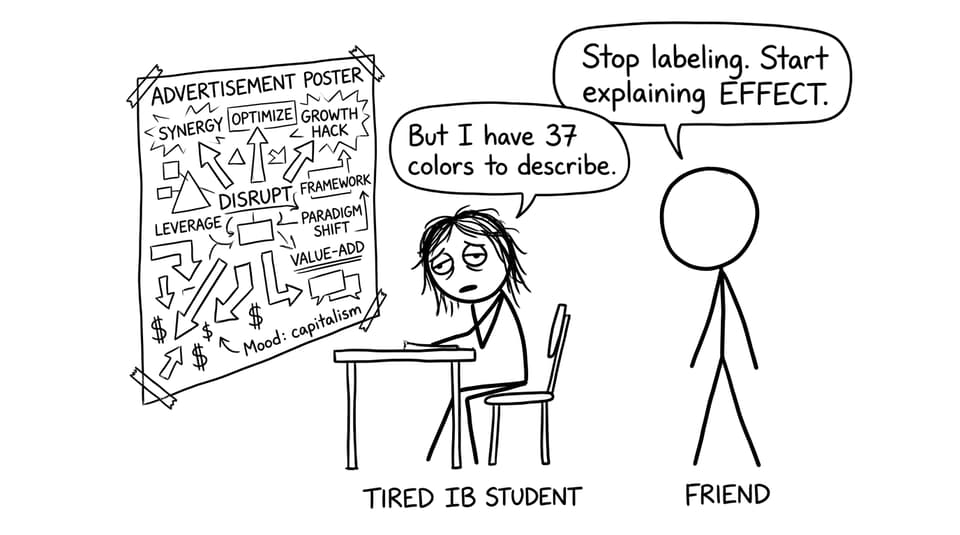
In IB English, don’t stop at naming the technique. Explain what the composition encourages the viewer to prioritize and why that matters.
Color and lighting: emotional shortcuts
Color psychology can be simplistic if you treat it like a cheat sheet. Make it contextual:
-
Warm tones can suggest warmth, comfort, intimacy, appetite, nostalgia.
-
Cool tones can suggest professionalism, technology, calm, detachment.
-
High contrast can dramatize stakes; soft lighting can romanticize.
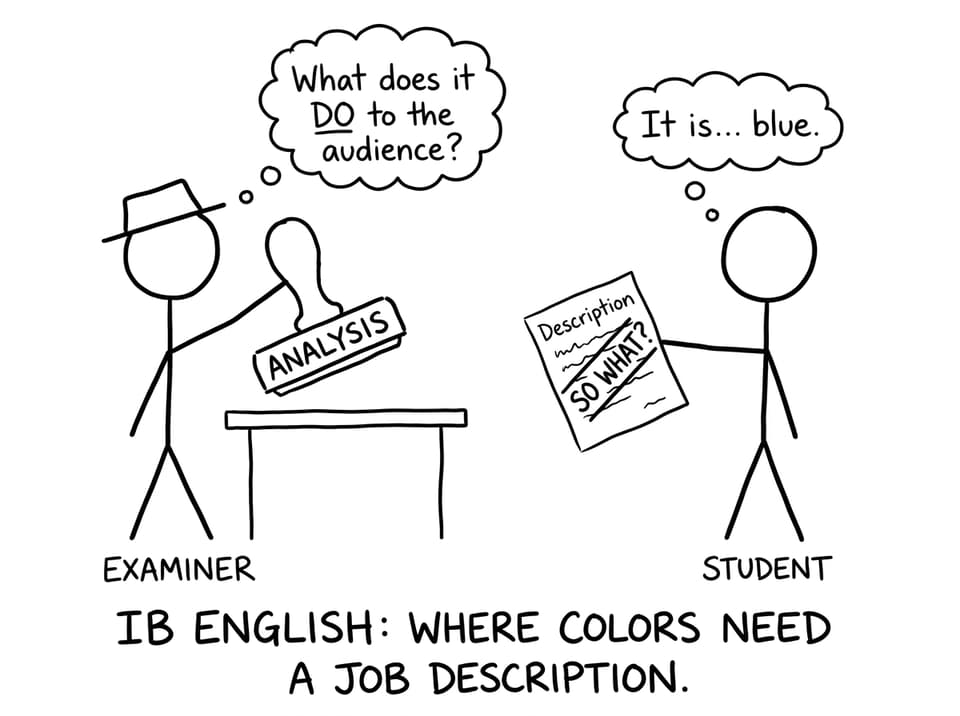
The best IB English sentence isn’t “blue means trust.” It’s “the restrained blue palette and clean lighting construct a clinical credibility that makes the product’s promise feel measurable and safe.”
Analyze the language: slogans, tone, and psychological pressure
Visuals catch attention. Language closes the deal.
In IB English, focus on how copy compresses an argument into something memorable:
-
Imperatives: “Join,” “Switch,” “Discover” (authority and urgency)
-
Second person pronouns: “you/your” (manufactured intimacy)
-
Rule of three / repetition: makes the message feel inevitable
-
Loaded connotations: “pure,” “real,” “limitless,” “natural,” “elite”
-
Numbers and pseudo-science: creates logos and credibility, even when thin
To sharpen Criterion B style analysis, see How to Analyze Language and Style in Unseen Texts (Paper 1).
A useful IB English move is to translate the slogan into plain speech. If the slogan says, “Because you deserve it,” the plain version might be: “Buying this is self-respect.” That translation reveals the ideology.
Representation and ideology: what the ad treats as “normal”
Advertisements are rarely neutral. They carry assumptions about:
-
who has power,
-
what beauty looks like,
-
what success should feel like,
-
what roles belong to which bodies.
In IB English, this is where your analysis turns from “spotting features” into critical thinking.
Ask:
-
Who is centered and who is absent?
-
Is the audience invited to identify with a person, or to desire them?
-
What stereotypes are reinforced or resisted?
-
What values are being packaged as common sense?
If you need a strong starting point for framing intention, The Role of Audience and Purpose in IB English A Texts helps you articulate this clearly.
How to use advertisement analysis in Paper 1 and the IO
Paper 1: turn “features” into an argument
For Paper 1, your goal in IB English is a focused line of reasoning: how choices combine to shape meaning and effect.
A practical structure:
-
Introduction: identify text type, context, purpose, audience, and a thesis about how persuasion works here.
-
Body paragraph 1: visual strategy (composition/color/symbolism) tied to effect.
-
Body paragraph 2: language strategy (slogan/diction/tone) tied to effect.
-
Body paragraph 3: representation + context (ideology, cultural assumptions) tied to effect.
-
Conclusion: evaluate overall impact and what it reveals about society/consumer culture.
For a wider framework beyond ads, How to Analyze Non-Literary Texts in IB English Language & Literature is a strong companion.
Individual Oral: pair an ad with a global issue
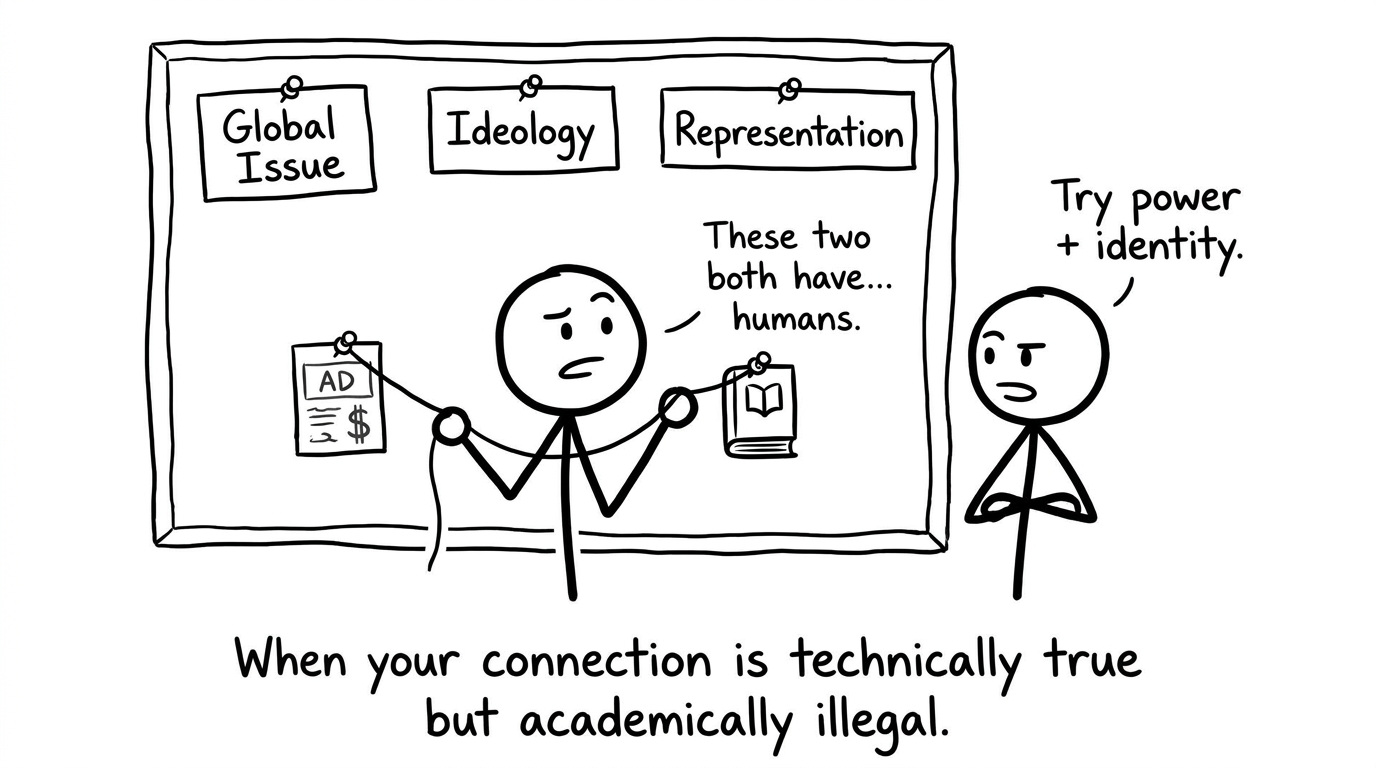
In the IO, IB English rewards students who can connect a visual text to a global issue with precision.
Good global-issue directions for ads include:
-
the commodification of identity
-
gender and power in media representation
-
consumerism and environmental responsibility
-
the performance of success and class
For IO planning support, use Master the IB Individual Oral: Expert Strategies and, when you want to drill the skill, IB IO Practice Tool: Perfect Your Individual Oral Skills with AI.