



Stress in the IB rarely announces itself. It shows up quietly: a calendar you stop wanting to open, a prototype that fails on Friday night, a set of equations that suddenly look like a foreign language.
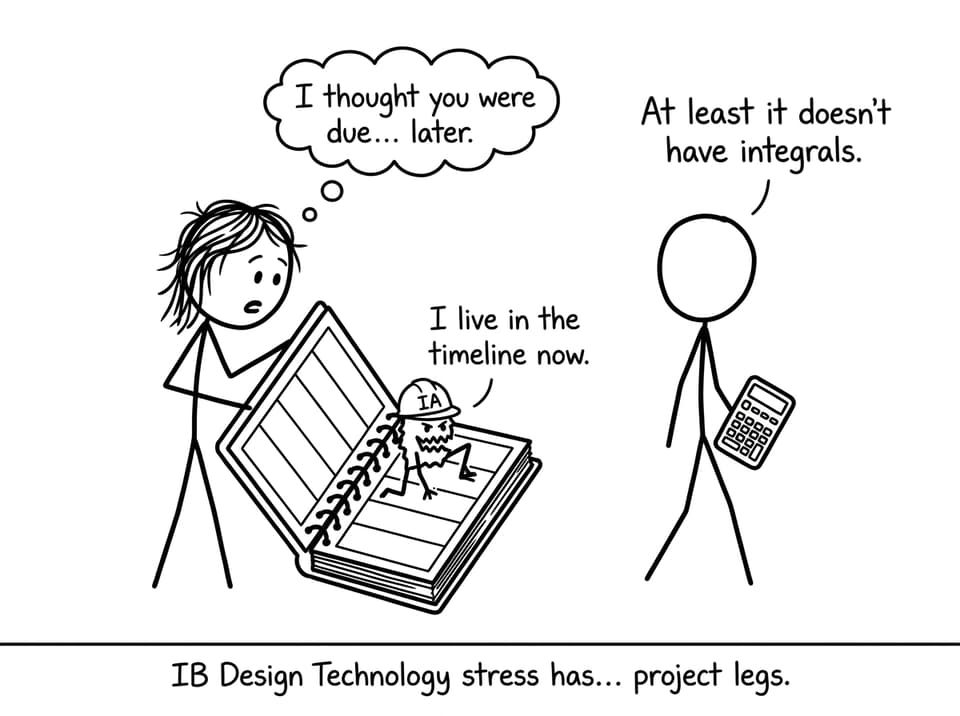
And if you take IB Design Technology, you’ve probably noticed something strange. The stress doesn’t always feel like “exam panic.” It feels more like a long, slow weight you carry across months: documentation, iteration, deadlines that keep moving closer.
This guide compares IB Design Technology stress to other IB subjects, explains why DT can feel uniquely intense (or oddly calm), and gives you simple ways to reduce pressure before exams.
Quick checklist: is IB Design Technology stress hitting you?
Use this as a fast diagnostic for IB Design Technology:
-
You feel fine in class, but anxious at home about “everything you still need to document.”
-
Your stress spikes after setbacks (CAD issues, materials problems, testing that fails).
-
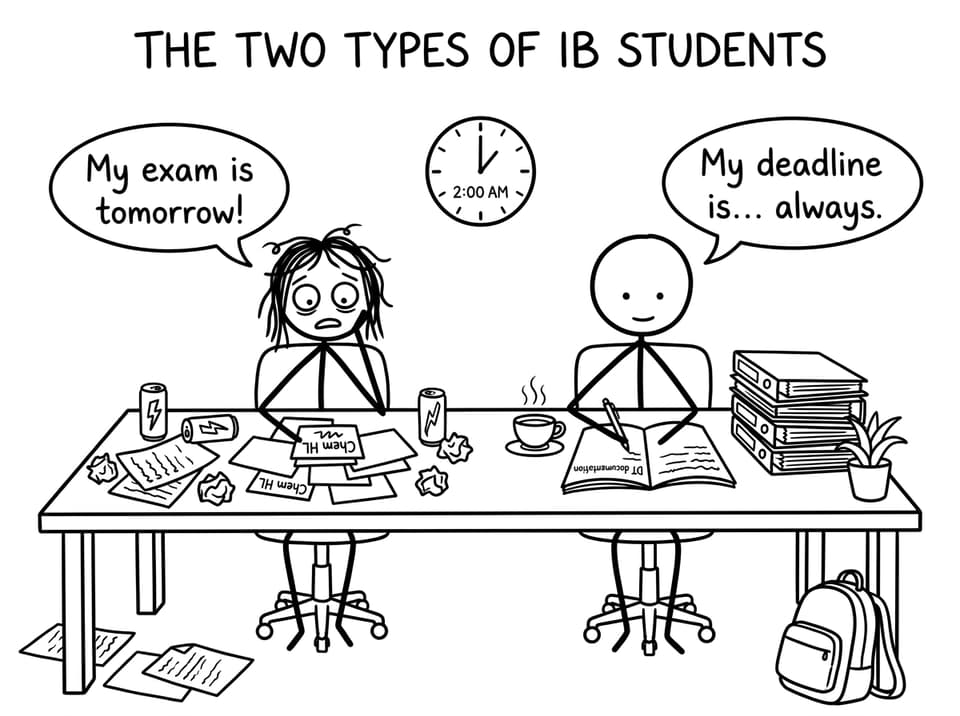
You can’t cram your way out of it, consistency matters more than bursts.
-
You’re unsure whether your project is “good enough,” even when progress is real.
-
Other subjects feel hard because of content, but DT feels hard because it never fully stops.
If you want an organized hub where DT content and practice live in one place, start with the IB Design Technology resources on RevisionDojo.
Why IB Design Technology stress feels different
Most IB stress is time pressure plus volume. IB Design Technology adds a third ingredient: uncertainty.
A Physics problem has a correct answer. An essay has a defensible argument. But a DT project is a moving target. Your best idea can become unrealistic once you meet the constraints (time, tools, user needs, testing results). That’s why IB Design Technology stress often comes from managing a process rather than mastering a pile of facts.
Common DT stress points include:
-
Long-term workload: the pressure of carrying your IA through months.
-
Documentation fatigue: knowing the work “counts” only if it’s recorded cleanly.
-
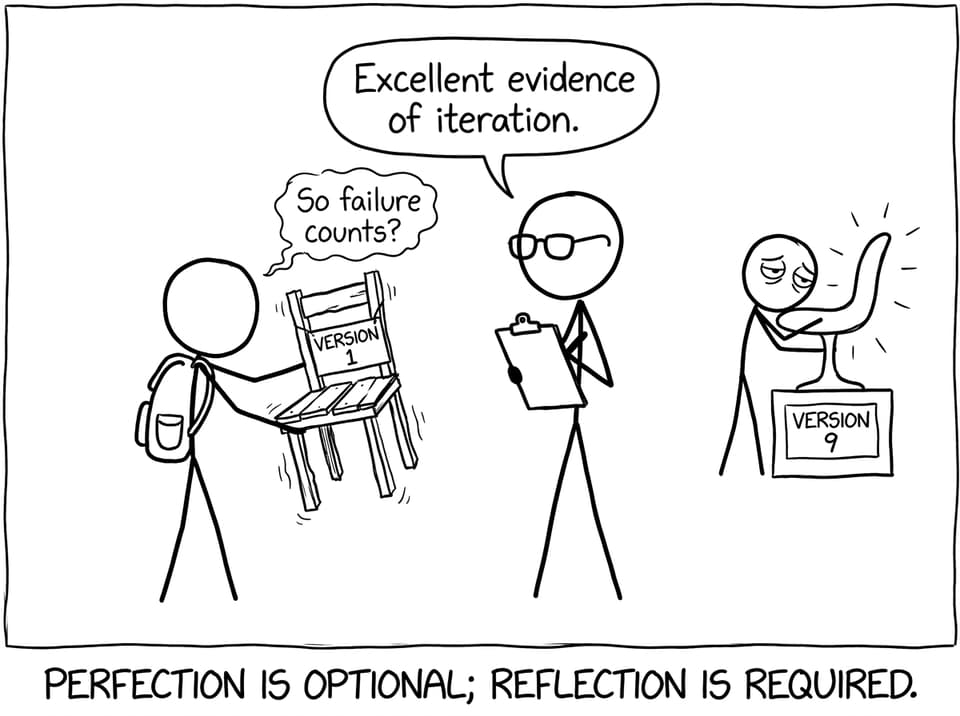
Iteration pressure: prototypes fail, and now you must explain the failure well.
-
Decision overload: too many choices (materials, mechanisms, manufacturing methods).
To make that uncertainty easier, RevisionDojo’s DT flow is designed around structure: Study Notes, Flashcards, and targeted Questionbank practice, plus AI Chat when you get stuck in a technical corner.
IB Design Technology vs other subjects: what kind of stress is it?
Stress isn’t just “more” or “less.” It’s different shapes.
Compared to Math
Math stress is often immediate: timed accuracy, method marks, and the feeling that one slip ruins momentum. IB Design Technology stress is usually slower. You can have a productive DT week without anything being “finished,” which is comforting, until it isn’t.
If your stress comes from timed performance, add exam training alongside your DT routine using How to Study for IB Exams: Step-by-Step Guide.
Compared to Sciences (Chemistry, Physics, Biology)
Sciences tend to be content-heavy with sharp exam peaks. You can feel behind quickly, then try to sprint to catch up. IB Design Technology can feel lighter in memorization, but heavier in sustained execution: you can’t revise “a prototype” the night before.
That’s why many students say IB Design Technology is calmer day-to-day but punishing if you procrastinate.
Compared to essay-heavy subjects (History, Economics)
Essay subjects often create stress through structure and recall: arguments, examples, case studies, timed writing. DT creates stress through progress visibility: you can see what isn’t done. A blank page is stressful, but a half-built solution can be stressful in a more personal way.
If you’re juggling DT with heavy writing deadlines, use the planning framework in Best Time Management Techniques for IB Students in 2025.
The hidden stress trigger in IB Design Technology: “I’ll document later”
The most common DT stress story is also the most predictable.
A student builds first and documents later. It feels efficient. It feels like real design work. Then weeks pass, and “later” becomes a terrifying reconstruction project: screenshots missing, testing details fuzzy, design decisions hard to justify. Suddenly IB Design Technology becomes stressful in a way no exam ever did, because you can’t recreate evidence.
A better rule is boring but powerful: document weekly, even when nothing impressive happened. Small entries reduce the fear that you’re “behind,” because progress becomes visible.
For a DT-specific routine, see Best Study Strategies for IB Design Technology Students and build your weekly rhythm around it.
How to lower IB Design Technology stress (without doing “more”)
You don’t need a heroic schedule. You need a repeatable one.
Choose a project that fits reality
Ambition is attractive. But in IB Design Technology, over-ambition creates stress late in the process when time is least flexible. Pick an idea that fits your tools, access, and skill level.
Break your IA into tiny milestones
Use milestones so small they feel almost silly: one user quote, one testing table, one annotated sketch, one decision explained. Momentum beats motivation.
Use exams to reduce project anxiety
DT has project stress, but you still need exam confidence. Build it steadily with the Design Technology Predicted Papers and then patch weaknesses using the Questionbank feature.
Get unstuck fast
DT stress often comes from losing an hour to confusion. When a concept or method blocks you, use RevisionDojo’s AI Chat to clarify in markscheme-style language, then return to building and documenting. That “unstuck” habit is underrated.
If you want the full workflow, How to Use RevisionDojo for IB Design Technology Success lays it out clearly.
Conclusion: how stressful is IB Design Technology, really?
IB Design Technology is stressful in a unique way. It’s less about memorizing more than everyone else and more about managing yourself over time: consistency, documentation, and calm responses to setbacks.
If you want to make IB Design Technology feel lighter, don’t wait for motivation. Build a system. Use RevisionDojo’s Study Notes, Flashcards, Questionbank, AI Chat, Grading tools, Predicted Papers, Mock Exams, Coursework Library, and Tutors to keep your work small, steady, and exam-ready.
When DT stops being mysterious, it stops being so heavy. And that’s when it can become one of the most satisfying subjects in the IB.
Explore more DT help in the IB Design Technology tag archive and set up your next week with structure, not stress.