


IB Design Technology Paper 2 is where revision stops being “what do I know?” and becomes “can I use what I know?”
Most students don’t lose marks because they’re lazy or clueless. They lose marks because they revise like Paper 1: lists, definitions, quick points. Paper 2 asks for something quieter and harder: depth, structure, and judgement under time pressure.
If you want a calm, high-scoring approach to IB Design Technology, this guide is built around what Paper 2 actually rewards.
What IB Design Technology Paper 2 is really testing
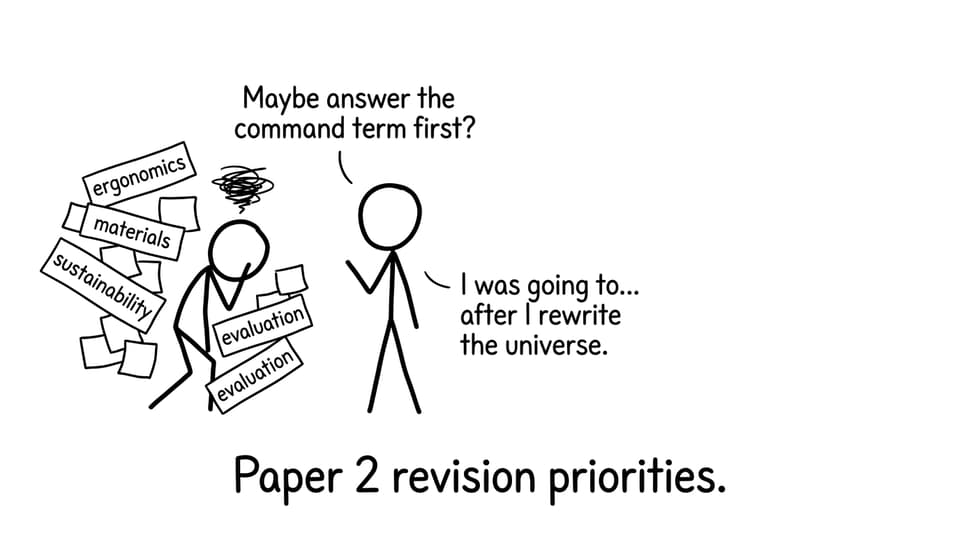
Paper 2 questions push you into extended responses. That means the examiner is watching for three things at once:
-
Application: Can you use design theory in a scenario?
-
Connections: Can you link topics (materials + manufacturing + user needs)?
-
Evaluation: Can you weigh trade-offs instead of making absolute claims?
A good shortcut: treat every Paper 2 prompt as an invitation to build an argument, not a chance to dump notes.
To keep your revision syllabus-aligned, start from the IB Design Technology hub (or the first exam 2027 hub) and revise topic-by-topic with the exam in mind.
A quick Paper 2 revision checklist (use this weekly)
Here’s a simple loop that works for IB Design Technology Paper 2:
-
Review one connected theme using RevisionDojo study strategies
-
Learn key terms quickly with Flashcards (active recall, not rereading)
-
Do targeted practice in the Questionbank
-
Write one timed extended response
-
Self-check against markbands: Did you apply? Did you evaluate? Did you answer the command term?
RevisionDojo makes this loop smooth because the Study Notes, Flashcards, Questionbank, AI Chat, and Grading tools are connected in one place.
Revise in themes, not chapters
Paper 2 loves blending ideas, so revise the way the exam asks you to think.
Try building theme bundles like these:
User-centred design + ergonomics + testing
This is where you explain why a product works for real people, not ideal users. If you need a starting point for content, use topic pages like Classic Design and then force yourself to apply it to a product you can describe clearly.
Materials + properties + manufacturing
Strong Paper 2 answers connect material choice to performance, sustainability, cost, and feasibility. Use detailed reference notes like Properties of materials notes and then practise turning those properties into decision-making.
Sustainability + ethics + production systems
Paper 2 rewards nuanced judgement: environmental impact, stakeholder trade-offs, realistic limitations. For HL-style depth, pages like Production systems can help you sharpen the vocabulary you’ll need to evaluate.
Use a repeatable structure for extended responses
When students say “I ran out of time,” it’s often code for “I didn’t have a structure.”
A reliable structure for most IB Design Technology Paper 2 questions:
-
Answer the command term immediately (evaluate, discuss, compare, justify)
-
Introduce the relevant concept (brief, accurate)
-
Apply to the scenario (specific, not generic)
-
Explain cause and effect (how it changes performance/user experience)
-
Evaluate trade-offs (benefits, limitations, consequences)
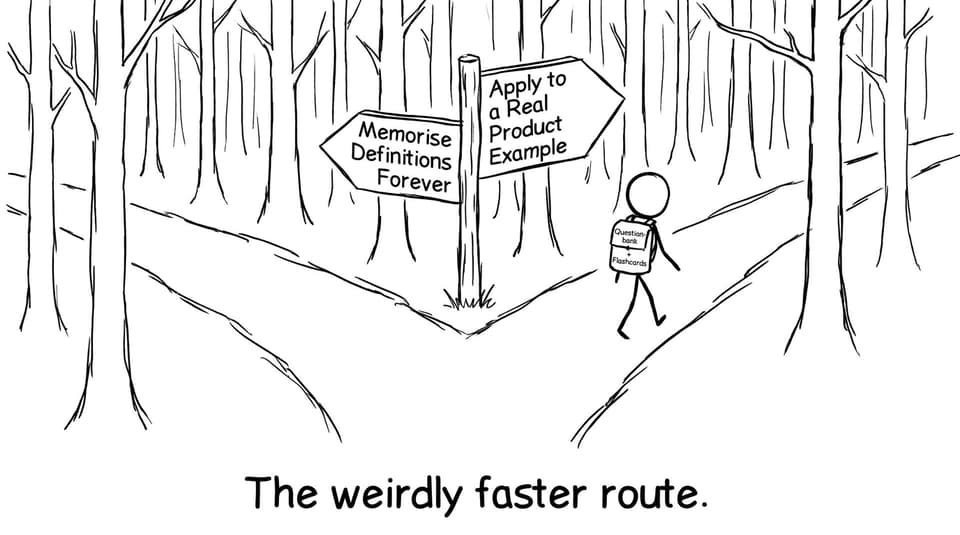
If you want to train this fast, pull exam-style prompts from the Design in practice Questionbank or drill a focused subtopic set like Modelling and prototyping Questionbank.
Timed practice is where Paper 2 confidence is built
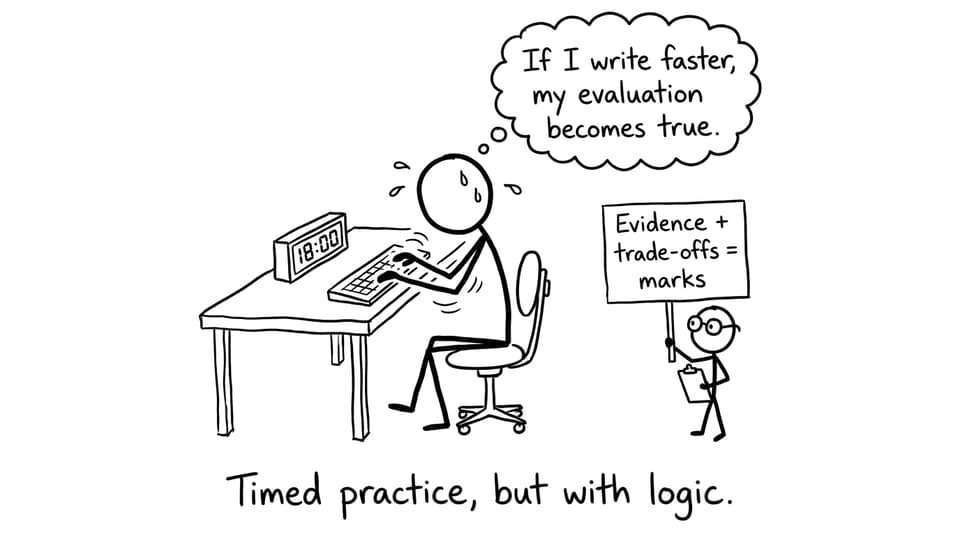
The best revision for Paper 2 is writing under constraints, then reviewing like an examiner.
Do this twice a week:
-
Pick one Paper 2-style question
-
Set a strict timer
-
Write a full answer
-
Use a grading checklist (application + evaluation + relevance)
To simulate real conditions, use RevisionDojo’s Mock Exams and Predicted Papers. For full-paper practice, explore IB Design Technology predicted papers or the broader Predicted Papers library.
Common Paper 2 mistakes (and the quick fix)
-
Writing everything you know instead of answering the question, start with the command term.
-
Generic examples, choose one product and explain it properly.
-
No evaluation, force one paragraph of trade-offs.
-
Messy paragraphing, use signposts: “This means…”, “However…”, “Therefore…”.
A practical support habit: after each timed response, ask AI Chat to rewrite your evaluation into tighter, markscheme-style judgement, then compare it to your own voice.
Conclusion: make Paper 2 feel familiar
Paper 2 stops being scary when it stops being new.
Revise IB Design Technology Paper 2 by training what it rewards: structured extended responses, connected themes, and balanced evaluation under timed conditions. Then run the full loop on RevisionDojo: Study Notes for clarity, Flashcards for recall, Questionbank for targeted practice, AI Chat for fast unblocking, and Mock Exams plus Predicted Papers to make exam day feel like a rehearsal.
If you want one place to start today, go back to the IB Design Technology hub and build your next week around one timed Paper 2 response and one focused mistake-fix session.