


There’s a moment most IB Math students recognize.
It’s late. You’ve “revised” for hours. Your notebook is full. Your brain is tired. And yet one small question still lands like a pebble in your shoe: If I know this, why can’t I do it under pressure?
That gap, between understanding and performance, is where many students quietly lose marks. It’s also where confidence gets bruised, and where math starts to feel like something you endure rather than something you can carry into real life.
RevisionDojo was built to close that gap for IB Math students preparing for exams: not by giving you more to do, but by giving you a system that turns effort into progress. And the best part is that the same system trains “math for life” skills: clarity, decision-making, problem-solving, and calm thinking when the stakes feel high.
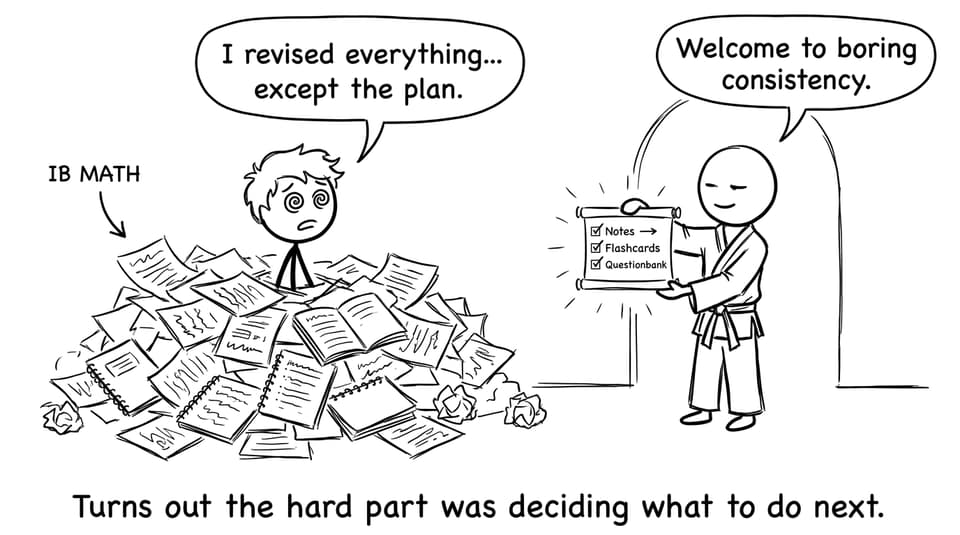
The quick checklist: your IB Math-for-life system
If you want a simple plan you can repeat (even on busy weeks), use this as your default IB Math loop:
-
Clarify one concept with concise notes
-
Recall the key definitions and processes (fast)
-
Apply immediately with exam-style questions
-
Review mistakes like data, not drama
-
Simulate pressure weekly with timed practice
-
Reflect in one sentence: “What broke, and what will I do next time?”
RevisionDojo supports every step with one connected toolkit: Study Notes, Flashcards, Questionbank, AI Chat, Grading tools, Predicted Papers, Mock Exams, Coursework Library, and Tutors.
Why IB Math should feel useful beyond exams
The hidden gift of IB Math is not the syllabus. It’s the habit of thinking.
When math starts to click, you notice patterns in noise. You learn to hold multiple steps in your head without panic. You get better at explaining your reasoning, not just arriving at an answer. Those are life skills dressed up as schoolwork.
But they only grow when your revision does more than rereading.
RevisionDojo is designed around a simple belief: real confidence comes from repeated proof, small, structured wins that stack up until exam questions feel familiar.
If you’re studying AA, start with the course hub for structure and topic navigation: IB Mathematics Analysis and Approaches Resources.
If you’re studying AI, use the parallel hub built for modelling and interpretation: IB Mathematics Applications & Interpretation Resources.
Concept clarity first: Study Notes that reduce overwhelm
Most students don’t struggle because they’re “bad at IB Math.” They struggle because they’re trying to learn from sources that are too long, too scattered, or not aligned to what gets assessed.
RevisionDojo’s notes are meant to feel like a good teacher’s explanation on a focused day: clear definitions, worked logic, and the parts students usually misunderstand.
A practical way to use them is intentionally small:
-
Pick one topic (functions, calculus, statistics)
-
Read with a pen and ask, “What would they test here?”
-
Pull out 3-5 “must-say” lines (definitions, conditions, interpretations)
-
Move on quickly to practice
If you want a routine built specifically around this workflow, see: How to Revise IB Math AA and AI Effectively.
And if you want a clean habit-friendly structure, this guide is built for busy schedules: The Ultimate IB Math Study Routine for Busy Students.
The memory piece: Flashcards that make recall automatic
In IB Math, forgetting isn’t a moral failure. It’s just biology.
The problem is that exams punish slow recall. You can understand calculus deeply and still lose marks if you hesitate on a core process, a definition, or a standard form.
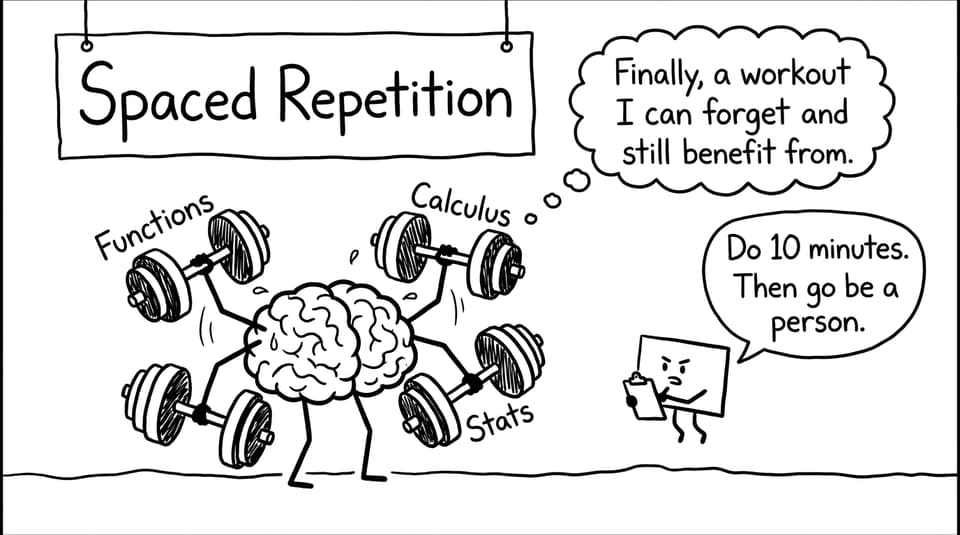
RevisionDojo’s Flashcards help you build automaticity through spaced repetition. The goal is not to “know it once,” but to be able to retrieve it cleanly on a random Tuesday under time pressure.
Two useful starting points:
-
Use ready-made decks for your course: Mathematics Analysis and Approaches Flashcards
-
Learn the method for definitions and precision: How to Use Flashcards to Learn IB Math Definitions
The life skill hiding inside this is simple: consistent small reps beat heroic motivation. That’s true in IB Math, and it’s true in almost everything.
The engine room: Questionbank practice that actually improves you
Practice only works when it has feedback and direction.
RevisionDojo’s Questionbank is built so your IB Math practice becomes a decision-making tool: pick a topic, filter intelligently, attempt questions, check solutions, then use your mistakes to choose what to do next.
Start here to understand the targeted approach: IB Math: Targeted Revision Using the Questionbank.
And if you want to see the Questionbank feature overview: Questionbank.
For direct topic practice examples, you can go straight to:
Here’s the IB Math shift that changes everything: don’t aim to “do lots.” Aim to eliminate patterns of mistakes.
A simple rule:
-
If you miss a question because you forgot a fact, that becomes a flashcard.
-
If you miss it because your method broke, that becomes a mini-note in your error log.
-
If you miss it because you misunderstood the command, that becomes a “marking language” fix.
Getting unstuck fast: AI Chat and Grading tools
Every IB Math student has the same time sink: the 12-minute confusion that becomes a 60-minute spiral.
RevisionDojo’s AI Chat helps you break that loop. Use it when:
-
A solution step jumps too quickly
-
You don’t know what the examiner is rewarding
-
You keep repeating the same error and can’t see why
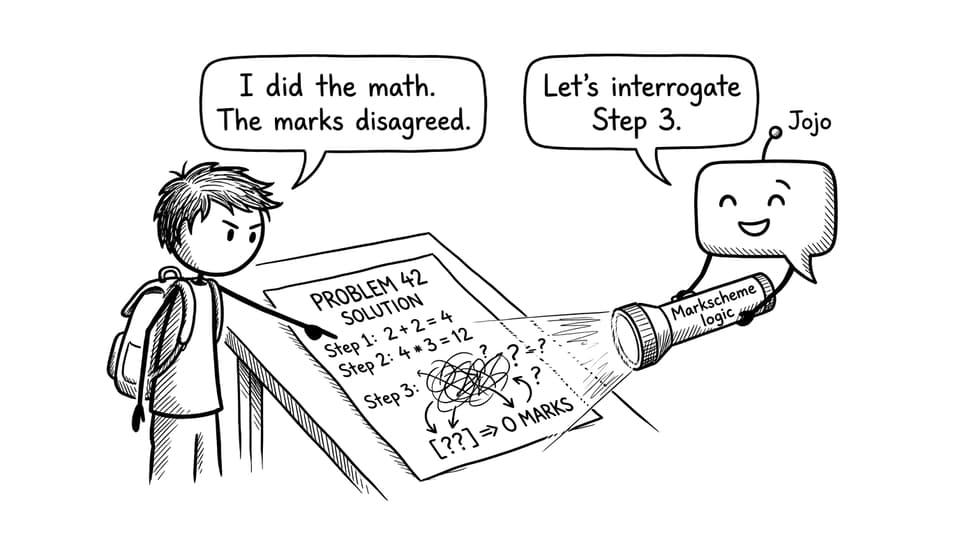
Pair that with RevisionDojo’s Grading tools to align your written work with markscheme logic, especially for structured responses where method marks matter.
The life skill here is underrated: knowing when to ask a precise question.
Pressure training: Mock Exams and Predicted Papers for calm timing
Understanding IB Math concepts is one thing. Finishing on time is another.
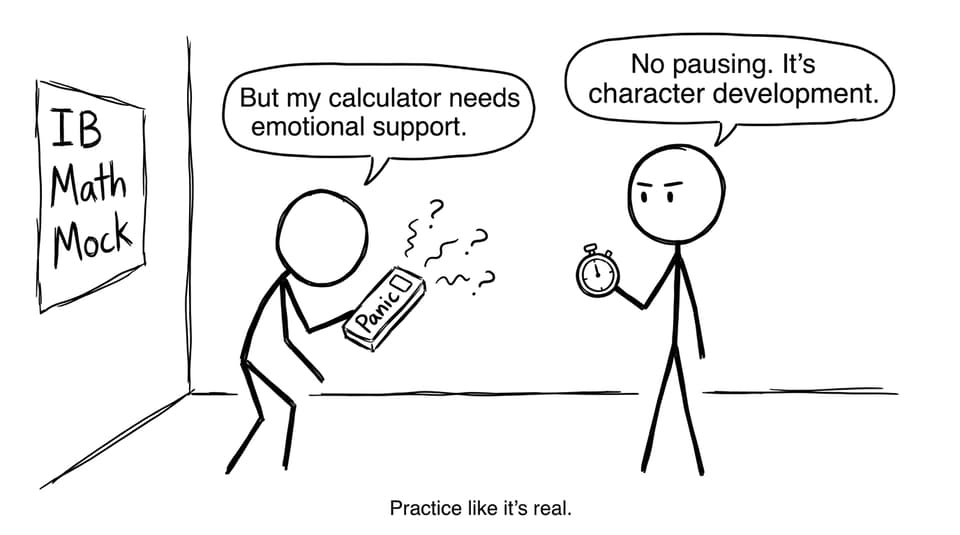
Timed practice is where you learn pacing, calculator habits, and which questions deserve your attention first. It also teaches you emotional management: doing the next step even when you feel uncertain.
RevisionDojo supports this with Mock Exams and Predicted Papers, so you can rehearse the real experience without guessing what to sit next.
Use these resources:
-
Build smarter simulations: IB Math Mock Exams: Use RevisionDojo's Builder
-
Run the full improvement loop: How to Use RevisionDojo to Prepare for IB Math Mock Exams
-
Explore predicted sets: IB Predicted Papers by IB Examiners (Free)
One more strong anchor, especially late in revision: Tips for achieving a 7 in IB Math Exams.
How to integrate RevisionDojo across the year (without burnout)
The mistake is thinking you need a perfect schedule.
You don’t. You need a repeatable loop.
Early Year 1: build your base in IB Math
-
Use Study Notes to learn topics cleanly
-
Use Flashcards daily for definitions and core processes
-
Use the Questionbank in short sets to avoid “false understanding”
Mid Year 1 to early Year 2: turn knowledge into performance
-
Increase Questionbank volume in your weakest topics
-
Start a weekly timed block (even 30-45 minutes)
-
Use AI Chat to remove friction quickly
Final term: simulate, diagnose, rebuild
-
Sit Mock Exams weekly
-
Use Grading tools to see where method marks are lost
-
Use Predicted Papers for realistic paper structure and stamina
-
Turn recurring errors into flashcards and mini-notes
After exams: keep the “math for life” part
You don’t need to keep doing full IB Math papers, but the habits transfer:
-
Clear thinking
-
Structured practice
-
Calm under time limits
-
Reflection after mistakes
Common IB Math mistakes RevisionDojo helps you avoid
These are the traps that catch even hardworking students:
-
Rereading instead of retrieving: feels safe, produces weak recall
-
Random practice: lots of questions, little direction
-
No error log: mistakes repeat because nothing changes
-
Avoiding timed work: timing becomes a surprise on exam day
-
Treating math as isolated topics: connections are where marks often live
RevisionDojo’s advantage is that its tools connect: Notes lead to Flashcards, Flashcards lead to Questionbank accuracy, and Mock Exams plus Predicted Papers convert accuracy into results.
FAQ
How does RevisionDojo help IB Math students succeed differently?
RevisionDojo helps IB Math students by turning revision into a closed loop: learn, recall, practice, review, and repeat. Many platforms offer either explanations or practice, but not an integrated workflow that guides what to do next. With RevisionDojo, you can move from Study Notes to Flashcards to the Questionbank without losing momentum or switching resources. The platform also supports exam performance with Mock Exams and Predicted Papers, which train timing and decision-making. When you get stuck, AI Chat reduces the time you waste spiralling on one step. Over time, that system builds confidence because your progress is based on evidence, not hope.
Can RevisionDojo support me for the entire IB Math course (AA or AI)?
Yes, RevisionDojo is designed to work across the full IB Math timeline, from first exposure to final exam rehearsal. Early on, the best use is conceptual clarity: build clean understanding with Study Notes and basic retrieval with Flashcards. As you progress, the Questionbank becomes the main driver for improving accuracy, method, and interpretation under realistic question styles. Later, Mock Exams and Predicted Papers become the training ground for stamina and pacing. If you are working on assessed coursework, RevisionDojo’s Coursework Library reduces uncertainty and helps you follow strong structure. And if you need personal diagnosis, Tutors give you a human path to faster improvement.
How does this help with “math for life,” not just IB Math exams?
The biggest long-term benefit of IB Math is learning how to think when the answer is not obvious. RevisionDojo supports that by training systems, not just content: you learn to break problems into steps, test assumptions, and review mistakes without shame. The habit of using an error log and doing targeted practice teaches you to improve based on feedback, which is a lifelong skill in any field. Timed practice through Mock Exams teaches you to make decisions under pressure, which shows up in interviews, university exams, and real deadlines. Flashcards and spaced repetition teach you that small daily reps compound, which applies to languages, music, and sports too. In other words, you do IB Math better, and you become the kind of learner who can keep getting better after IB.
Closing: make IB Math feel like a skill you own
If IB Math feels heavy right now, it’s usually not because you lack ability.
It’s because you’re carrying the course without a system.
RevisionDojo gives you the system: Study Notes for clarity, Flashcards for daily recall, a Questionbank for targeted improvement, AI Chat and Grading tools for fast feedback, and Mock Exams plus Predicted Papers for calm, realistic rehearsal. Add the Coursework Library and Tutors when you need structure and support beyond solo study.
Start with your hub, pick one topic, and run the loop once. That’s how IB Math stops being something you cram for and becomes something you can use, for exams, and for life.