
If you have ever highlighted a sentence in a book and suddenly felt like you owned the material, you already understand the quiet power behind DNA accessibility. The words were always there. But the moment they became reachable, they became usable.
In IB Biology, nucleosomes are the cell’s version of that highlighter. They don’t change the DNA sequence. They decide what can be reached, when, and by whom. And that decision is the difference between a gene that’s silent and a gene that’s expressed.
IB Biology quick checklist: what to say in an exam
Keep this structure ready for any short-answer or data-response question in IB Biology:
-
A nucleosome is DNA wrapped around histone proteins (octamer)
-
About 147 base pairs wrap around the histone core
-
More compact chromatin = less DNA accessibility = less transcription
-
Heterochromatin is tightly packed; euchromatin is more open
-
Cells change accessibility via chromatin remodeling and histone modifications
For the syllabus-aligned core definition, see Structure of a nucleosome (HL only) Study Notes.
How nucleosomes physically limit DNA accessibility
A eukaryotic genome is long enough to be a problem, even before regulation enters the story. Nucleosomes solve the packing problem by wrapping DNA around histones, forming the classic “beads-on-a-string” chromatin.
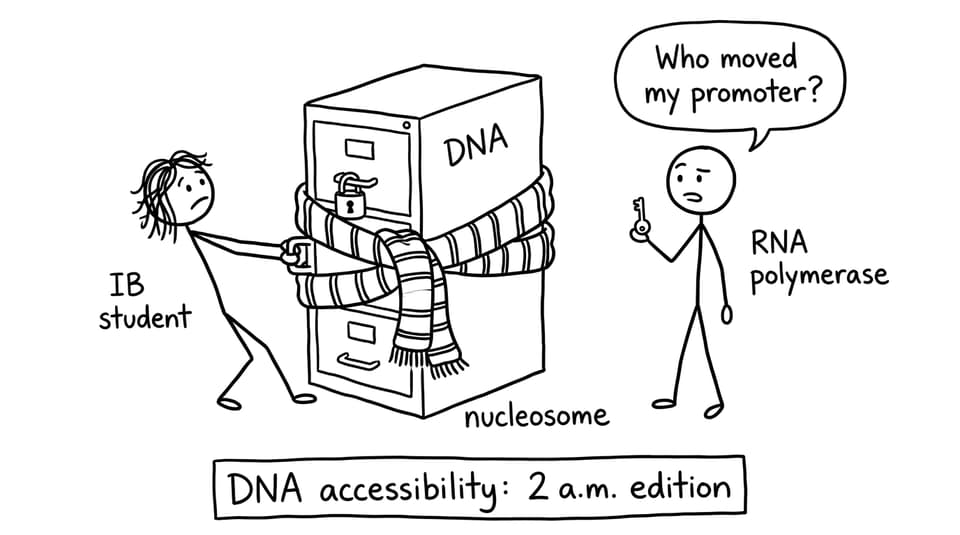
But in IB Biology, the higher-value point is what that wrapping does to transcription. If a promoter is wrapped tightly around histones, RNA polymerase and transcription factors can’t bind efficiently. The gene may as well be behind a locked door.
This is why chromatin state matters. In heterochromatin, nucleosomes are packed tightly, DNA accessibility is low, and transcription is reduced. In euchromatin, nucleosomes are looser, DNA accessibility is higher, and transcription is more likely.
To connect nucleosomes to the broader unit, revise alongside D2.2 Gene Expression (HL) Topic Hub.
How cells increase DNA accessibility: remodeling and histone changes
Cells aren’t stuck with one chromatin layout. They treat nucleosomes like movable furniture.
Chromatin remodeling complexes (ATP-powered)
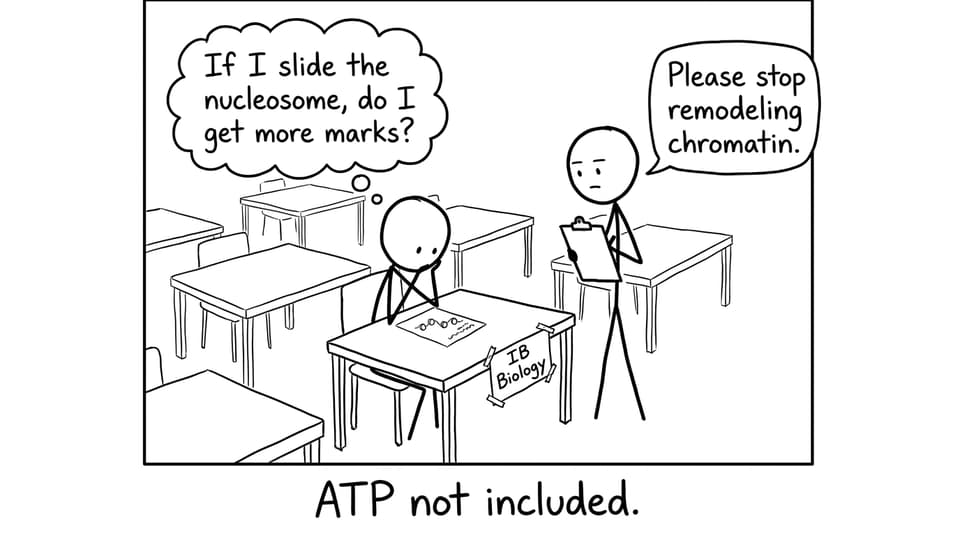
Chromatin remodeling complexes use ATP to slide nucleosomes, reposition them, or temporarily remove them. When a nucleosome shifts away from a promoter, DNA accessibility increases and RNA polymerase can assemble the transcription machinery.
This connects cleanly with exam questions about regulators: activators often recruit proteins that open chromatin, while repressors help keep chromatin closed. If you want that linkage in IB Biology wording, use How Activators & Repressors Control Genes.
Histone modifications (epigenetic control)
Histone tails can be chemically modified, changing how tightly DNA binds.
-
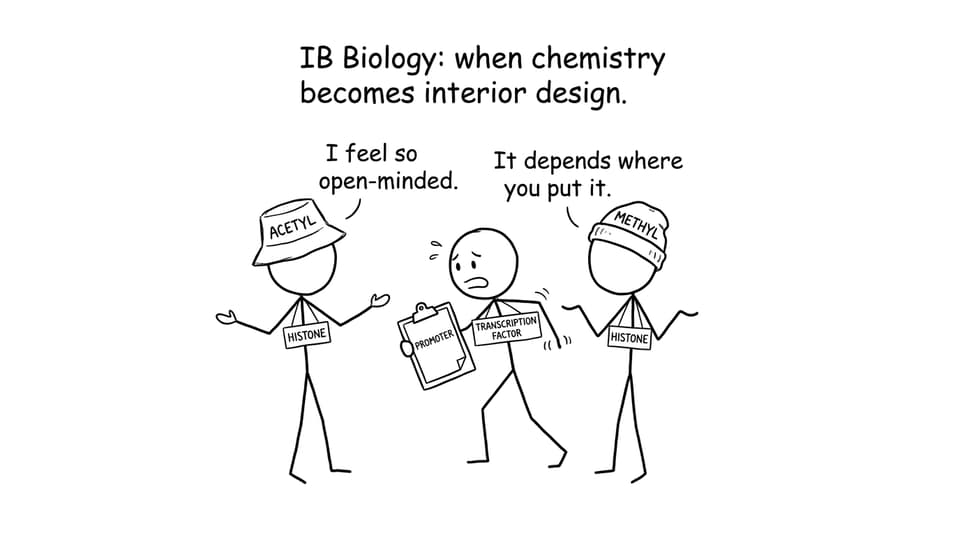
Acetylation generally loosens DNA-histone attraction, increasing DNA accessibility (more euchromatin)
-
Methylation can either activate or repress transcription depending on where it occurs
This is one reason gene regulation feels “smart” in IB Biology: the genome is constant, but the accessibility map changes.
Why nucleosome positioning matters for cell specialization
A neuron and a muscle cell contain the same DNA, yet behave like different worlds. A big part of that difference is which regions remain accessible.
Many genes have nucleosome-free regions near promoters (or at least lower nucleosome occupancy), making transcription easier. Other genes are kept inaccessible until a signal recruits remodeling complexes or changes histone marks.
If you want to zoom out to chromosome-scale packing, pair this with Condensation and movement of chromosomes Notes or the broader Chromosomes Notes.
Bring it home: using IB Biology resources to master accessibility
Nucleosomes are not just DNA packaging. In IB Biology, they are the gatekeepers of DNA accessibility, deciding whether transcription is realistic or impossible.
If you want this to feel effortless under exam pressure, RevisionDojo is built for that exact moment: use the Study Notes for clean definitions, the Flashcards for quick recall, the AI Chat to fix misunderstandings fast, and the Grading tools plus Mock Exams to learn what earns marks. Then lock it in with the Questionbank, where DNA accessibility questions stop being scary and start feeling familiar.
Start with the hub for IB Biology Resources and build momentum from there.